


America’s 250th: Trump’s Visage to Adorn Commemorative Passports, Riling Critics and Tradition
POLICY WIRE — WASHINGTON D.C., United States — Beyond the prosaic necessity of international travel, a passport embodies a nation’s essence—its values, its history, its...

POLICY WIRE — WASHINGTON D.C., United States — Beyond the prosaic necessity of international travel, a passport embodies a nation’s essence—its values, its history, its very identity. But now, as America readies itself for its 250th birthday, that cherished symbol is set to receive an unprecedented, and frankly, polarizing, facelift. The State Department, in a move that has already commenced its inevitable rounds of partisan jousting, announced it will issue a limited series of commemorative U.S. passports featuring the stern-looking visage of former President Donald Trump.
This isn’t just an aesthetic tweak; it’s a historical inflection. Never before has a living American president graced the pages of the nation’s travel document. While Mount Rushmore’s stoic quartet—Washington, Jefferson, Roosevelt, and Lincoln—already occupy a double-page spread, their inclusion is retrospective, a nod to history’s settled judgments. Trump’s potential appearance, however, injects a decidedly contemporary and, for many, contentious figure into the very fabric of American international identity.
And yes, the concept, complete with an actual rendering of Trump’s portrait, has been percolating through bureaucratic channels for months, finally receiving its imprimatur late Monday. These special editions will initially be obtainable only at the Washington, D.C., passport office, and crucially, only upon explicit request. Applicants not keen on traveling with a miniature “Make America Great Again” memento (or, more accurately, an unstated homage to a particular political era) can still opt for a standard issue. How considerate, isn’t it?
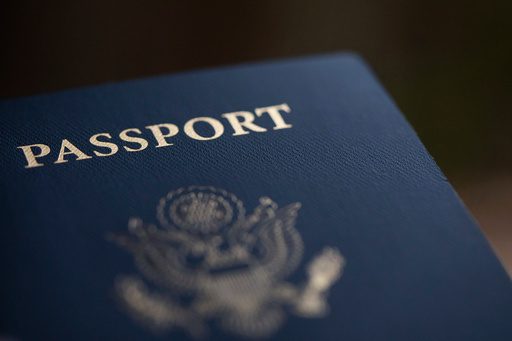
“As the United States celebrates America’s 250th anniversary in July, the State Department is preparing to release a limited number of specially designed U.S. passports to commemorate this historic occasion,” State Department spokesman Tommy Pigott relayed. He assured the public that these passports would feature “customized artwork and enhanced imagery” while “maintaining the same security features that make the U.S. passport the most secure documents in the world.” But beyond the interior portrait of Trump, changes remain subtle: a bold gold “United States of America” at the top and “Passport” at the bottom on the cover—a reversal of the usual order—and a small gold laminated American flag, encircled with stars and the number 250, adorning the back.
This initiative, first reported by The Bulwark, arrives amidst a backdrop of escalating political polarization. For detractors, it’s a blatant, self-serving act of executive narcissism, an attempt to immortalize a divisive figure at the expense of national unity. “This isn’t about patriotism; it’s about partisan adulation, frankly a dangerous precedent that cheapens a symbol of national unity,” shot back Senator Eleanor Vance (D-Calif.), her voice dripping with incredulity. “Our passports should represent the enduring ideals of America, not the fleeting ego of any single politician.”
Still, proponents frame it differently. “President Trump’s inclusion honors a consequential leader during a pivotal anniversary,” countered Rep. Marcus Thorne (R-Texas), dismissing the criticism as typical partisan sniping. “It’s a testament to his indelible mark on American history, whether critics care to admit it or not.” And there’s the rub, isn’t there? A nation grappling with its own identity, now literally inscribing its recent political struggles onto its global travel papers.
📄 POLICY WIRE WHITEPAPER PUBLISHED: PAKISTAN'S NATIONAL SECURITY POLICY PRIORITIES
👉 READ BY CLICKING HEREAcross the globe, particularly in regions like South Asia — and the wider Muslim world, the U.S. passport is often viewed with a mixture of reverence, aspiration, and sometimes, a healthy dose of cynicism regarding American intentions. The symbolism of such a document is not lost on populations who might navigate complex geopolitical currents—and who often view American leaders through a unique lens. Will a passport bearing the image of a leader whose policies, particularly on immigration and foreign relations, sparked considerable debate in these regions, be received as a sign of American strength or as further evidence of a nation weaponizing its symbols? It’s a fascinating question, if you think about it.
In fiscal year 2023 alone, the State Department processed over 23.3 million passports, a number that speaks to the sheer volume of individuals carrying this potent symbol. The decision to affix a former president’s image, especially one who remains a formidable presence in contemporary politics, forces an uncomfortable conversation about the intersection of national identity and individual political loyalty.
What This Means
This seemingly innocuous bureaucratic announcement carries substantial political — and even diplomatic weight. At its core, it’s another battleground in America’s ongoing culture war, transforming a utilitarian document into a political declaration. Politically, it signals a desire by some factions to permanently etch the legacy of the Trump administration into national iconography, regardless of prevailing public sentiment or historical consensus. It also risks further eroding political decorum, opening the door for future administrations to similarly emblazon passports with their preferred figures, making the document a malleable canvas for political hero-worship rather than a neutral representation of the state.
Economically, the impact is likely negligible, though the niche demand for these commemorative passports might create a micro-market among collectors and dedicated supporters. The actual cost of production is unlikely to be significant, given the limited run. However, the intangible cost lies in the perception of American soft power. A U.S. passport has long been seen as a neutral, trusted, — and universally respected document. Introducing a figure as divisive as Donald Trump could, for some, subtly undermine that neutrality, raising questions about the stability and impartiality of American institutions in the eyes of international observers and everyday travelers alike. It isn’t just paper; it’s perceived legitimacy.