


Italian Football’s Perpetual Melodrama: A Solidarity Pact Amidst Shaking Foundations
POLICY WIRE — Rome, Italy — In Italian football, the spectacle often extends well beyond the ninety minutes of play, frequently veering into an operatic display of power, loyalty, and scandal. So...

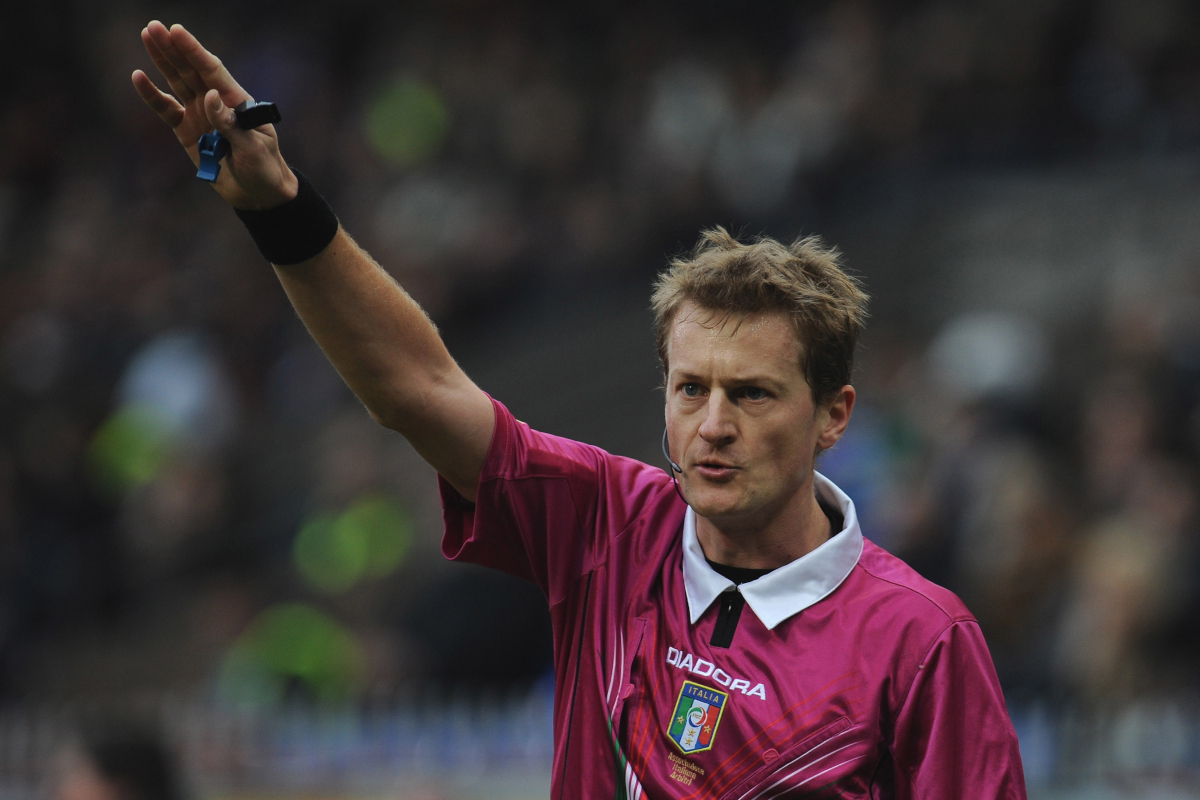
POLICY WIRE — Rome, Italy — In Italian football, the spectacle often extends well beyond the ninety minutes of play, frequently veering into an operatic display of power, loyalty, and scandal. So it’s not particularly surprising, but still quite revealing, that the new interim head of Serie A and Serie B referees, Dino Tommasi, chose his inaugural public appearance not to declare a new era of unimpeachable rectitude, but to extend a profound “message of solidarity” to his predecessor, Gianluca Rocchi. Rocchi, you see, alongside his assistant Andrea Gervasoni, had just ‘suspended himself’ — an eloquent euphemism — amid a swirling Milan prosecutor’s office investigation.
Tommasi, recently tapped by the national referees’ committee for this decidedly hot seat, made his debut during a broadcast of ‘Open VAR.’ And he didn’t mince words, though their implication was perhaps more complex than simple collegiality. He asserted, via TuttoMercatoWeb, that he wished “to send a message of solidarity to Gianluca and Andrea on behalf of the entire refereeing group, a strong message of closeness.” It’s a sentiment that, while perhaps understandable within the insular world of officiating, reverberates somewhat differently across the wider landscape of Italian sport, which has a storied, some might say infamous, history of integrity crises.
And what a history it’s. From Calciopoli—a scandal that relegated Juventus and tarnished multiple clubs two decades ago—to perennial whispers surrounding match manipulation and dubious calls, the trust of the tifosi (fans) is perpetually tested. This latest fracas, whatever its ultimate outcome, merely stirs those deeply embedded anxieties once more. It isn’t just about Rocchi or Gervasoni; it’s about the very perceived bedrock of fair play in a league that’s a cultural cornerstone and a colossal business.
Still, stability, Tommasi maintained, was paramount as the season hurtled towards its denouement. “We’re calm — and we want to finish the season with stability and determination,” he declared. Such pronouncements often precede fresh revelations, don’t they? One might forgive a cynical observer for detecting a slight undertone of performative calm. Maintaining professionalism amidst a looming prosecutorial probe? That’s a tightrope walk for any organization, let alone one perpetually under the microscope of a football-crazed nation.
But the public’s appetite for football remains ravenous, even amidst the drama. Serie A, a global phenomenon, pulls in an annual revenue exceeding €2.5 billion (as per recent industry reports), much of which relies on an image of competitive integrity. So, any perceived erosion of that integrity—real or imagined—carries significant economic weight, affecting everything from sponsorship deals to broadcast rights. This isn’t some niche affair; it’s a global enterprise.
And it’s a dynamic keenly observed in places far beyond Europe’s borders. In Pakistan, for instance, and across the wider South Asian and Muslim world, European football leagues—especially Serie A, with its historical giants and tactical artistry—command massive followings. The integrity of these leagues doesn’t just impact local viewership; it sets a benchmark for sporting governance internationally. When a scandal hits a major European league, it sends ripples of doubt through burgeoning sports industries in these regions, where they often grapple with their own challenges concerning transparency and fair play. It’s a subtle but palpable influence on the global sports ecosystem, a reminder that the stakes are higher than just 90 minutes on a Saturday afternoon.
A spokesperson for the Italian Football Federation (FIGC), speaking anonymously given the ongoing investigation, later underscored the federation’s official stance, which seemed to subtly diverge from Tommasi’s immediate emotional overture. “Our commitment to full transparency and cooperation with judicial authorities remains unwavering,” the official stated, adding a crucial, if dry, counterpoint. “The integrity of the game is our foremost priority, and due process must be allowed to run its course without prejudice.” That’s the official line, you see, a necessary distancing from the personal solidarity, emphasizing institutional principles over individual allegiances.
What This Means
At its core, Tommasi’s gesture, while framed as ‘solidarity,’ underscores the deep-seated, almost tribal, loyalties that often supersede institutional rectitude in Italian football. Politically, this incident places further pressure on the FIGC to demonstrate robust oversight, lest calls for more stringent governmental intervention re-emerge. The Italian state, historically, hasn’t shied away from cleaning up football’s messes, often with heavy-handed measures. Economically, prolonged controversy risks alienating sponsors — and broadcasting partners who demand a clean product. While Serie A remains a powerful brand, repeated integrity issues could dampen investor confidence and fan engagement, potentially leading to a dip in its lucrative global market share.
Behind the headlines, this isn’t merely about one man (or two) — and their alleged missteps. It’s a barometer for the health of Italian sport, testing the resilience of its governance structures against the perennial allure of backroom maneuvering. It’s a perennial battle, isn’t it, between the game’s ideals — and its messy realities? And for fans and stakeholders worldwide, particularly those in markets like Pakistan looking to European football as a gold standard, this episode is a stark reminder that even the most celebrated institutions can find their trust eroding.