


Rome’s Glitched Glory: One Injury, A Hundred Geopolitical Echoes
POLICY WIRE — Rome, Italy — Rome braces for its venerable derby tomorrow, the eternal city holding its breath not just for the usual gladiatorial spectacle, but for a singular, seemingly innocuous...

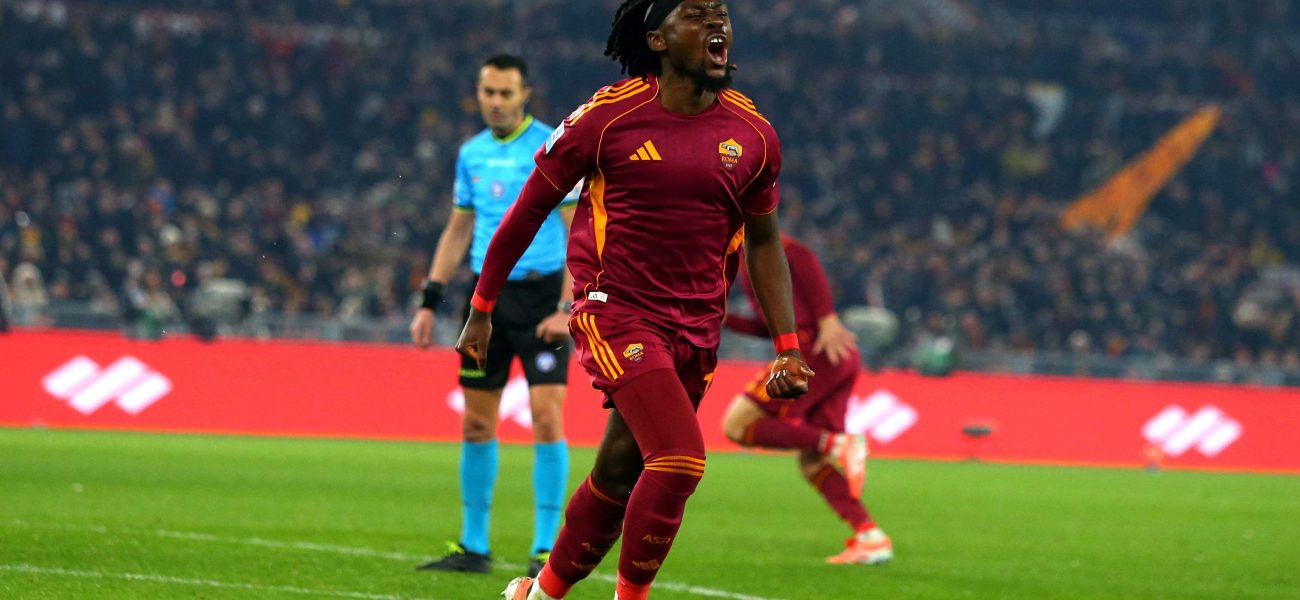
POLICY WIRE — Rome, Italy — Rome braces for its venerable derby tomorrow, the eternal city holding its breath not just for the usual gladiatorial spectacle, but for a singular, seemingly innocuous incident that peels back the polished veneer of modern football: a strained muscle. Manu Koné, AS Roma’s dynamic midfielder, sidelined by a training mishap. It’s more than just a benching; it’s a tiny fault line exposing the vast, complex, often absurd machinery of global sport, where local passions intersect—and sometimes collide—with geopolitics and cold, hard cash.
No, this isn’t about mere sporting tactics. This is about commodities, national psyche, and the relentless pressure of a game that has transcended athletic endeavor to become an economic powerhouse. Because let’s face it, one star player’s hamstring isn’t just about tomorrow’s score; it’s about sponsorship deals, broadcast rights worth billions, and the emotional equilibrium of an entire city, often a nation. The ‘Giallorossi’ faithful will fret, naturally, but the ripples extend far beyond the curva sud. Don’t they always?
It’s an uneasy quiet, a peculiar dread that settled over Trigoria—Roma’s training ground—following reports Koné ‘stopped short instantly’ during a session. His absence, however provisional, changes the equation. Coach Gian Piero Gasperini, they say, waits for updates, but what he’s really waiting for is reassurance that one of his most marketable assets hasn’t just depreciated in value right before the season’s most-watched fixture. But the irony isn’t lost on seasoned observers: Koné, lauded for his ability to ‘dictate play’ and ‘carry the ball forward quite cleanly’, is now reduced to an injured statistic, a testament to the frailty of even the most robust athletic form.
And you’ve got to wonder about the system itself. What does it say about sport when a player is more commodity than athlete, meticulously monitored, optimized, but ultimately still prone to a basic muscle pull? "Modern football demands superhuman feats, yet its foundation remains achingly human," observed Giancarlo Rossi, a former Serie A technical director now a prominent commentator. "These derbies, they’re meant to be pure emotion. Now they’re just another balance sheet item, a calculation of risk." His weary tone cuts through the usual PR speak.
The stakes couldn’t be higher. This match, one of Europe’s fiercest rivalries, isn’t just watched in Italy. It pulls in colossal international viewership, including millions across South Asia and the Muslim world, where Serie A holds a long-standing fascination. Fans in Karachi and Dubai will tune in, not just for the ‘beautiful game’, but for the spectacle, the stories, and perhaps, a fleeting connection to a globalized world where football offers a universal language. It’s a key export for Italian culture, an unwritten diplomatic envoy, generating revenue that keeps clubs afloat. According to Deloitte’s annual Football Money League, the top 20 European clubs collectively generated an astonishing €10.5 billion in revenue in the 2022/23 season, showcasing the immense economic clout at play. One player, one injury, a minute portion of that sum in lost marketing potential or altered outcomes, but a visible crack nonetheless.
📄 POLICY WIRE WHITEPAPER PUBLISHED: PAKISTAN'S NATIONAL SECURITY POLICY PRIORITIES
👉 READ BY CLICKING HEREConcerns for player welfare often take a backseat to financial imperatives, don’t they? Especially with a World Cup on the horizon. "We appreciate the pressure, the fans’ expectations," stated Senator Elena Bianchi, Italy’s Deputy Minister for Sport and Youth Policy, in a rare moment of candidness. "But player safety, especially when global tournaments beckon, must always be paramount. We can’t risk their futures for one game, however important it may seem today. That would be short-sighted, economically irresponsible." A refreshing, if predictable, bit of bureaucratic boilerplate for an athlete who, after all, is merely doing his job.
The narrative, often simplified to ‘passion’ — and ‘pride’, quietly obscures the deeper currents. This injury reminds us that even at its most raw and elemental—a derby—football is deeply entangled with global market forces, fragile human bodies, and the distant hopes of millions.
What This Means
Koné’s setback isn’t just a sports blip; it’s a minor symptom of major geopolitical and economic trends shaping modern sport. The sheer financial scale of top-tier football means that individual player fitness carries significant commercial weight. A prominent club like Roma, contending in Europe and locally, relies on its star power not just for wins, but for marketability, brand reach, and broadcast revenue streams that crisscross the globe. An injury to a key player like Koné — especially before a high-profile derby — can diminish viewership interest in crucial overseas markets, including those in the Middle East and South Asia. That affects global perception of the league, — and subsequently, advertising and media rights negotiations. This is precisely why we’re seeing an increasingly fierce debate around player burnout, fixture congestion, and the ethical responsibilities of clubs towards their human capital. The focus isn’t solely on the player’s personal recovery, but also on the immediate financial impact for the club, the broader economic health of Serie A, and even the Italian football association’s ability to maintain its global sporting soft power, especially as rival leagues like the Premier League expand their reach into these same lucrative foreign markets. For a glimpse into similar crises of commercialized sport, you might look at Paper Tigers? The IPL’s Manufactured Authenticity Crisis, Per Steyn.