


Caravans of Gluttony: New Mexico Brace for 72-Ounce Steak Spectacle as Route 66 Flexes Its Absurdist Muscle
POLICY WIRE — ALBUQUERQUE, N.M. — Forget missile treaties and sovereign debt. This June, the Land of Enchantment will confront a far more primal, some might say existential, challenge: the digestive...

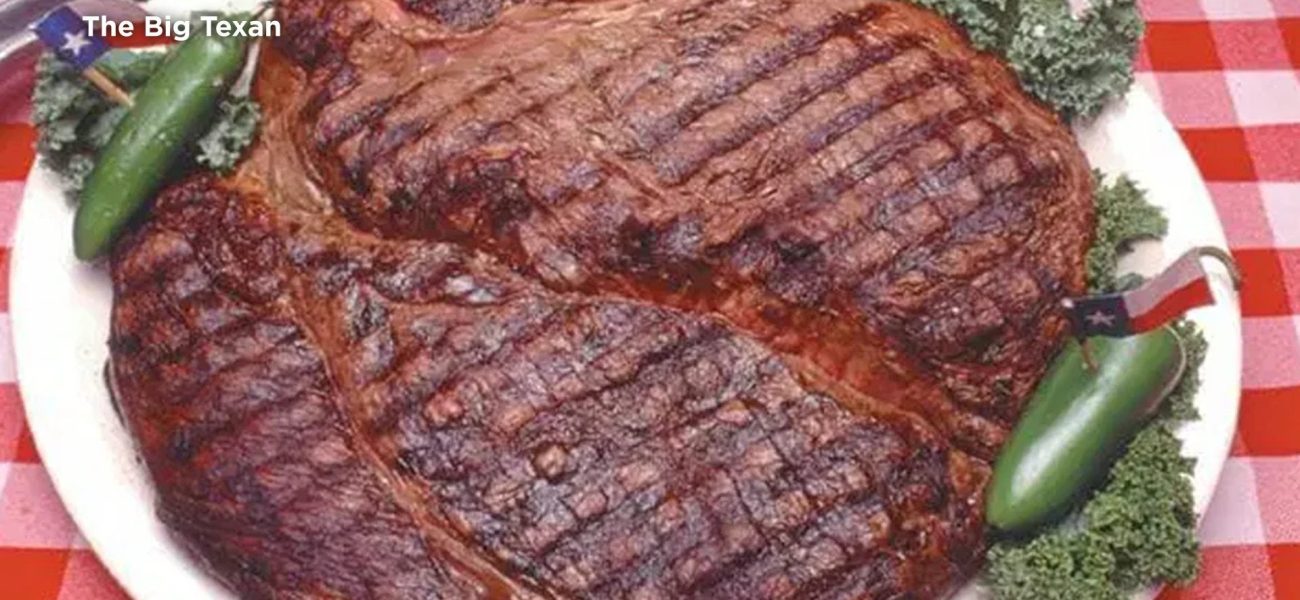
POLICY WIRE — ALBUQUERQUE, N.M. — Forget missile treaties and sovereign debt. This June, the Land of Enchantment will confront a far more primal, some might say existential, challenge: the digestive capacity of its citizenry. Answering a call no one particularly remembers issuing, a leviathan of bovine excess, “The Big Texan’s” infamous 72-ounce steak challenge, is rolling into New Mexico. Not quietly, either, but with all the understated grace of a carnival barker — and a well-greased gravy boat. This isn’t just about a gargantuan slab of meat; it’s an American odyssey, re-packaged as a gastrointestinal gauntlet, coinciding with the centennial celebrations of Route 66—a highway itself synonymous with both grand adventure and roadside kitsch.
Because, apparently, driving 1,200 miles to Amarillo just for the privilege of potentially self-induced dietary distress is too much hassle. So, The Big Texan, bless its heart (and arteries), is bringing its meat-centric pilgrimage to the masses. Four stops are slated across New Mexico next month: Gallup, Albuquerque, Santa Fe, — and Santa Rosa. Each promises the same high-stakes gamble: consume four-and-a-half pounds of beef, plus a baked potato, salad, and dinner roll, all within sixty agonizing minutes. Pull it off, and it’s free. Fail, — and you’re on the hook for, well, a whole lot of meat and regret. But hey, it’s tradition!
“It’s more than just a meal; it’s a cultural experience,” proclaimed Janice Evans, New Mexico’s Secretary of Tourism, in an exclusive chat with Policy Wire, a subtle glint of calculated PR optimism in her eyes. “Route 66 draws in millions, — and these events inject palpable energy into our local economies. We’re talking about generating excitement, encouraging overnight stays, supporting our small businesses. This caravan isn’t just selling steak; it’s selling a slice of Americana.” She didn’t mention the inevitable indigestion or potential collective cholesterol spike, but we can’t expect everything.
And indeed, there’s an economic argument. Route 66, in all its weathered glory, continues to be a surprisingly potent fiscal engine. The National Park Service estimated that visitors to the historic Route 66 corridor in New Mexico alone poured nearly $38 million into local coffers in 2021. This steak carnival, then, becomes another cog in that tourism machine, albeit a profoundly meaty one. It’s capitalism, writ large — and well-done (or rare, depending on your preference).
“We’re certainly keen to see the foot traffic it brings to downtown,” offered Mayor John Gomez of Santa Rosa, a town that often finds itself a quaint waypoint rather than a destination. He paused, reflecting. “But let’s be real, folks come to Santa Rosa for the Blue Hole, for the tranquility. A 72-ounce steak challenge… well, it’s a talking point, isn’t it? An unusual talking point. We’ll welcome the visitors, of course, just hope they don’t mistake our hospital for the after-party.” There’s that dry, practical frontier spirit. They’ll take the tourist dollars, but they’ve seen weirder, you know? They probably just don’t expect it to arrive on four wheels — and a meat sweats agenda.
But the caravan raises more than just eyebrows here in the American Southwest. It offers a fascinating, albeit indulgent, lens through which to view global consumption habits — and cultural exports. In many parts of the world, particularly across South Asia and the broader Muslim world, food challenges of this nature are practically unheard of. Consumption is often a communal affair, deeply tied to notions of hospitality, sustenance, and occasionally, religious observance—think the grand communal feasts after Eid al-Adha, where sacrificial meat is meticulously shared. The very concept of an individual engaging in a timed, competitive act of excessive gluttony would, frankly, mystify many in, say, Pakistan or Indonesia. Our own Route 66, with its promise of open roads and caloric overload, becomes a strange mirror to historical trade routes like the Silk Road, albeit with textiles replaced by textiles strained over expanding waistlines, and spices giving way to steak seasoning.
What This Means
The Route 66 centennial isn’t just about vintage cars and nostalgia; it’s about a deliberate attempt to revitalize what remains of an iconic artery, monetizing its cultural cachet. Bringing an event like The Big Texan’s challenge to various towns isn’t random; it’s a calculated maneuver by state tourism boards and business consortiums to leverage a known, if outlandish, commodity. They’re betting on the spectacle, the social media buzz, and the simple human curiosity for the outrageous to draw eyeballs and wallets. Politically, this signals a leaning into ‘heritage tourism’—not necessarily celebrating what New Mexico *is*, but what an idealized, marketable version of Americana *represents*. It also implicitly nudges conversations about dietary choices and public health, especially in a state wrestling with its own socio-economic complexities. But ultimately, it underscores a deeper narrative: the commercialization of regional identity. While other nations meticulously craft culinary diplomacy and protect food heritage through specific cultural lenses, America often champions the bigger, the faster, the more extreme. And in New Mexico, for a fleeting four days, that means embracing the epic scale of one very large steak. The local economic uplift is undeniable, sure. But the cultural statement is, well, digestible only to a few very specific, — and probably very hungry, people.
So, get your tums ready, New Mexico. The beef is coming. And with it, a peculiar blend of economic pragmatism, audacious showmanship, and an undeniable dash of plain old American eccentricity. Don’t say we didn’t warn you.