


Seashells, Sedition, and the State: Comey’s Latest Indictment Punctures Political Decorum
POLICY WIRE — Washington, D.C. — The federal hammer, it appears, now falls on beachcombers. Not for illicit shell collection, mind you, but for the *arrangement* of them. And so, the bizarre theater...

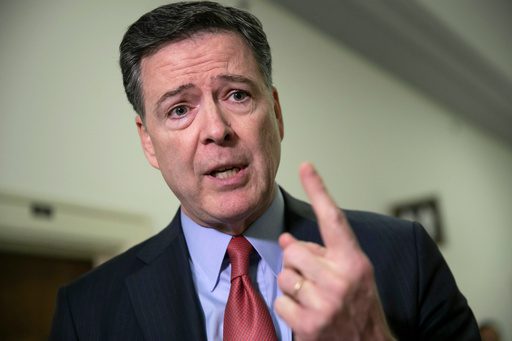
POLICY WIRE — Washington, D.C. — The federal hammer, it appears, now falls on beachcombers. Not for illicit shell collection, mind you, but for the *arrangement* of them. And so, the bizarre theater of American political retribution gains another improbable act: former FBI Director James Comey, once the nation’s preeminent law enforcement officer, now finds himself ensnared in a fresh federal indictment. The alleged transgression? A social media photo of seashells, artfully – or perhaps inadvertently – configured to display “86 47.”
It’s an accusation so peculiar, so divorced from conventional jurisprudence, that it could almost be satire. But it isn’t. Officials, cloaked in anonymity yet wielding immense prosecutorial power, insist the seaside tableau constituted a tangible threat against former President Donald Trump, the 47th occupant of the Oval Office. This, despite Comey’s immediate disavowal, his subsequent deletion of the post, and his candid admission: “I didn’t realize some folks associate those numbers with violence. I oppose violence of any kind so I took the post down.”
And just like that, the legal system found itself parsing the semiotics of marine mollusk arrangements. This isn’t Comey’s first rodeo with the current Justice Department, though. It’s his second criminal case, a relentless legal pursuit that raises more than a few eyebrows, particularly after his previous indictment — for allegedly lying to Congress about internal information leaks — was unceremoniously dismissed. That prior charge, you’ll recall, collapsed because the very prosecutor bringing it had been, well, illegally appointed. You can’t make this stuff up, can you?
Behind the headlines, this newest charge against a prominent Trump foe looks less like justice and more like an aggressive political gambit. Acting Attorney General Todd Blanche, widely perceived as vying for a permanent perch in the department, seems intent on demonstrating his fidelity to a specific political agenda. It’s a calculated escalation, a clear signal to Trump’s critics that the legal landscape remains treacherous.
President Trump himself wasted little time in weighing in, dismissing Comey’s claims of innocence with characteristic bluntness. “A child knows what that meant,” Trump shot back in a May Fox News Channel interview. “If you’re the FBI director — and you don’t know what that meant, that meant assassination. And it says it loud and clear.” Merriam-Webster, for its part, defines ’86’ as slang for ‘to throw out’ or ‘get rid of,’ only recently acknowledging a more sinister, though not yet officially entered, sense of ‘to kill.’ Still, the dictionary hasn’t historically dictated federal indictments.
At its core, this whole saga is a rather potent illustration of the weaponization of language — and now, apparently, visual puns — in an increasingly polarized political sphere. This relentless legal pursuit, born from a seemingly innocuous social media post, doesn’t just reverberate across Washington’s corridors of power; it sends shivers through democracies globally. In nations like Pakistan, where political adversaries often face a barrage of politically motivated legal challenges, often for far less, such actions by a developed Western democracy offer a troubling template. It validates the cynical view that law, ultimately, serves power, not justice — a perception that’s destabilized nascent democracies and entrenched authoritarian tendencies across the Muslim world for decades.
Comey, of course, isn’t some innocent bystander in this long-running drama. He was the FBI Director who, appointed by President Obama, endured a spectacularly strained relationship with President Trump from day one. He resisted Trump’s demand for personal loyalty, documented their fraught interactions, and ultimately, was fired in 2017 amidst an active FBI investigation into potential ties between the Trump campaign and Russian interference in the 2016 election. That inquiry, later shepherded by Special Counsel Robert Mueller, concluded that Russia did indeed interfere, and the Trump team welcomed the help, though found insufficient evidence for criminal conspiracy.
“This incessant targeting of former officials for perceived slights — particularly over an ambiguous social media post — it’s chilling,” remarked Professor Elena Petrova, a constitutional law expert at Georgetown University. “It erodes public faith in the impartiality of our justice mechanisms, setting a perilous precedent that many abroad are watching closely.” Indeed, the Justice Department is also pursuing a criminal investigation into former CIA Director John Brennan, another key figure in the Russia probe. It’s not just Comey; it’s a pattern, some argue, of political purge.
What This Means
This latest indictment isn’t merely about James Comey; it’s a pivotal moment in the ongoing erosion of institutional norms and the politicization of the Justice Department. Politically, it signals a deepening of the ‘justice as a weapon’ philosophy, where legal instruments are employed to settle political scores rather than uphold disinterested principles. This tactic, often seen in less stable democracies, risks undermining the very foundations of American rule of law — and trust in government. According to a 2023 Pew Research Center study, only 23% of Americans express a great deal or fair amount of trust in the federal government to do what’s right, a stark decline from previous decades. This ongoing saga, it’s fair to say, won’t buttress that sagging figure.
Economically, such political instability, particularly when it touches core governmental institutions, creates a climate of uncertainty. It diverts national attention from pressing policy issues – everything from inflation to geopolitical tensions (see also: Levant on the Brink). it sets a precedent that could deter qualified individuals from public service, fearing protracted legal battles over ambiguous gestures. The cost of defending these cases, not to mention the reputational damage, represents a drain on both personal and public resources. Ultimately, it paints a picture of a nation increasingly consumed by internal vendettas, at the expense of substantive governance.