


From Hardwood to Hallway? How a WNBA ‘Enforcer’ Became the Latest White House Whisper
POLICY WIRE — Washington, D.C. — Forget the dusty policy papers, the predictable rhetoric of town halls, or the meticulously crafted press releases. The 21st-century American political narrative, it...

POLICY WIRE — Washington, D.C. — Forget the dusty policy papers, the predictable rhetoric of town halls, or the meticulously crafted press releases. The 21st-century American political narrative, it increasingly appears, isn’t being penned by campaign managers in windowless rooms. It’s written in the flashing lights of arenas, on the screens of trending memes, and, if the latest musings are to be believed, possibly even on a basketball court.
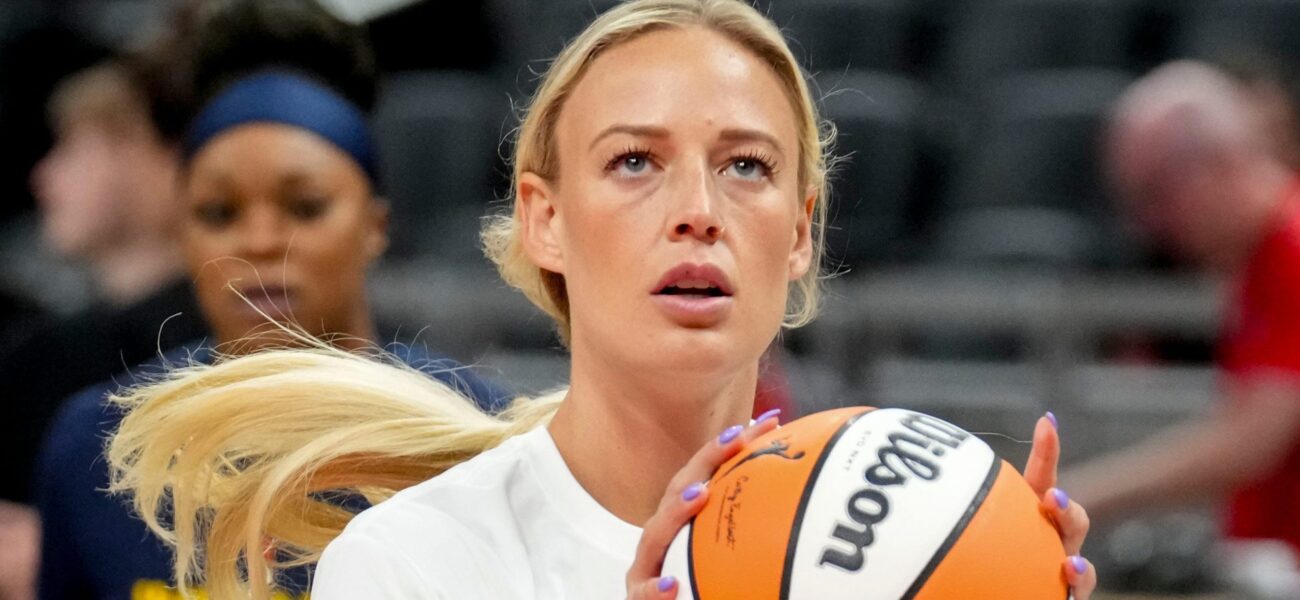
Because these days, a rising tide of public dissatisfaction with conventional leadership seems to elevate figures from the entertainment and sports worlds right onto the political landscape. And perhaps nowhere is this blurring of lines more evident than in the curious case of Indiana Fever guard Sophie Cunningham.
It’s not enough that Cunningham, long a gritty presence in the WNBA, has transformed into a bona fide cultural phenomenon since aligning with phenom Caitlin Clark. We’re talking podcast host, broadcast analyst for USA Network—the woman’s even debuted as a UFC ring girl, for goodness’ sake. Her journey isn’t just about athletic prowess; it’s a meticulously (or perhaps accidentally) curated brand that screams relevance across multiple demographics. And for a politician, relevance is currency, isn’t it?
This whole celebrity-to-candidate trajectory isn’t new; it’s practically a cliché. But what sets Cunningham apart, and what makes observers scratch their heads and then nod knowingly, is her sheer unapologetic self. She’s a WNBA ‘enforcer’ in every sense—on the court, she sets hard screens, mixes it up. Off it, she talks straight about league issues, even when it draws fire. Some fans, not shy about affixing labels, have tagged her ‘MAGA Barbie’ due to perceived affiliations—a tag she’s actively bristled against, mind you.
But her recent, famously viral finger-point meme—employed as a wry deflection when pressed about her views on the current administration—just turbocharged the conversation. It was a perfect piece of non-committal performance art. And then, famed culture critic and ESPN Page 2 writer Chuck Klosterman tossed a grenade into the discourse: a prediction that Cunningham will, indeed, end up on a national ticket.
“Sophie Cunningham… I’m going to say 2050, is going to be Vice President of the United States,” Klosterman declared on The Bill Simmons Podcast. He admitted to knowing zilch about her political platform or party preference. “I don’t know what it’s. It’s something about the fact that she wears those sleeves on the court, something about the way she triggers in-bound plays at the end of games, makes me think she will be someone’s ideal vice president. You know, she has a damn likable personality.” Klosterman’s analysis might sound flippant, but it speaks volumes about the intangible qualities now prized in the electoral arena. Charisma often outweighs detailed policy, a trend we’ve certainly seen in other presidential campaigns.
Look, the guy wasn’t running a formal poll here. But even a casual observation suggests that the criteria for presidential—or vice-presidential—timber have changed drastically. Gone are the days when a Senate term — and a meticulously worded stance on fiscal policy were entry requirements. Now, it seems, it’s about whether you can generate a meme, command a social media following, and project an image of authentic, if slightly combative, likability. You could be a pugilist or a pop star—or even, as in this case, a WNBA powerhouse. As one former senior advisor, who declined to be named but has seen a few election cycles, dryly put it, “Political strategists used to spend their evenings poring over demographic data; now they’re probably binging highlight reels, searching for the next charismatic ‘outsider’ who can actually spell charisma.”
📄 POLICY WIRE WHITEPAPER PUBLISHED: PAKISTAN'S NATIONAL SECURITY POLICY PRIORITIES
👉 READ BY CLICKING HEREThis dynamic isn’t contained to the American sphere, either. In places like Pakistan, where youth demographics are enormous and internet penetration is rising, figures with similar widespread media exposure can capture public imagination and discourse. The political sphere isn’t just for politicians anymore; it’s a global stage for personality. They’re watching these trends, don’t you think?
A recent 2023 analysis by Gallup indicated that trust in traditional American institutions like Congress dipped to a startling low of just 7%, a figure that practically shouts for non-traditional figures to step into the void. And step in, they do.
What This Means
If Klosterman’s audacious claim bears even a speck of truth, it paints a stark picture of where our democratic process is headed. The immediate political implication is a continued acceleration of personality-driven campaigns, where genuine policy debate often gets sidelined by performative antics and viral moments. Economically, we’re talking about a further monetized political landscape. The infrastructure to support such candidates—influencer marketing firms, brand strategists, celebrity PR agencies—will see even greater demand. It’s less about the old-school stump speeches — and more about maximizing social engagement. The campaign trail becomes another content creation platform. For traditional politicians, this is an existential threat; they’ll need to learn how to operate in a gladiatorial arena they didn’t design, where authentic self-presentation (or the convincing illusion of it) can sway more votes than a 50-page white paper on tax reform. Global events often get filtered through similar lenses now, reducing complex geopolitics to digestible, personality-driven narratives.
So, does Sophie Cunningham actually want to be Veep? We’ve no idea, — and frankly, neither does Klosterman. But the fact that the conversation is even happening, with a straight face in some circles, tells you everything you need to know about the current state of American politics: it’s less West Wing, more wild west. And the biggest star on the court might just be prepping for a run at the highest office.