


The Unsung Architects: Belen’s Coach Pena, Community Grit, and the Policy Chasm of Local Mentorship
POLICY WIRE — Washington, D.C. — They aren’t on cable news. You won’t find them pontificating on Sunday morning shows, nor are they jet-setting to Davos. But these quiet individuals,...

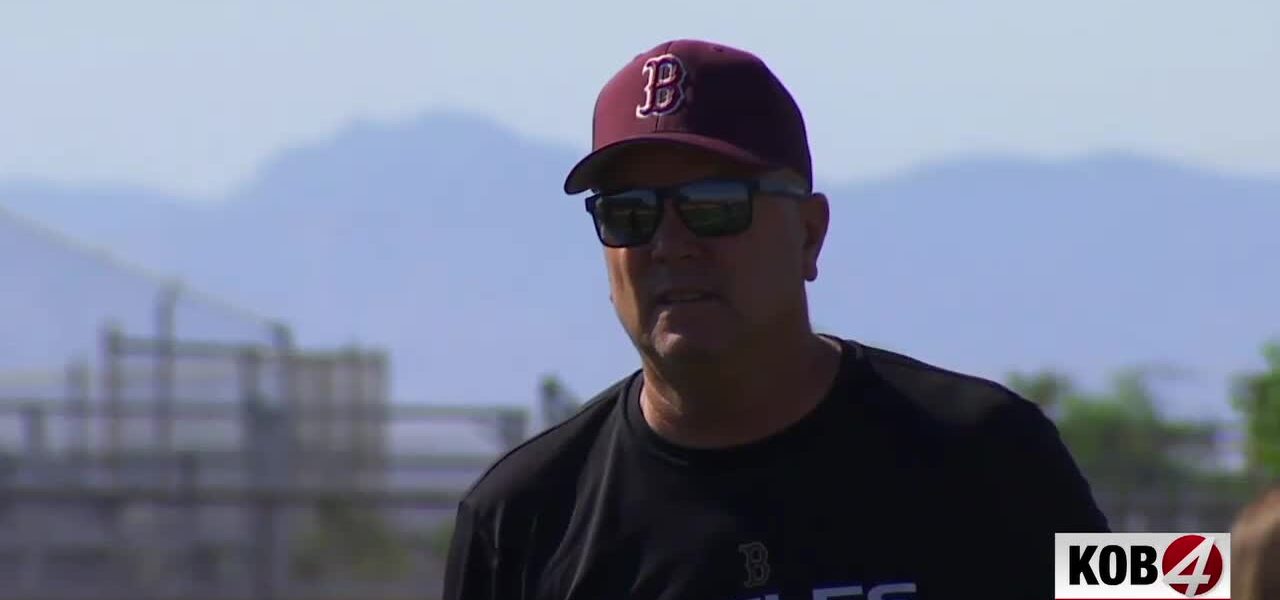
POLICY WIRE — Washington, D.C. — They aren’t on cable news. You won’t find them pontificating on Sunday morning shows, nor are they jet-setting to Davos. But these quiet individuals, embedded deep in the fabric of America’s forgotten towns, well, they’re often the only thing holding entire communities together. Folks like Kevin Pena, the veteran coach at Belen High School in dusty New Mexico, embody this unnoticed, utterly foundational leadership. He’s spent three decades in the trenches—and we’re not talking about gridiron strategy alone.
It’s a simple, stark truth that America often celebrates the loudest voices while the real heavy lifting—the patient, everyday shaping of future generations—happens under the radar. Coach Pena’s almost mythical 30 year career of coaching isn’t just about X’s — and O’s. We hear it again and again: he’s cultivating discipline, sowing respect, and most significantly, providing mentorhsip for students on and off the field. That’s the part that resonates far beyond the end-zone, don’t it? [QUOTE_PLACEHOLDER]
Because let’s be blunt: when a society fails to provide these basic conduits for growth—these human guardrails—the social decay isn’t just unfortunate; it’s an expensive, corrosive reality. You see, the modern policy apparatus, it’s obsessed with metrics, with grand programs — and measurable deliverables. Yet, the deep, intangible impact of a steady presence, a guiding hand in a young person’s life, that’s usually dismissed as anecdote. It’s often too inconvenient to quantify for congressional budgets or departmental mandates. And frankly, it’s not flashy enough to make headlines—until the system breaks down. Pena’s enduring impact, conversely, offers a raw blueprint for something less easily codified: human capital development at its purest. It’s truly a quiet, enduring work.
Consider the staggering costs of inaction. A young person adrift, without a solid mentor, might just tumble into cycles of crime, underemployment, or academic failure. And those trajectories, they aren’t merely personal tragedies. They’re drains on public coffers, demands on social services, and ultimately, an unquantifiable loss of potential for the entire nation. It’s a sobering thought. Just look at the data: studies suggest that youth with mentors are 55% more likely to enroll in college than those who don’t, according to research compiled by MENTOR National. That isn’t just a number; it’s a colossal societal ripple.
But the ‘Pay it 4ward: More than a coach’ narrative, while heartwarming, also points to a gaping hole in our policy infrastructure. Why is such essential work often left to the benevolence and extraordinary endurance of individuals like Pena, rather than being actively fostered and funded as a fundamental policy blueprint for raw talent? This isn’t just a feel-good story; it’s a silent indictment of a system that often overlooks the grassroots efforts that genuinely build strong citizens and cohesive communities. That’s why we should be paying attention.
In many parts of the world, particularly across South Asia or the Muslim world, the role of a local mentor—be it an elder, a teacher (ustad), or a community leader (pir)—carries profound weight, a weight that transcends mere vocational training. These figures aren’t just imparting skills; they’re upholding cultural norms, reinforcing ethical frameworks, and guiding spiritual paths. The expectation for a figure of authority to encompass holistic development—mind, body, spirit—it’s far more ingrained there. A coach in a Belen high school, in his own sphere, actually performs a remarkably similar, deeply communal function. It’s almost universal, isn’t it?
📄 POLICY WIRE WHITEPAPER PUBLISHED: PAKISTAN'S NATIONAL SECURITY POLICY PRIORITIES
👉 READ BY CLICKING HEREAnd when those traditional roles erode, either due to urbanization, geopolitical upheaval, or simple neglect, the social vacuum is quickly filled with more chaotic influences. The policy implications—they’re not exclusive to New Mexico. Consider, for instance, how critical these local anchors become in regions struggling with stability. The absence of such figures, of such quiet civic architects, has far more sweeping geopolitical consequences than many Washington strategists often appreciate. It’s not about the visible power structures; it’s about the invisible sinews. Geopolitical tensions, at their core, often manifest where these local bonds fray.
What This Means
This isn’t some sappy feature on a small-town hero, even if Pena is one. It’s a signal. The reliance on figures like Coach Pena, particularly for fundamental developmental elements like discipline, respect, and mentorhsip, highlights a critical blind spot in contemporary policy-making. We’re consistently failing to adequately invest in the soft infrastructure of society – the human networks and relationships that fundamentally shape productive citizens and stable communities.
Politically, the implication is clear: communities with strong, homegrown mentorship programs and deeply invested local leaders often experience lower crime rates, improved educational outcomes, and greater civic engagement. Yet, federal and state programs frequently prioritize top-down solutions, rather than empowering and scaling what already works at the neighborhood level. The economic costs of this oversight are substantial, both in terms of squandered human potential and increased social spending to address the fallout of underdeveloped youth. It’s really quite plain to see: if you don’t invest upstream in prevention, you’re stuck with a much messier, more expensive problem downstream. Coach Pena’s daily, three-decade grind, in that sense, is both a quiet triumph and a sharp, implicit criticism of what often passes for ‘solutions’ from faraway capitals.