


One Hundred Miles of No Privacy: Your Phone, Their Rules
POLICY WIRE — Washington, D.C. — Imagine buying a ticket to a baseball game in Boston, visiting the beach in Miami, or even just driving through a suburban street outside Houston. Seems pretty...

POLICY WIRE — Washington, D.C. — Imagine buying a ticket to a baseball game in Boston, visiting the beach in Miami, or even just driving through a suburban street outside Houston. Seems pretty ordinary, right? No, not exactly. Because for nearly two-thirds of all Americans—a staggering 200 million people by some counts—these everyday acts can place your most intimate digital secrets right under the nose of a federal agent, no warrant required.
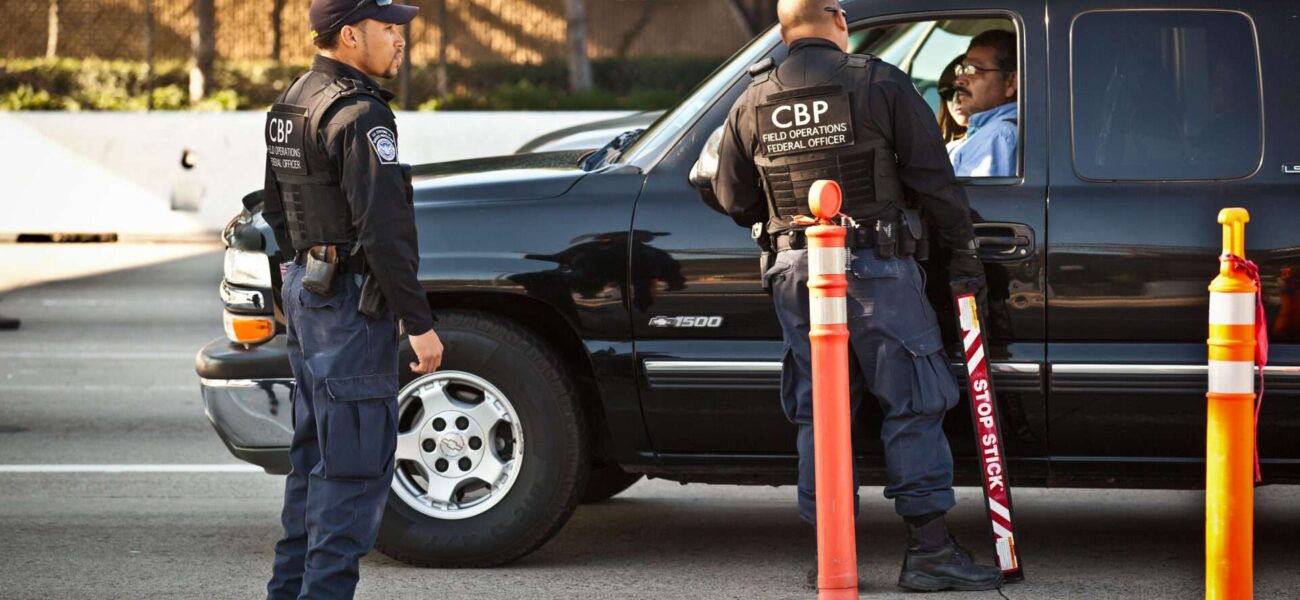
It’s a peculiar twist of American liberty, this vast stretch of territory, dubbed the ‘100-mile border zone,’ where the ordinary rules of engagement often simply don’t apply. And what gets caught in this constitutional gray area isn’t just contraband or undocumented souls; it’s the entirety of your digital life—your texts, your photos, your emails, your browsing history. Anything that lives on your phone is fair game, its presumed privacy dissolving like a cheap suit in a rainstorm. [QUOTE_PLACEHOLDER]
For most folks, the very notion of a ‘border’ conjures up images of a fence in El Paso or an entry point at JFK Airport. But federal law, specifically the power granted to Customs and Border Protection (CBP) and Immigration and Customs Enforcement (ICE) agents, redraws that map quite drastically. It means that within an arbitrary (and rather generous) 100 miles of any US land or coastal border, your rights get, shall we say, a little… flimsy. This expansive allowance isn’t new; it’s a century-old legislative relic, initially conceived to help catch smugglers and bootleggers.
But today, its application is anything but old-fashioned. Agents possess what many consider extraordinary authority to demand access to phones and other electronic devices without needing probable cause or even reasonable suspicion. It’s just a ‘border search exception’ to the Fourth Amendment, a rather elastic interpretation that’s been consistently challenged but largely upheld by courts. So, that cat video, that confidential work email, that picture of your grandad napping—all potentially browsed by someone whose badge grants them extraordinary permissions.
The numbers speak to the sheer scale of these operations. While precise statistics vary, a recent report from the American Civil Liberties Union (ACLU) indicates that between 2017 and 2020 alone, CBP conducted over 147,000 electronic device searches, an astounding leap from previous years. These aren’t just limited to suspected criminals; they target everyone. Ordinary citizens, foreign visitors, even folks just flying through an airport on a domestic layover if they happen to land within this phantom zone.
And let’s be real, the implications resonate far beyond American shores. Consider, for instance, a technologist or academic traveling from Islamabad or Karachi, where digital privacy is often a precarious subject to begin with. Their expectation of security in transit, already shaped by experiences in a region with its own complex surveillance realities, clashes head-on with this American legal anomaly. A researcher carrying sensitive data, a journalist with sources on their device, a businessman with proprietary information—they all become potentially exposed to a level of scrutiny that could, frankly, chill. It’s a perception that the US, often seen as a champion of free speech and digital rights, is itself enacting policies that erode personal liberty, albeit in a specific, geographically defined way.
📄 POLICY WIRE WHITEPAPER PUBLISHED: PAKISTAN'S NATIONAL SECURITY POLICY PRIORITIES
👉 READ BY CLICKING HEREThese powers, sometimes known as border search exception to warrant requirements, extend across state lines, federal highways, and local jurisdictions—a veritable internal customs zone, whether you knew you were in it or not. The concept itself is simple enough: at the border, all bets are off. But because the US has decided that ‘at the border’ can mean ‘hundreds of miles inland,’ it transforms routine travel into a low-stakes game of constitutional roulette. And winning, in this context, often means merely retaining the privacy you assumed you had.
But the lack of clear, consistent judicial pushback against this broad interpretation leaves little recourse for individuals. They’re left with a choice: unlock your phone or face potential confiscation, delays, — and perhaps even legal trouble. It’s not an even exchange.
What This Means
This 100-mile rule isn’t just some dusty legal footnote; it’s a living, breathing policy with tangible, uncomfortable ramifications for modern American society and its international standing. Politically, it showcases a significant tension between national security apparatuses — and fundamental civil liberties. It’s a reminder of how readily long-standing constitutional protections can be constrained under the guise of security, especially when legislative oversight lags behind technological evolution. Lawmakers seem reticent to tackle this head-on, probably because no one wants to be perceived as ‘soft’ on border security, even when addressing digital privacy. That political calculus often outweighs individual rights, leaving us in a rather exposed position.
Economically, while less direct, there are still ripples. For a nation that champions innovation and data privacy in other contexts, the permissive nature of these searches can erode trust. International travelers—business people, tourists, and academics alike—might think twice about the data they carry on their devices, creating a subtle disincentive for those whose work or travel involves sensitive information. It complicates the digital trust ecosystem, particularly when American tech giants are already battling perceptions of data vulnerability globally. Because ultimately, when agents can demand your digital keys at the drop of a hat, it isn’t just personal data on the line—it’s the nation’s broader commitment to privacy in a digital age, and that’s a much bigger headache than a delayed flight.