

Hungary’s Parliament Moves to Unseat Orbán’s President, Recasting Post-Authoritarian State
POLICY WIRE — BUDAPEST, Hungary — While former Prime Minister Viktor Orbán found himself halfway across the world, immersed in the roar of a football crowd for the World Cup, the political edifice he...

POLICY WIRE — BUDAPEST, Hungary — While former Prime Minister Viktor Orbán found himself halfway across the world, immersed in the roar of a football crowd for the World Cup, the political edifice he spent 16 years erecting back home began to crumble. One could almost feel the tectonic plates of Hungarian politics shifting under the very feet of President Tamás Sulyok, even as the stadium lights dimmed thousands of miles away. It’s a rather pointed irony, wouldn’t you say? That while one chapter formally closed in Budapest, its chief author was otherwise engaged with a completely different kind of global spectacle.
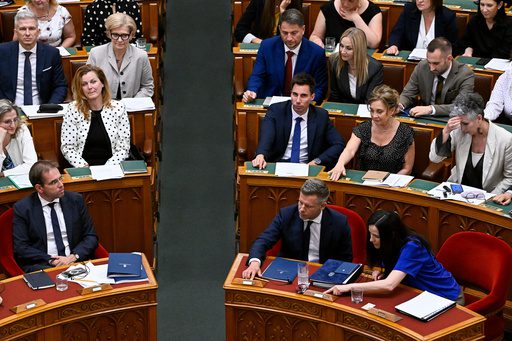
Hungary’s Parliament, now firmly controlled by Prime Minister Péter Magyar and his pro-European, center-right Tisza party, voted Monday to pass a constitutional amendment aimed at unseating Sulyok and systematically unraveling the apparatus of Orbán’s long tenure. They’ve got the numbers, no doubt—a solid two-thirds majority following an April landslide victory. This mandate, it seems, isn’t just for governing; it’s for rebooting a political system many deemed dangerously centralized.
And what a reboot it aims to be. The amendment itself, quaintly described as having the stated purpose of “restoring rule-of-law democracy,” sailed through with an almost unanimous backing: 139 votes for and six against in the 199-member Parliament. That’s a decisive margin, indicative of the current power dynamics. Tisza lawmakers, fresh off their victory, delivered a standing ovation after the vote. Orbán’s Fidesz party? They boycotted the session entirely. One imagines their protest was meant to signify disdain, but to many observers, it simply read as sulking.
President Sulyok now faces a ticking clock, with just five days to sign this particular piece of legislation into existence. He hasn’t tipped his hand, mind you, about whether he’ll comply. But don’t misunderstand the current government’s resolve. Tisza has already vowed an impeachment procedure if he doesn’t, making it clear this isn’t a suggestion; it’s a direct instruction. Magyar’s campaign promises weren’t subtle: he told voters repeatedly he’d remove Sulyok, contending the president failed to live up to his role by neglecting to stand in the way of antidemocratic steps by Orbán’s government. That big win at the polls? It’s been interpreted as a clear mandate from voters to fulfill that promise, full stop. Sulyok, for his part, has resisted calls to resign, which complicates matters, though perhaps not for long.
Following the vote, a rather triumphant Magyar declared that with the passage, his government had “started the transformation of the Orbán legal system.” It’s a pretty bold claim, right? He punctuated it by stating, “With this vote today, we have closed an era,” before adding, “We asked for and received a completely clear mandate from the Hungarian people to do this.” Quite direct. The amendment does more than just oust Sulyok, enabling Parliament to elect a fresh face for the presidency. It’s also stuffed with other reforms, like adjustments to the judicial system, establishing an office to investigate financial abuses from the Orbán years, and even a 12-year term limit on lawmakers. This latter point apparently stung Fidesz caucus leader Gergely Gulyás, who reportedly resigned his post, knowing the term limit would block him from future parliamentary seats.
📄 POLICY WIRE WHITEPAPER PUBLISHED: PAKISTAN'S NATIONAL SECURITY POLICY PRIORITIES
👉 READ BY CLICKING HEREOf course, Fidesz sees it differently. They called the amendment an “unprecedented” assault on Hungary’s democratic order. Last week, a protest they staged drew about 3,000 people—a decent number, but one that Orbán conspicuously skipped. Orbán, however, still took to Facebook, posting a photograph of Magyar with the subtly provocative caption, “Democratic Hungary: 1990-2026.” A declaration of future return? Or just a wishful fantasy from a former strongman who couldn’t be bothered to show up when his legacy began to unravel?
While the president’s role in Hungary is largely ceremonial, it’s not without teeth. The head of state signs legislation — and can even send bills to the Constitutional Court for review. That last bit caused some jitters among the new government’s supporters, fearing Sulyok, being an Orbán appointee, could pull the rug out from under them. Since taking office in May, Magyar’s team has already begun its demolition work. They’ve removed countless political appointees and institution heads—folks they see as having aided Orbán’s autocratic setup. The news service of Hungary’s public television and radio, which Magyar once dubbed a “propaganda factory” for Fidesz, has been suspended. They’ve even shuttered the Sovereignty Protection Office, an entity Orbán’s critics saw as a bludgeon for intimidating dissenters and stifling independent media.
What This Means
This isn’t merely a leadership change; it’s a genuine reckoning in Hungary, a hard swerve from an illiberal democracy back towards a more conventional European model. The rapid, aggressive approach of the Tisza party indicates a deep conviction—or perhaps a political urgency—that the Orbán system had to be systematically purged rather than gently reformed. Magyar’s government, having secured a powerful popular mandate, is demonstrating that winning an election isn’t enough; it’s about translating that win into decisive, structural shifts. Politically, this represents a stark contrast to many nations where such entrenched power structures often linger, even after electoral defeats. Consider countries across South Asia, for instance, where popular leaders with strong mandates frequently face immense institutional resistance or deep-seated bureaucracies when attempting sweeping reforms. Pakistan’s history, in particular, offers numerous cautionary tales of populist leaders grappling with what are sometimes seen as ‘deep state’ elements, finding true systemic change agonizingly slow and often incomplete. It speaks to a common democratic friction: how quickly and fundamentally can a new government dismantle the legacy of its predecessor without being accused of its own form of overreach? Magyar is walking a fine line. Economically, unraveling Orbán’s state-centric policies and curbing financial abuses could unlock greater foreign investment and bolster ties with the European Union, which had grown wary of Budapest’s trajectory. But the inevitable political turbulence could also deter some investors in the short term. Fidesz’s cries of “tyranny” from a candlelight vigil outside Parliament underscore that this is no polite transition; it’s a battle for Hungary’s soul. But when you start with Orbán calling your actions democratic in a Facebook post while he watches a soccer game (for example, see Dallas’s World Cup bid), one can’t help but wonder if some level of detachment, or perhaps denial, is already firmly entrenched on the opposing side. What unfolds next won’t just define Hungary, but potentially offer a blueprint—or a warning—for other nations trying to pivot from similar strongman regimes.