

World Cup Showdown: France-Spain Rematch Brews Global Stakes in Dallas
POLICY WIRE — Dallas, USA — It isn’s just a game, you know? Not when France rolls up to face Spain in a World Cup semi-final. What we’re really talking about here is another chapter in a sporting...

POLICY WIRE — Dallas, USA — It isn’s just a game, you know? Not when France rolls up to face Spain in a World Cup semi-final. What we’re really talking about here is another chapter in a sporting rivalry that sometimes feels less about football and more about, well, everything else. You’ve got history, national bragging rights—and more than a little bit of managerial mind games—all set to explode on a field far removed from the Iberian Peninsula or the Hexagon, smack dab in Dallas of all places.
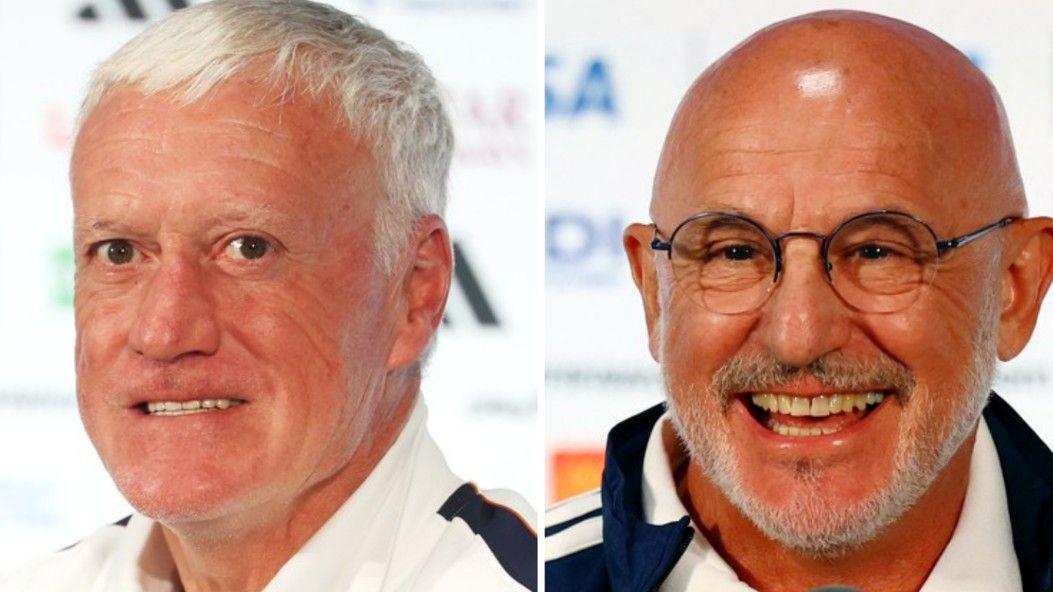
Didier Deschamps, France’s boss and soon-to-be a man of leisure (after 14 years on the touchline, a lengthy tenure many politicians in volatile regions might envy), has already tried to set the temperature. And he’s certainly no stranger to high pressure. Remember Qatar in 2022? Yep. But this isn’t just another match, it’s a legacy moment. It’s Deschamps making bold pronouncements, calling it [QUOTE_PLACEHOLDER] in Dallas on Tuesday. Now, a veteran observer might note that such predictions often serve as much to psych up one’s own side as they do to genuinely assess the coming conflict. Maybe more.
It’s no secret Spain’s had France’s number lately, trouncing them in the Euro 2024 semi-finals, then again in a ridiculous nine-goal barn-burner during the Nations League last year. But Deschamps, he’s got this line, a well-worn piece of coach-speak, right? [QUOTE_PLACEHOLDER]. See, that’s how he plays it. You forget yesterday; you focus on the grind right now.
Because that’s what it boils down to: this specific game. This France team, two-time world champs already, is aiming for its third straight World Cup final. That’s a feat managed only by West Germany back in the 80s (1982, 1986, 1990) and Brazil at the turn of the millennium (1994, 1998, 2002). Think about that lineage. It’s almost impossible. But Les Bleus have come close—so very close—before, like when they were beaten on penalties by Argentina in the 2022 final. The margins, they’re microscopic at this level.
And then there’s Kylian Mbappé. The man is a phenomenon. France has punched in 16 goals in six tournament games, — and Mbappé? He’s bagged eight himself — and set up three more, according to tournament statistics. He’s neck-and-neck with Messi for the Golden Boot, and this semi-final is his chance to pull ahead. His duel with Spain’s watertight defense (they’ve given up just one goal in six games—a defensive masterclass) makes this contest especially tasty.
Spain’s gaffer, Luis de la Fuente, he isn’t playing the favourite game. Deschamps tried to tag Spain with that, saying [QUOTE_PLACEHOLDER]. But de la Fuente shut that down fast. [QUOTE_PLACEHOLDER], he mused. [QUOTE_PLACEHOLDER]. You gotta appreciate the stoicism, don’t you? It’s just a game, after all, — and everyone feels the pressure. But let’s be real, a lot of folks in Karachi or Dhaka, glued to their screens, they’ll feel the pressure too. This isn’t just for Europe; this stuff plays worldwide. Global fandom, after all, can make or break the ratings, especially among populations for whom such global tournaments become a temporary national obsession, a chance to align with distant powers.
And let’s not forget the wisdom from the ancients. De la Fuente even dropped a Julius Caesar quote on Monday: [QUOTE_PLACEHOLDER]. He’s got that passion, that grit. [QUOTE_PLACEHOLDER]. He just wants his lads to go out there, embrace the moment. [QUOTE_PLACEHOLDER], he says. It’s a mentality. It’s almost Zen-like, considering the stakes.
📄 POLICY WIRE WHITEPAPER PUBLISHED: PAKISTAN'S NATIONAL SECURITY POLICY PRIORITIES
👉 READ BY CLICKING HERESpain, they’ll have to grapple with Mbappé, Ousmane Dembélé, — and Michael Olise. De la Fuente gets it. [QUOTE_PLACEHOLDER], he acknowledged. [QUOTE_PLACEHOLDER]. That’s the mantra. It always is.
What This Means
This semi-final is way more than just ninety minutes of football—or perhaps 120, and then penalties. Politically, big international sporting events like the World Cup have always offered a proxy battlefield, especially when European titans clash. Success can offer a short-term bump in national mood, a momentary diversion from domestic headaches like inflation or geopolitical maneuvering. A French win would continue their athletic dominance, feeding into a broader narrative of French influence, perhaps subtly aiding Macron’s standing back home (even if he denies any direct link). For Spain, a victory offers similar, albeit more muted, affirmation on the global stage.
Economically, you’re looking at massive viewership numbers and sponsorship money, driving engagement far beyond the typical sports markets. Millions in South Asia and the Muslim world, where football—especially the World Cup—commands immense devotion, will tune in. Imagine Pakistan, for instance, a nation obsessed with cricket, momentarily shifting its collective gaze. Such events generate soft power and significant revenue for FIFA, but also for broadcasters, advertisers, and the host city (Dallas, in this case). The economic ripple effects from merchandise sales, travel, and media rights are considerable, making even a semi-final a substantial economic engine.
It’s, for better or worse, an emotional pressure valve for global populations, transcending local politics to focus on a shared spectacle. The sheer amount of interest from places like Bangladesh, with its burgeoning middle class, represents an important, often overlooked market for global sports—a reality that international sporting bodies ignore at their peril. You can read more about how other regions handle immense pressures, from natural disasters to socio-political quagmires, by clicking on related topics like Deltaic Distress: Bangladesh’s Annual Ritual of Ruin, Unseen by Global Eyes or explore Gaza’s Echoes: Familiar Casualties Amidst Unceasing Volley for broader political contexts shaping diverse parts of the world. But for a few hours on Tuesday, all that gets sidelined for 22 men — and a ball, where the drama is its own reward.