Trump’s Volcanic Rhetoric: Promises to Flatten Fictional Peaks in Iran Spark Alarm
POLICY WIRE — Washington D.C., USA — It’s always something with Donald J. Trump, isn’t it? One might expect a former president, or an aspiring one, to weigh in on interest...

POLICY WIRE — Washington D.C., USA —
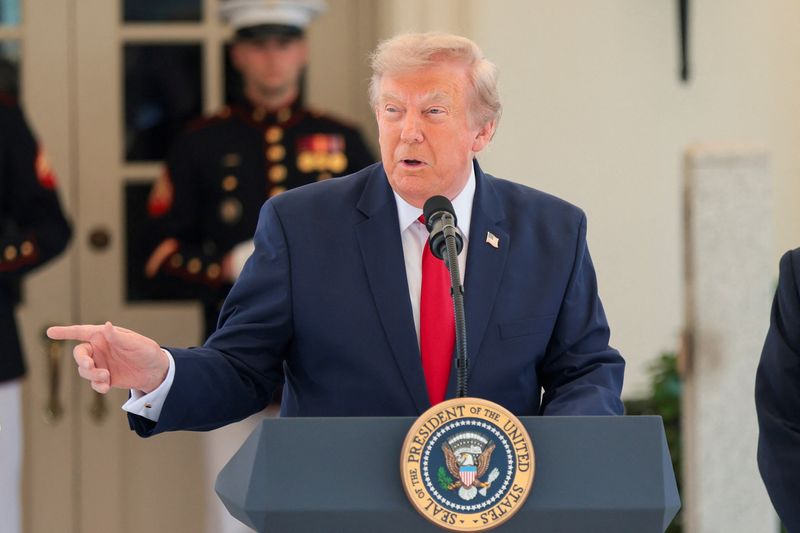
It’s always something with Donald J. Trump, isn’t it? One might expect a former president, or an aspiring one, to weigh in on interest rates, perhaps; or maybe supply chain woes. Instead, the political oxygen today is consumed by a statement so utterly bizarre, so divorced from geographical reality, that it’s difficult to parse whether it’s calculated provocation or a genuine misunderstanding. The former President made a declarative statement this week, announcing that “the US will take out Pickaxe Mountain in Iran.” And just like that, geopolitical strategists — not to mention cartographers — worldwide collectively paused, scratching their heads, checking their atlases. [QUOTE_PLACEHOLDER]
There’s no mountain, known to any geological survey or even local legend, by the name Pickaxe Mountain in Iran. The immediate ripple wasn’t panic, but a slow-motion eye-roll, a shared sigh across the diplomatic wires. The remark, made in a campaign-style address, serves as yet another testament to Trump’s unconventional approach to foreign policy rhetoric. It leaves officials — those who actually, you know, do diplomacy — in an unenviable position of interpreting an assertion that literally targets an imaginary feature.
But make no mistake; even phantom threats carry real weight, especially when emanating from a figure like Trump. The Middle East, as it stands, is a tinderbox, its delicate regional power balance constantly under threat. A casual, almost offhand, declaration of military action, regardless of its fantastical target, reverberates across Tehran, Riyadh, Ankara, and Islamabad. Leaders in Pakistan, for instance, a nation grappling with its own internal political complexities and a sensitive border with Iran, don’t dismiss such pronouncements as mere hyperbole. They’re often seen as indicators, however absurd, of potential shifts in U.S. foreign policy— shifts that could have immediate, destabilizing effects on the entire South Asian and wider Muslim world region.
Because America’s posture towards Iran directly impacts regional stability. When a leading American political figure speaks, people listen, even if the content resembles something out of a fantasy novel. This isn’t abstract for countries like Pakistan, whose economy and national security are inextricably linked to the geopolitical tremors next door. Islamabad, which already navigates a tightrope between its historic ties with Washington and its deepening strategic partnership with Beijing, cannot afford miscalculation on its Western flank. The mere *idea* of a new conflict or increased tension with Iran — even one over a mountain that exists only in name — could spark economic volatility, refugee flows, or even rekindle dormant militant activities along their porous borders. Consider this: according to the U.S. Energy Information Administration, Iran was the world’s fourth-largest crude oil producer in 2022, holding about a quarter of the Middle East’s total proved crude oil reserves. Any real action against it — let alone the theatrical ‘taking out’ of an imaginary mountain — would send global oil markets into a spiral, and nations like Pakistan would feel the immediate pinch in fuel costs and trade.
And let’s not forget the electoral context. Such bold, often belligerent, statements are part of the former President’s well-established political playbook. It plays to a specific segment of his base, individuals who respond to aggressive, decisive language, regardless of its factual basis. For them, the ‘Pickaxe Mountain’ comment likely wasn’t about geology, but about demonstrating resolve against a perceived adversary. But for others, it’s a further erosion of the serious, sober diplomacy that once defined — or at least aspired to define — presidential discourse. It becomes difficult to predict rational foreign policy responses when the initial premise itself defies logic. It’s a bit like watching a wrestling match where one contestant starts describing imaginary assailants. Interesting, perhaps, but not exactly policy. This constant stream of the extraordinary means foreign ministries across the globe are constantly parsing signals, both real and imagined. They’ve got to.
But does this theatrical flourish genuinely reflect a deeper policy intention? Or is it simply part of the unique Ballot Box Battle that Trump continues to wage, a narrative created for domestic consumption, with international ramifications an unfortunate byproduct? His administration certainly had moments of real confrontation with Tehran. The killing of Qasem Soleimani, for instance, was far from imaginary. So, we’re left with a question mark — one that often feels more like a rhetorical shrug.
What This Means
This episode, bizarre as it seems, isn’t just a quirky anecdote for the foreign policy textbooks. It’s a flashing red light. Economically, this type of rhetoric introduces an additional layer of uncertainty into already volatile global markets, particularly energy. The mere whiff of increased U.S.-Iran tension, regardless of its foundation, can push oil prices higher and create headwinds for developing economies in Asia that are net importers of crude. Politically, it complicates the efforts of nations like Pakistan, caught between regional rivalries and needing stable U.S. relations. Such public grandstanding offers easy fodder for Iranian hardliners to paint the U.S. as irrational — and hostile, reinforcing narratives of external threat. And within the U.S., it continues to normalize a form of discourse where factual accuracy takes a back seat to raw rhetorical impact. It’s a strategy that can, ironically, make actual, coherent policy incredibly difficult to implement, both for American allies and adversaries. This sort of verbal brinkmanship doesn’t diffuse regional tensions; it usually cranks them up. Foreign leaders, for their part, have become accustomed to parsing such statements, trying to find the underlying intent, if any, often with limited success.