

DIY Justice: Albuquerque Couple’s Viral Plea Exposes Urban Insecurity
POLICY WIRE — Albuquerque, United States — Sometimes, the old guard just isn’t quite as nimble as the collective will of the digital age. What starts as a simple property crime in a quiet...

POLICY WIRE — Albuquerque, United States — Sometimes, the old guard just isn’t quite as nimble as the collective will of the digital age. What starts as a simple property crime in a quiet corner of New Mexico can quickly morph into a national conversation on public safety, civic disillusionment, and the increasingly crucial, if imperfect, role of social media in today’s haphazard justice landscape. It’s a snapshot of a bigger issue, you know, this eroding faith in institutional response.
Meet Adeline Harris and Jordy Medrano, a couple in northeast Albuquerque who, for a few bewildering nights last week, found themselves trapped in a particularly vexing Groundhog Day scenario. It began innocuously enough. A ruckus outside after dark; a peek out the window revealing two figures, a man and a woman, meticulously — or rather, wantonly — assaulting their vehicle. [QUOTE_PLACEHOLDER] Medrano recalled later. You can just picture it: shards of glass shimmering under the streetlights, a freshly minted wound on something you depend on daily.
And here’s where it gets interesting, reflecting a very human initial reaction. The couple, observing the woman’s apparent fury, didn’t immediately jump to retribution. In fact, they empathized, even speculated. [QUOTE_PLACEHOLDER] Medrano revealed. That’s a gut check, isn’t it? A momentary lapse into charity before the harsh reality bites. But empathy doesn’t fix a busted back windshield. And it sure as heck didn’t stop what came next.
But when they tried to go the official route, things stalled. The cops, according to Medrano, were pragmatic. [QUOTE_PLACEHOLDER] Think about that for a second. An immediate incident, property actively being destroyed, — and the advice is: fill out a form on the internet. It doesn’t exactly scream swift response, does it? It’s a telling symptom of stretched resources — and shifting priorities, I reckon.
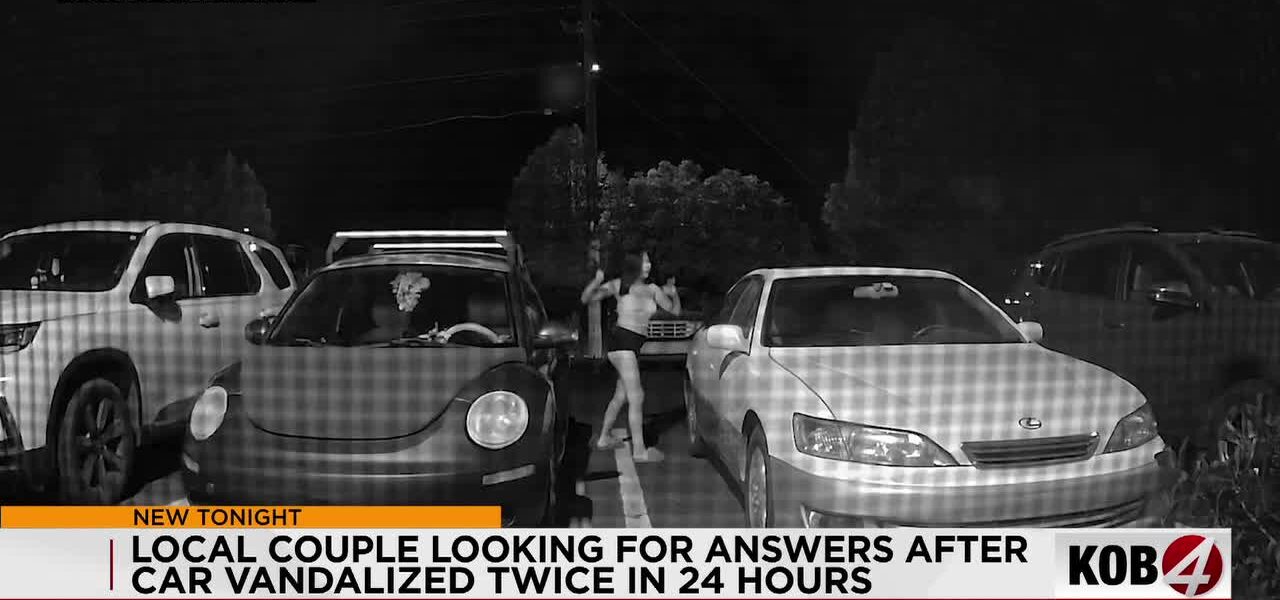
Feeling adrift, the couple—they’re smart folks, clearly—got inventive. They slapped a poster on the damaged glass, a kind of defiant public service announcement declaring that the vandals had picked on the wrong people. More importantly, Harris went out — and spent $40 on a camera, a move that would prove utterly crucial. They essentially established their own neighbourhood watch, a single-family task force of surveillance.
Because, yes, the vandals came back. The very next night, same time, same targets. That $40 investment? It paid off immediately. The camera caught the whole miserable replay. It caught the faces. So, the couple, armed with irrefutable digital evidence and facing the same frustrating bureaucratic inertia, made a decision. They went public. They posted the second attack’s video on social media, launching it into the digital ether. And then, well, the internet did what it does best: it exploded. The clip garnered more than 100-thousand views in short order, turning a private misfortune into a public spectacle.
This widespread dissemination seemed to be the catalyst official channels needed. Once their story became a viral phenomenon, the Albuquerque Police Department actually showed up. Officers came out and collected more evidence, responding to the incident now infused with the high-octane fuel of public outrage and viral engagement. It’s a bittersweet win, though, a testament to how often citizens must become their own digital detectives and public relations managers just to nudge the gears of justice. The FBI’s Uniform Crime Reporting Program data, for instance, indicated that property crimes collectively saw a 7.5% decrease nationally in 2022 compared to the previous year, yet individual incidents like this still leave communities feeling acutely vulnerable and ignored without a wider outcry.
📄 POLICY WIRE WHITEPAPER PUBLISHED: PAKISTAN'S NATIONAL SECURITY POLICY PRIORITIES
👉 READ BY CLICKING HEREWhat This Means
This Albuquerque episode, while seemingly local, reverberates with global implications for public trust — and governance. It isn’t just about a smashed car; it’s about the erosion of faith in conventional security frameworks when perceived threats aren’t immediately classified as [QUOTE_PLACEHOLDER] In countries like Pakistan, for example, communities in some regions have historically navigated gaps in formal policing or judicial responsiveness by leveraging communal networks or informal forms of resolution, albeit often with mixed results. The reliance on digital platforms, crowdfunding for solutions, or turning to public shaming as a last resort in a place like New Mexico points to a fascinating, if troubling, parallel: a growing inclination toward informal, self-initiated justice when institutional responses falter. It isn’t a blueprint for ordered society, but rather a reflection of where individual citizens find themselves in an increasingly complex and digitally interconnected world.
Economically, this implies an individualization of security costs. Harris had to buy a camera—an unexpected expense just to protect property she presumably pays taxes to protect. When public services retreat or are perceived to retreat, the individual taxpayer has to absorb those costs. It forces you to consider what civic responsibilities actually mean anymore, both for the citizen — and the state. Because when the initial call doesn’t prompt action, when online reporting becomes the first line of defense rather than an additional tool, citizens effectively become the first responders, investigators, and publicists. It’s an interesting model, but one with distinct drawbacks, isn’t it? As governments across various continents, from Europe, as we see with some debates around geopolitics of identity, to the streets of Lahore, grapple with shifting societal expectations and stretched resources, incidents like this serve as stark reminders that the ‘social contract’ is continually being renegotiated, often in real-time, often on social media.
Ultimately, this case presents a cautionary tale about the evolving role of the state versus the empowering (and occasionally chaotic) power of the crowd. For Policy Wire, it raises sharp questions about resource allocation, modern policing strategy, and the unintended consequences when the gap between public expectation and official response becomes too wide. It isn’t good enough, this piecemeal reliance on viral fame for basic safety, and we’re left to wonder who picks up the pieces—both literally and figuratively—when the cameras are off.