


Kiwi Diplomacy Lands India Pact Amidst Geopolitical Chessboard
POLICY WIRE — Wellington, New Zealand — In the grand theater of global diplomacy, sometimes the smallest players land the most unexpected wins. So it was this past weekend, when New Zealand—a nation...

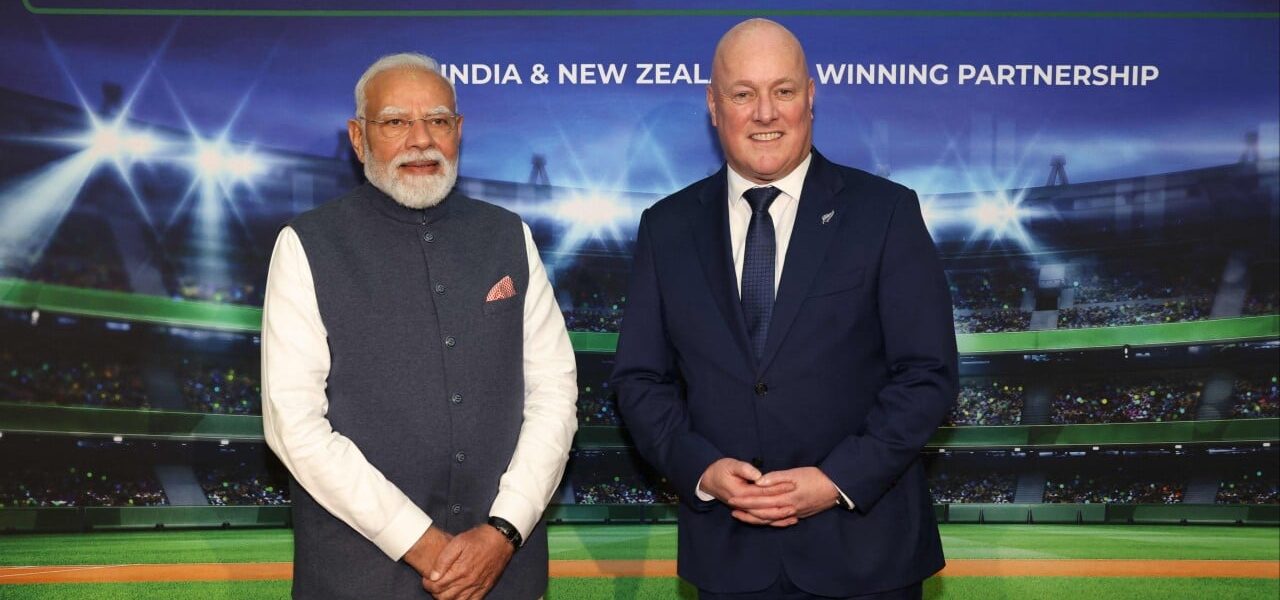
POLICY WIRE — Wellington, New Zealand — In the grand theater of global diplomacy, sometimes the smallest players land the most unexpected wins. So it was this past weekend, when New Zealand—a nation often overshadowed by its larger Tasman neighbor—played host to Indian Prime Minister Narendra Modi. And let’s be frank: it wasn’t just a friendly chat over a cuppa. Prime Minister Christopher Luxon wasn’t merely welcoming a guest; he was solidifying a calculated move on the Indo-Pacific chessboard, wrapping up Modi’s regional grand tour in a rather definitive flourish.
Modi, you see, was just sailing off a hefty regional trip—Indonesia, Australia, then this. But instead of the usual diplomatic niceties, Wellington staged a spectacle. Luxon, ever the genial host, put on quite a show. We’re talking a full-on, deeply symbolic indigenous Maori welcome and a guard of honour, which doesn’t happen for just anyone. And you know, sometimes it’s these smaller, more human touches that telegraph intent better than any joint communique. [QUOTE_PLACEHOLDER]
It’s all part of something bigger, isn’t it? New Zealand — and India aren’t exactly traditional bedfellows in the strategic sense. But they did announce on Saturday the creation of a strategic partnership encompassing defence — and security. Defence and security? For two nations separated by an entire ocean and hemispheres? But don’t scoff just yet. It speaks to a changing world, where geographic distance often means less than shared interests, particularly when those interests involve securing supply chains and, let’s be honest, balancing out the regional big players.
And then there’s the money, of course. A free-trade pact in April that he has touted as an economic boon was signed already. Because while security’s top of mind, pockets are always an immediate concern. Trade figures often tell the real story of strategic alignment, don’t they? India’s GDP is projected by the International Monetary Fund to be one of the fastest-growing among major economies in the coming years. This means opportunities for countries like New Zealand to diversify their economic partnerships beyond established, and perhaps sometimes volatile, markets.
It’s a smart play, too. You see the Pacific islands—hell, the entire Indo-Pacific region—becoming a hotbed of competing influence. From aid packages to military exercises, everyone’s scrambling for a piece, or at least some stable allies. For New Zealand, latching onto India’s accelerating trajectory offers a different sort of hedging, a counterweight that feels less aligned with historical blocs and more with practical self-interest. You can’t blame them; it’s a complicated neighborhood.
Consider the broader Asian dynamic. India, with its colossal population and burgeoning economy, serves as an indispensable anchor in South Asia, a region that’s home to more than a fifth of the world’s population, including Pakistan. For years, narratives of regional stability, or lack thereof, have orbited around India’s relations with its immediate neighbors, some fraught, some cooperative. As India flexes its economic and diplomatic muscles far beyond its immediate frontiers, as evidenced by these New Zealand overtures, it signals a deeper engagement with the broader Pacific, an arena where historically its presence was more muted. And these ripples aren’t confined to economic projections; they stretch into security frameworks, touching everything from maritime safety to intelligence sharing. That’s big picture stuff.
But how do these newer alliances sit against older ones? That’s always the question, isn’t it? For India, cultivating friendships in faraway lands without significant colonial baggage might just be the ticket to enhanced soft power. And for a country like New Zealand, usually quite cautious about stepping onto big stages, this represents a subtle yet pronounced declaration of its geopolitical intent. They’re not just an island nation anymore, quietly minding their sheep. They’re showing they want to shape the rules, or at least have a louder say in them.
One might even suggest a hint of irony in a smaller, Western-aligned nation seeking defense and security ties with a large non-aligned power, even as traditional Western alliances get re-examined under geopolitical stress. But these days, everybody’s shopping around for partners who fit the specific need, not just the pre-approved club roster. It’s less about ideological purity, more about practical resilience.
What This Means
This isn’t just about New Zealand getting a better deal on lamb exports or India expanding its Kiwi fruit intake—though those things help, undoubtedly. Politically, it cements New Zealand’s commitment to diversifying its strategic dependencies and engaging more directly with key Indo-Pacific powers outside of its usual orbit (think Australia, Five Eyes partners). It signals a readiness to participate in complex security architectures far from its shores, aligning with India’s Act East policy. Economically, the move targets massive growth potential in a diversifying world, shielding against over-reliance on a single market. For India, it’s another chip on the table for global recognition and a subtle broadening of its maritime security outreach. This partnership strengthens democratic bonds in a region increasingly marked by competing systems, without the baggage of older alliances. It tells us that future global influence isn’t just about military might, but also about the intricate web of economic and security cooperation built quietly, sometimes with the unexpected players, far from the flashbulbs.