


Pamplona’s Bloody Spectacle Defies Modern Sensibilities Amid Roaring Controversy
POLICY WIRE — Pamplona, Spain — The summer air in Navarre usually smells of damp stone and something vaguely religious, but this season, it’s thick with the metallic tang of money and the acrid smoke...

POLICY WIRE — Pamplona, Spain — The summer air in Navarre usually smells of damp stone and something vaguely religious, but this season, it’s thick with the metallic tang of money and the acrid smoke of protest. Pamplona, famed for its San Fermín festival, is gearing up for another round of bullfights, a grim spectacle that refuses to vanish despite escalating global condemnation. It’s a curious dance, really—this municipal government, defiantly stepping onto the blood-stained sand, daring anyone to suggest the show simply isn’t worth the mess anymore.
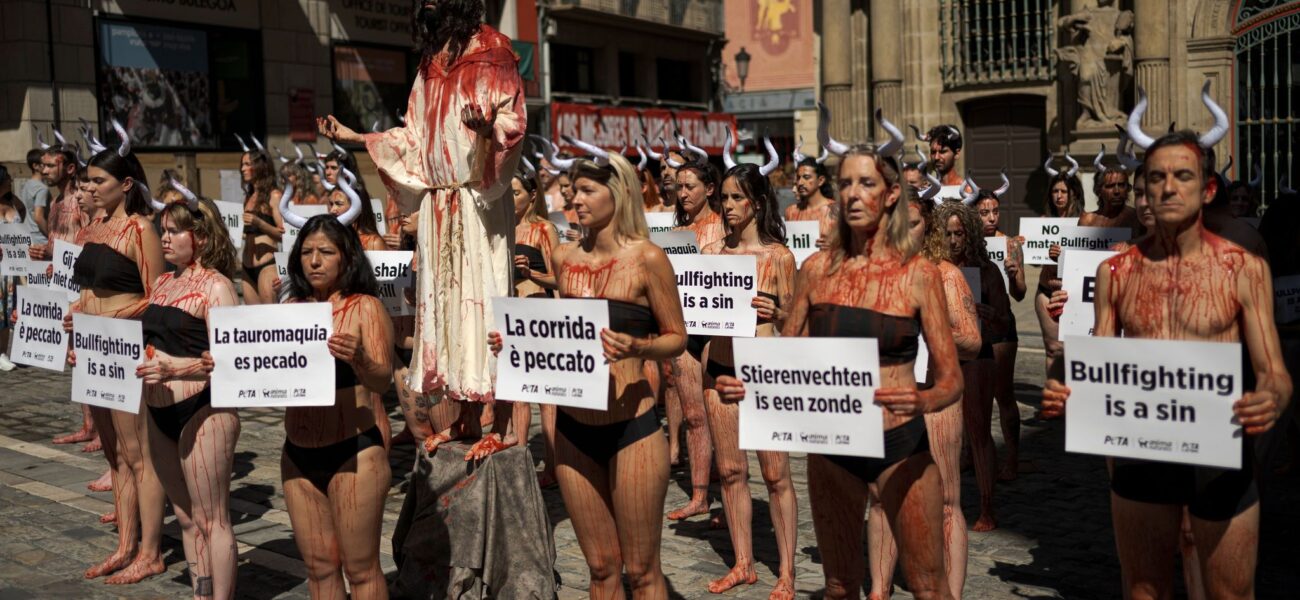
It’s not just a debate; it’s a culture war fought on cobble-stone streets — and plastered across social media feeds. Protesters, drenched in mock blood — and armed with powerful slogans, face down police lines, shouting about barbarity. And then, there’s the roar from the arena, a primal call for a tradition that seems stubbornly resistant to the passage of time—or basic empathy. Pamplona, you see, isn’t just holding bullfights; it’s staking its identity on them.
María Carmen Alarcón, Pamplona’s Deputy Mayor for Tourism, wasn’t shy about it. “It’s not just about tradition; it’s our economic pulse, a part of what defines us,” she declared to a local outlet recently, brushing aside concerns with the kind of practiced smile only seasoned politicians master. Her office maintains the events are critical to the city’s tourism intake, pulling in hundreds of thousands annually, many for the iconic running of the bulls (a prelude to the fights, don’t forget). Because, let’s be honest, those hotels don’t fill themselves, do they?
But there’s a growing global cohort—not just within Spain—that views this as an abhorrent anachronism. Javier Soto, spokesperson for ‘Compassion for Creatures’, a prominent animal rights group, certainly doesn’t mince words. “The world’s moved on. Why hasn’t Pamplona?” he challenged rhetorically last week, his voice cracking with exasperation during a brief press conference near the city hall. It’s a question echoed from London to Lahore, where similar arguments unfold over culturally ingrained practices that brush against contemporary ethical standards. This isn’t just about Spain anymore.
And that’s the rub, isn’t it? The tourism sector in Pamplona, estimates suggest, generates an economic impact upwards of 80 million euros during the San Fermín festival alone, much of it tied directly or indirectly to the bull-related activities. That’s a staggering sum for a city of just over 200,000, and it’s a difficult thing for any local administration to just, well, wave goodbye to. You can shout all you want about animal welfare, but politicians tend to hear the clatter of coins more clearly than the bellow of a bull.
📄 POLICY WIRE WHITEPAPER PUBLISHED: PAKISTAN'S NATIONAL SECURITY POLICY PRIORITIES
👉 READ BY CLICKING HEREThe controversy in Pamplona, though decidedly Spanish in its aesthetics, speaks to a broader, global pattern: the tension between deeply entrenched cultural heritage and the ever-shifting landscape of modern ethics. We see similar debates, albeit with different species and stakes, in parts of the Muslim world, like Pakistan, where the annual Eid al-Adha sacrifice, while religiously sanctioned, prompts ongoing discussions among urban populations and animal welfare activists about humane practices and the future of traditional rituals in an increasingly interconnected and conscious world. It’s an interesting parallel, this fight for an animal’s dignity against the weight of centuries. Europe’s holiday destinations often grapple with such heritage conundrums, trading on ancient appeal while trying to appeal to contemporary sensibilities.
What gives this iteration of the argument its particular bite is the perception—fair or not—that Spain is holding onto something it should’ve discarded, much like one clings to a comfortable but threadbare old jacket. Critics point to the declining interest in bullfighting among younger generations within Spain itself; attendance numbers, while boosted by international tourists, aren’t what they once were domestically. But the money, always the money, speaks its own language, often drowning out the more humane pleas. And this isn’t the first time economic pressures have shaped deeply cultural decisions in Europe, not by a long shot.
What This Means
This isn’t just about bulls in Pamplona. Not really. What we’re witnessing here is a microcosm of a much larger, global economic — and cultural clash. The local government’s staunch defense of bullfighting, despite mounting national and international opposition, signals a prioritization of immediate tourist revenue over evolving ethical standards and global image. It’s a calculation, a grim ledger where tradition and income weigh heavily against the welfare of animals and the discomfort of a progressively-minded segment of society. Economically, they’re betting that the tradition, no matter how brutal, is too ingrained, too profitable to abandon. And they might be right, in the short term. The long-term implications, however, are far more complicated. As societies across the globe become more vocal about animal rights and sustainable tourism, nations clinging to such contentious practices could find themselves increasingly isolated, or at the very least, facing reputational damage that could outweigh any financial gain down the road. It forces a tough question: what’s a culture worth, if its very essence alienates the future?