
US Official Defends White Supremacist March on Free Speech
POLICY WIRE — Washington D.C., USA — Federal officials had no justifiable cause to intercede in a July 4 rally held by a white supremacist group in Washington D...

POLICY WIRE — Washington D.C., USA — Federal officials had no justifiable cause to intercede in a July 4 rally held by a white supremacist group in Washington D.C., due to the constitutional safeguards of free speech, as stated by US Interior Secretary Doug Burgum on Sunday. The comments underscore the persistent tension between constitutionally protected expression and public revulsion toward abhorrent ideologies.
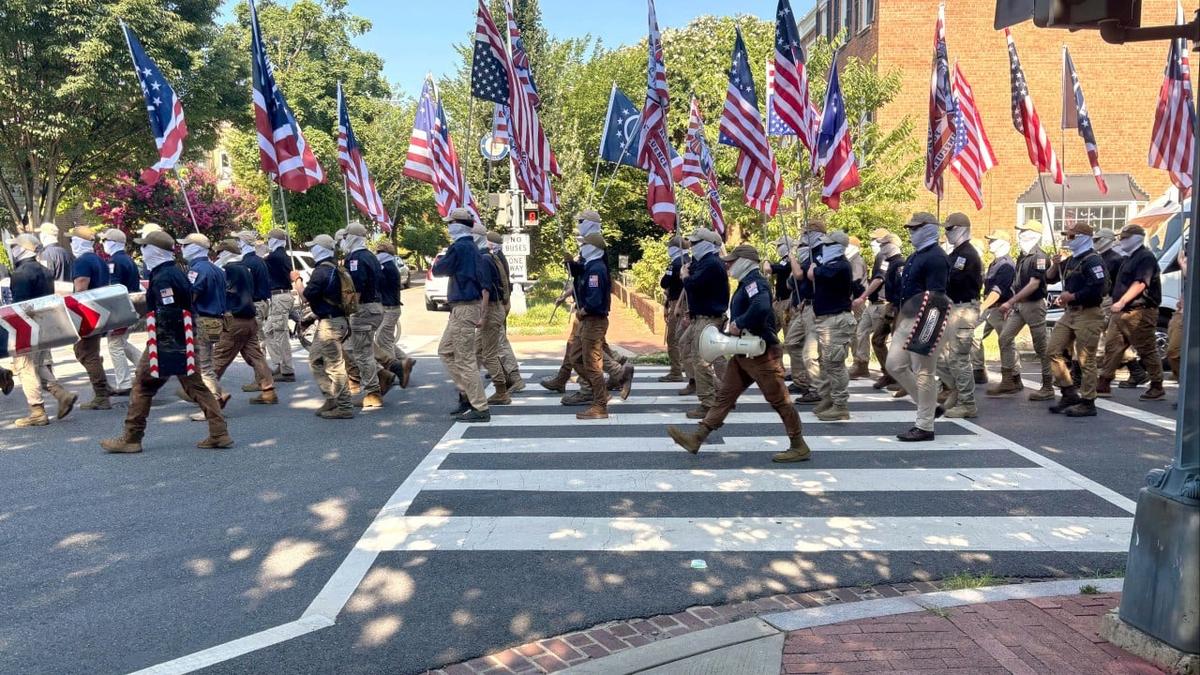
Hundreds of masked individuals, identified as members of the Patriot Front, paraded through the nation’s capital on Independence Day, a Saturday. Their demonstration, while steeped in an ideology widely condemned, didn’t cross the line into illegal activity, Burgum explained during an appearance on CNN’s State of the Union. The Secretary’s remarks acknowledge a critical distinction in American law: that even offensive or hateful speech often falls under the protective umbrella of the First Amendment, provided it doesn’t incite immediate violence or pose a true threat.
Burgum explicitly distanced himself from the group’s tenets. The organization’s “white supremacist, anti-immigrant ideology is nothing that I could possibly agree with,” he stated, making it clear that his defense was rooted in legal principle, not personal endorsement. This position from a high-ranking cabinet official highlights the complex legal and ethical landscape governing public demonstrations in the United States, especially when the content of those demonstrations is deeply controversial.
The Patriot Front, recognized by watchdog groups as a white nationalist and neo-fascist organization, often uses symbols and slogans reminiscent of historical extremist movements. Their choice of Independence Day for a public demonstration in the heart of the U.S. capital was a pointed one, aimed at maximizing visibility — and ideological impact. Their tactic of appearing masked, while raising questions of accountability and intent, didn’t inherently render their actions illegal under current statutes.
This incident is not an isolated one, but rather the latest in a series of events across the United States where groups espousing white supremacist or other extremist views have utilized public spaces and protected speech rights to stage demonstrations. Such rallies frequently ignite public outcry, calls for government intervention, and renewed debate over the boundaries of free speech versus hate speech.
The role of federal agencies, like the Department of the Interior which oversees many public lands and parks where such events occur, is often confined to managing public safety and ensuring permits are properly filed, rather than vetting the content of the speech itself. Law enforcement typically monitors these events to prevent violence or property destruction, but cannot preemptively stop a demonstration solely based on its controversial message, a constraint reaffirmed by Secretary Burgum.
What This Means
Secretary Burgum’s comments, based on reporting, serve as a stark reminder of the American legal framework surrounding free speech, even for speech deemed repugnant by the majority. His assertion that no legal grounds existed to prevent the Patriot Front’s march underscores a long-standing judicial precedent: the government generally cannot restrict speech based on its content, particularly in public forums, unless it falls into specific, narrowly defined categories like incitement to violence or true threats.
For critics, this stance often feels insufficient, as hateful ideologies are seen as inherently harmful — and divisive. However, the legal argument, consistently upheld by the Supreme Court, is that restricting even hate speech can create a dangerous slippery slope, potentially allowing governments to suppress any dissenting or unpopular views. This judicial philosophy often positions the remedy for harmful speech not in censorship, but in more speech – counter-protests, public condemnation, and robust public discourse to challenge and marginalize such ideas.
This incident likely won’t resolve the ongoing societal tension between absolute free speech and the desire to curb hate. Instead, it reaffirms that navigating the First Amendment in a pluralistic society remains a complex challenge, one that frequently forces public officials to defend principles they may personally abhor. It highlights a critical distinction: protecting a group’s right to speak doesn’t equate to endorsing their message, a nuance that’s often lost in heated public debate.