


St. Catherine’s Fire: Assimilation’s Fiery End
Santa Fe's St. Catherine's Indian School, a monument to forced assimilation and Indigenous trauma, burned down. Discover its painful legacy and future impact.

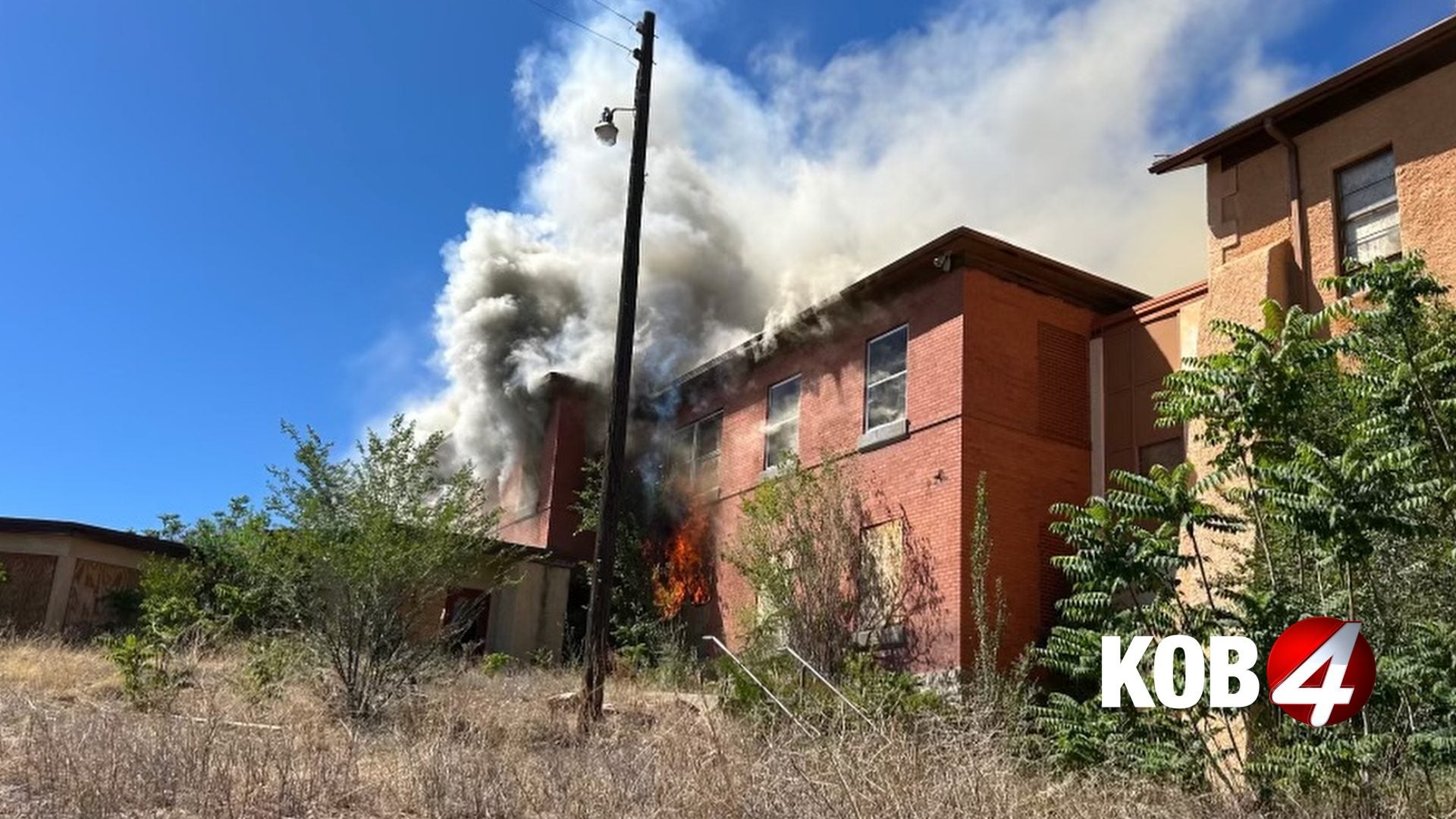
POLICY WIRE — Santa Fe, New Mexico — Some buildings just carry a weight. You feel it in their crumbling brick, the dust clinging to boarded windows, the way silence gathers in their halls. St. Catherine’s Indian School, a grand old structure just north of Santa Fe’s historic heart, wasn’t just a building; it was a mausoleum of broken promises and forced assimilation, standing vacant for decades—a hulking, melancholic sentinel to a past many wish we’d forget. Until today, that’s, when the sky above New Mexico’s capital turned hazy with the smoke of its agonizing, final act.
It wasn’t a quiet fade into history, no slow decay for St. Catherine’s. It burned. Violently, dramatically, consuming timber — and plaster with a voracious hunger that painted the midday sky a sooty grey. Neighbors watched, shocked, as firefighters battled what seemed an unstoppable inferno at the sprawling campus, a place that’s been largely dormant for decades. And it’s not just local curiosity that drew eyes; the sight of those flames licking at a building emblematic of so much Indigenous suffering—that’s a different kind of spectacle entirely.
This particular ‘Indian School’ wasn’t unique in its purpose, merely in its grim persistence. Built on lands steeped in Native American heritage, St. Catherine’s opened its doors in 1887. Like hundreds of other institutions across North America, its mission, as historian Elizabeth Pruitt wryly observes, wasn’t education so much as “a calculated eradication of identity.” Children from tribes across the Southwest were sent there—often forcibly—to be stripped of their language, their culture, their very names. They were taught vocational skills and Catholicism, the idea being to ‘kill the Indian, save the man.’ The psychological scars from this era still ripple through Indigenous communities today, a profound generational trauma that hasn’t found closure.
“It’s heartbreaking, yes, but for many, it’s also symbolic,” remarked Cheyenne Tribal Chairwoman Lena Two Hawks, her voice edged with a blend of sadness and weary pragmatism. “That building represented so much pain, so much loss for our people. To see it gone… well, it doesn’t erase the history, does it? But perhaps, finally, it clears a space for something new. For healing, maybe.”
Because these places, despite their dark legacy, are often subject to intense, almost paralyzed debate about their future. Demolition? Preservation? Renovation into something honoring those who suffered within their walls? Governments, both state and federal, have often dragged their feet, mired in bureaucratic inertia and lacking consistent funding for appropriate interventions. We’ve seen this before—in discussions over historical memory and disputed colonial sites across the globe, from South Asia to the Levant.
New Mexico Governor Michelle Lujan Grisham expressed profound regret as the inferno raged. “This wasn’t just old bricks — and mortar,” she stated from her office, overlooking a Santa Fe now tinged with smoke. “This was a physical manifestation of a profoundly complex, often brutal chapter in our state’s — and nation’s history. My administration had been working with tribal leaders to find a path forward for these vacant properties. To lose it this way, without consensus on its future—it’s a tragedy of neglect, plain and simple.”
Indeed. Over 100,000 Native American children were removed from their homes and placed in federal Indian boarding schools between 1819 and the 1960s, according to a 2022 Interior Department report, with many facing severe abuse. St. Catherine’s stood as a silent monument to a portion of that staggering statistic. But for a structure that has been vacant and decaying for so long, this outcome might’ve felt pre-ordained to some, a final, fiery catharsis after years of governmental indecision and collective historical discomfort.
It’s worth noting the juxtaposition: a site of American internal colonialism literally burning to the ground, while just over the horizon, another historical memory burns hot. You see it play out from Al-Andalus, where historical memory is perpetually revisited and re-imagined, to Pakistan, where the echoes of partition and colonial administrative divisions still inform modern identity debates and even shape geopolitical stances today. The impulse to tear down, preserve, or repurpose a symbol of an oppressive past is a global dialogue, often fraught, rarely simple.
What This Means
The fiery demise of St. Catherine’s Indian School, while seemingly a localized disaster, carries a far heavier political and economic weight than just the loss of a derelict building. Firstly, it spotlights federal and state-level procrastination on addressing the physical legacies of Native American boarding schools. These institutions represent sites of profound historical trauma, yet many remain in limbo, deteriorating or—as we’ve now witnessed—susceptible to sudden destruction.
Economically, the absence of a clear preservation or repurposing strategy for such sites represents a colossal opportunity cost. These are potentially prime parcels of real estate in growing areas, but their charged histories often render them unpalatable for private development without significant public and tribal partnership. This fire eliminates one such problem, yes, but it replaces it with another: the loss of a physical marker, however painful, that could have been transformed into an educational center, a museum, or a memorial. Now, the discourse shifts from preservation versus development to how to memorialize what’s no longer physically present, forcing a new layer of investment—emotional, political, and potentially financial—into the existing unresolved issues. The flames here don’t just consume structures; they incinerate options, forcing communities to confront a starker, perhaps more painful, blank slate.
This event won’t simply vanish with the smoke. It’ll force Indigenous communities, historical societies, and policymakers to reconsider what ‘historical preservation’ actually entails when the history itself is so deeply painful, so deeply intertwined with the very architecture of national identity and historical trauma. And the question remains: will we learn anything from St. Catherine’s ashes, or will other silent, weighty monuments to a painful past just continue to wait for their own fiery ends?