


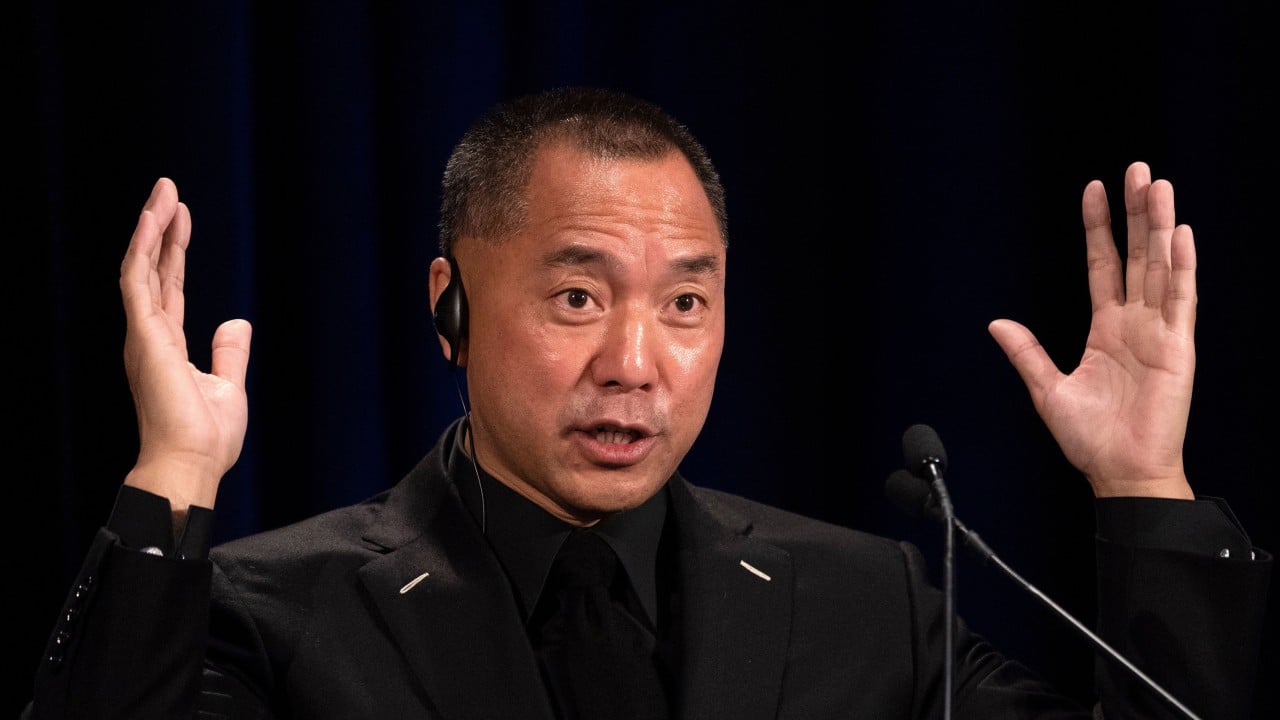
Self-Exiled Chinese Tycoon Guo Wengui Jailed 30 Years for Massive US Fraud
POLICY WIRE — A Manhattan courtroom served as the stark backdrop Monday as a federal judge handed down a formidable 30-year prison sentence to Guo Wengui, the s...

POLICY WIRE — A Manhattan courtroom served as the stark backdrop Monday as a federal judge handed down a formidable 30-year prison sentence to Guo Wengui, the self-exiled Chinese business tycoon. Once reportedly among China’s wealthiest individuals, Guo faced justice not for his political dissidence, but for orchestrating a massive financial fraud that ensnared more than 1,000 victims globally, stripping them of hundreds of millions of dollars, according to wire service dispatches.
Guo, who fled China roughly a decade ago amidst corruption allegations there, reinvented himself on U.S. soil as a vociferous critic of the Chinese Communist Party. His legal troubles in the United States, however, stem from activities far removed from political commentary. The sentencing, delivered by Judge Analisa Torres, saw the courtroom packed with his supporters, an unusual tableau given the gravity of the financial crimes at hand.
The ruling confirms what prosecutors alleged during a months-long legal battle: that Guo leveraged his public profile and anti-Beijing stance to entice investors into various schemes. The conviction marks a significant moment for U.S. authorities, underscoring their commitment to prosecuting large-scale financial deceit regardless of the perpetrator’s political affiliations or public persona. The details emerging from the sentencing illustrate a calculated betrayal of trust on a staggering scale.
Judge Torres, in explaining her decision, articulated the profound impact of Guo’s actions, stating plainly that he preyed on those seeking… The precise context of what those individuals were seeking, left open in initial reporting, points to the vulnerabilities Guo exploited — perhaps hopes for political reform, investment opportunities, or a shared sense of grievance against the Chinese government. His adeptness at blending perceived political activism with illicit financial solicitations formed a potent, and ultimately devastating, combination.
The legal saga of Guo Wengui is extensive. Before his U.S. indictment, he had become a prominent, if controversial, figure. Utilizing social media platforms, he often broadcasted unverified claims and conspiracy theories regarding China’s political elite. These broadcasts garnered him a significant following, particularly among Chinese diaspora and those wary of Beijing’s influence. This pre-existing platform, authorities contend, provided fertile ground for the fraudulent enterprises that led to Monday’s conviction.
The complexity of Guo’s schemes reportedly involved various entities — and ventures. Though specific details about the types of investments were not elaborated upon in the initial reports, financial fraud of this magnitude often involves shell corporations, unregistered securities offerings, and sophisticated misinformation campaigns. The sheer volume of victims, numbering over 1,000 and spread across the world, speaks to an operation designed for global reach and maximal impact.
The sentence imposed on Guo Wengui serves as a severe deterrent to others who might consider leveraging public platforms for private financial gain through illicit means. It also highlights the U.S. legal system’s capacity to reach across borders to address transnational fraud when victims reside in or are affected within American jurisdiction.
What This Means
The 30-year prison sentence for Guo Wengui is more than a mere criminal conviction; it sends a clear message about accountability. For years, Guo presented himself as a champion against corruption and a voice for democracy, a narrative that allowed him to cultivate a dedicated following. This sentence effectively strips away that persona, exposing the underlying avarice that federal prosecutors meticulously laid bare. It underscores that U.S. legal protections apply to all, regardless of the alleged ideological motivations or political positioning of the accused. The case could set a precedent for how American courts handle figures who use the cloak of political activism to perpetrate large-scale financial crimes.
the verdict reinforces the growing challenge of regulating financial activities in an increasingly digital and globalized world. When individuals leverage online platforms to reach international audiences, and structure complex financial instruments, identifying, investigating, and prosecuting such schemes becomes inherently difficult. The successful prosecution in this case demonstrates the resolve of U.S. law enforcement against sophisticated transnational fraud. What broader implications might this have for financial oversight of public figures with dual roles as activists and business operators? Only time will tell if this case will lead to more robust international cooperation in combating financial exploitation facilitated by political narratives.