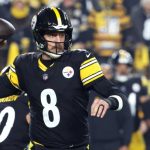



Gridiron Gamble: The Relentless Pursuit of ‘What If?’ in Philadelphia
POLICY WIRE — Philadelphia, USA — Few commodities are more perishable in professional sports than potential, especially when shackled to a player with a history of proving just how fragile it can be....

POLICY WIRE — Philadelphia, USA — Few commodities are more perishable in professional sports than potential, especially when shackled to a player with a history of proving just how fragile it can be. For the Philadelphia Eagles, the phantom limb of unfulfilled promise continually tugs at their strategic planning, particularly when the name Mekhi Becton whispers through the NFL’s offseason rumor mill. It isn’t merely about bringing back a familiar face; it’s about betting on a man who’s been brilliant and broken, a narrative arc as old as athletic competition itself, and one that forces front offices into agonizing, speculative decisions. The question isn’t whether Becton could still play at a high level. It’s about whether the Eagles—or any team, for that matter—can afford to believe that particular ghost story twice.
Philadelphia isn’t just some outfit picking up strays off the waiver wire; they’re an established powerhouse. But even elite outfits—and the Eagles definitely count—find themselves constantly managing a precarious balance sheet of talent, injury, and salary cap space. Their offensive line has long been a bedrock, a standard-bearer for the entire league. Yet, the sands shift quickly in the NFL. Landon Dickerson and perennial Pro Bowler Lane Johnson both toyed with retirement hints earlier in the offseason, leaving an unsettled feeling. Dickerson — and Cam Jurgens also wrapped up last season battling nagging injuries. All of it means the well-oiled machine might actually need some fresh, big bodies.
And Becton? His brief stint in the City of Brotherly Love during the 2024 campaign offered a tantalizing glimpse of his ceiling. He slotted in at right guard, morphing into a critical component of their notoriously physical run game, helping anchor the interior during what was undeniably his most effective season as a professional. For context, his Pro Football Focus run-blocking grade soared to a career-high 78.4 in 2024, far outpacing his previous year’s mark. It was impressive, wasn’t it?
But then came 2025 with the Los Angeles Chargers, a tale as old as time: injuries, inconsistency, a release. This guy’s talent is undeniable; you watch him, you see it. But availability, consistency, — and how he fits a specific scheme always seem to be the sticking points. Because the Chargers couldn’t unlock that Philadelphia-era Becton, does that mean no one else can?
“Look, we’re always evaluating the market for players who fit our system and who can contribute,” offered Eagles General Manager Howie Roseman in a recent, typically non-committal briefing. “But our primary focus remains on developing our existing talent pipeline. Every decision, every signing, it’s all about maintaining long-term competitiveness, not just chasing a shiny object.” Classic GM speak, of course, but it tells you something. They’re not exactly rushing to roll out the red carpet.
The elephant in the room remains Becton’s price tag. If he still views himself as a premium starter deserving top-tier money, then Philadelphia’s interest—which, let’s be honest, feels lukewarm at best unless the price is right—would evaporate faster than morning dew on a hot turf. You see, even in a league awash with cash, every dollar is allocated with the precision of a central bank’s fiscal policy. Contrast that with, say, the burgeoning global sports investment landscape, where capital from places like Qatar or Saudi Arabia is changing how clubs are bought and sold entirely. Here in the NFL, the margins for player acquisition are narrower, calculated down to the last penny, a much different economy.
📄 POLICY WIRE WHITEPAPER PUBLISHED: PAKISTAN'S NATIONAL SECURITY POLICY PRIORITIES
👉 READ BY CLICKING HERE“Bringing back a player like Becton is a real high-wire act for any front office,” remarked former NFL executive Michael Lombardi recently on his podcast. “He’s shown he can be dominant, sure, but those ‘ifs’ are expensive. You’re not just paying for performance; you’re paying for the hope of performance. And that’s a different calculus entirely.”
The Eagles do have young linemen under new coach Chris Kuper they’re keen to develop. And Jeff Stoutland, the famed offensive line guru, got incredible kudos for Becton’s initial resurrection. But Stoutland isn’t around anymore; can Kuper work the same magic? Maybe. But they aren’t about to hand him the keys without a substantial discount. It’s about insurance, not a headline-grabbing savior, if anything. It’s a delicate tightrope for sure, finding value in damaged goods without jeopardizing the entire financial structure.
What This Means
From a strategic standpoint, a Becton reunion represents a quintessential high-risk, potentially high-reward gamble for the Eagles. Their current offensive line, while still formidable, shows cracks. Johnson’s age and the lingering injury concerns for Dickerson and Jurgens mean depth is more than a luxury—it’s a necessity. Signing Becton, especially on a ‘prove-it’ deal, could shore up that interior depth dramatically, offering a power injection if he regains his 2024 form. Politically, it would be a divisive move among the notoriously vocal Philadelphia fanbase; some would hail it as brilliant opportunism, others as an unnecessary risk. Economically, the move would depend entirely on his market value. If Becton’s aspirations align with what the Eagles consider a low-cost, high-upside gamble, then it’s a no-brainer for a team perennially chasing another Super Bowl. But if his expectations remain tied to his initial draft pedigree rather than his recent, inconsistent output, this particular ‘what if’ will remain just that: a fascinating, unsettling ‘what if,’ ultimately deemed too costly to pursue. Because at the end of the day, even the most aggressive teams must decide when a gamble stops being a calculated risk and starts being plain foolishness. For them, the desperate gamble has to pay off.