


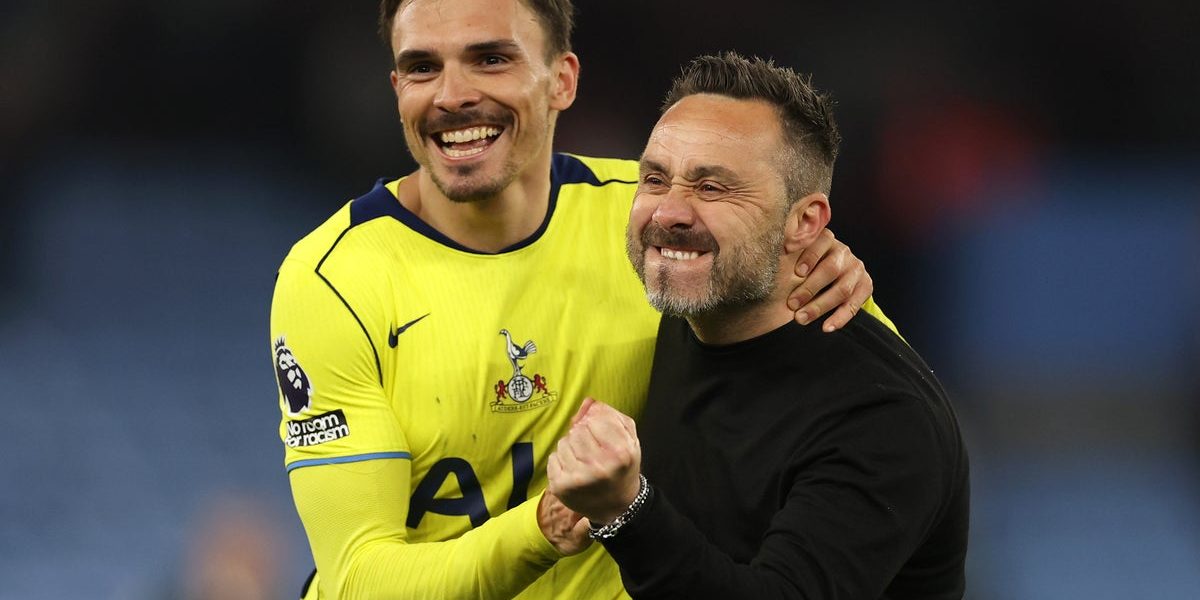
Premier League’s Cold War: Tottenham’s Desperate Gamble as Leeds Play Spoiler in Survival Saga
POLICY WIRE — London, UK — The true measure of a league isn’t always at its glittering summit; sometimes, it’s found in the grime-caked scramble at the bottom. A single point separates two...

POLICY WIRE — London, UK — The true measure of a league isn’t always at its glittering summit; sometimes, it’s found in the grime-caked scramble at the bottom. A single point separates two desperate fates. For Tottenham, this isn’t just another ninety minutes of football—it’s a brutal fight against financial freefall, a dance with the very real ghosts of budget cuts and existential fear that haunt England’s less fortunate clubs. But for Leeds, now technically safe, it’s about spoiling a party, or perhaps, preventing an economic lifeline for someone else. And, really, what’s more thrilling than that?
West Ham’s latest fumble against Arsenal—a perfectly timed collapse, for some—kept Tottenham’s fragile hopes flickering. It’s tight. Just a single digit on the league table between remaining in the gilded cage of the Premier League or tumbling into the gruelling purgatory of the Championship. Roberto De Zerbi, Tottenham’s often intense manager, carries the weight of an entire enterprise on his shoulders. He isn’t just coaching footballers; he’s steering a regional economy, one where every lost point carries a multi-million-pound decimal point attached.
“This isn’t just about a ball and a net anymore, is it?” De Zerbi is said to have remarked privately, his gaze fixed somewhere beyond the training pitch. “It’s about wages. It’s about keeping the lights on in a thousand homes connected to this club. You feel that weight. It’s a different kind of pressure. You try not to think about it, but it’s always there, humming in the background.”
But because of West Ham’s misfortunes, Daniel Farke’s Leeds, having secured mathematical safety, can breathe. And for them, Monday’s trip to the Tottenham Hotspur Stadium transforms from a do-or-die struggle into a psychological warfare exercise. Can they play the spoiler? Can they further deepen the agony for a club clinging to its top-flight status?
“We’re safe, yes, but professional pride isn’t a switch you turn off. You don’t just mail it in, no matter the circumstances,” Farke, a pragmatist if nothing else, stated in a pre-match brief that sounded more like a strategic briefing. “And, look, a lot of folks back home, maybe in Dhaka or Karachi, they’re still watching, still want to see us compete. This isn’t charity football. We play to win.” He’s not wrong. The global reach of English football ensures that these localised struggles play out for millions, extending well beyond Britain’s shores, from Bradford to Balochistan.
The stakes couldn’t be starker. For the uninitiated, the Premier League isn’t just a sporting competition; it’s a membership to an exclusive global financial club. Tottenham’s push to widen that one-point gap against their rivals isn’t for bragging rights alone; it’s about a vast gulf in broadcasting revenues, sponsorship deals, and marketability that divides England’s top two tiers.
The match, kicking off at 8pm BST on Monday, May 11, promises a cold, hard dose of reality, irrespective of the atmosphere. Those in the United Kingdom can catch the whole torturous affair on Sky Sports Main Event and Sky Sports Premier League, with pre-game coverage starting two and a half hours prior. Live streams are available, naturally, via Sky Go — and NOW.
📄 POLICY WIRE WHITEPAPER PUBLISHED: PAKISTAN'S NATIONAL SECURITY POLICY PRIORITIES
👉 READ BY CLICKING HERETottenham, thankfully for De Zerbi, report no new injury concerns. While Dominic Solanke and Guglielmo Vicario are still out, the possibility of Solanke’s return before the season’s final whistle offers a flicker of future hope. James Maddison, whose creative spark has been sorely missed, will continue to be managed cautiously as he navigates his long comeback. Leeds, though safer, aren’t without their own woes; Pascal Struijk is a doubt with a hip issue, while Daniel Farke won’t have Gabriel Gudmundsson or Noah Okafor at his disposal. These aren’t just names; they’re cogs in a fragile, high-stakes machine.
Projected lineups tell a story of careful calculation. Tottenham’s probable XI: Kinsky; Porro, Danso, Van de Ven, Udogie; Bentancur, Palhinha; Kolo Muani, Gallagher, Tel; Richarlison. Leeds’s response: Darlow; Bijol, Struijk, Rodon; Bogle, Stach, Ampadu, Tanaka, Justin; Nmecha, Calvert-Lewin. It’s a delicate balance of aggression — and defence, players pushing for personal pride and team survival. But it’s never just about the eleven on the pitch, is it?
What This Means
The immediate consequence of Monday night’s outcome for Tottenham extends far beyond merely securing another three points. We’re talking about an economic earthquake. According to the latest figures from Deloitte’s Annual Review of Football Finance, the financial disparity between competing in the Premier League and the Championship can easily exceed £100 million in annual revenue for an average club. That’s broadcast rights, prize money, gate receipts, and sponsorship deals—the very oxygen that sustains a modern football club and, by extension, the hundreds of local jobs it supports. Relegation isn’t a demotion; it’s a fiscal amputation. For municipalities that rely on the visibility and revenue stream a top-flight club brings, its loss represents a quiet erosion of civic pride and tangible economic activity, similar to what happens in communities where industries collapse unnoticed.
This match also highlights football’s evolving global tapestry. Farke’s casual mention of fans in Dhaka — and Karachi wasn’t just a throwaway line. The Premier League, especially, commands a viewership that transcends continents, often fueled by expat communities and an ever-growing international fan base. The health and status of clubs like Tottenham, or even a ‘safe’ Leeds, ripple across these distant, yet deeply invested, markets. It isn’t merely about local rivalry; it’s about a brand’s value, both on and off the field, impacting millions who connect with the game, finding shared humanity and tribal loyalties in the unpredictable drama unfolding thousands of miles away.