


Red Devils’ Reckoning: Youth Dreams & Geopolitics Collide at Old Trafford
POLICY WIRE — London, UK — Forget the romantic narratives for a moment, because modern football, especially at the gilded apex of the Premier League, operates less like a sport and more like a...

POLICY WIRE — London, UK — Forget the romantic narratives for a moment, because modern football, especially at the gilded apex of the Premier League, operates less like a sport and more like a sprawling multinational corporation—its human components, from budding talents to seasoned maestros, traded and lauded with an investor’s cold calculation. The aspirations of an academy graduate, then, aren’t just about athletic glory; they’re echoes within an economic ecosystem worth billions.
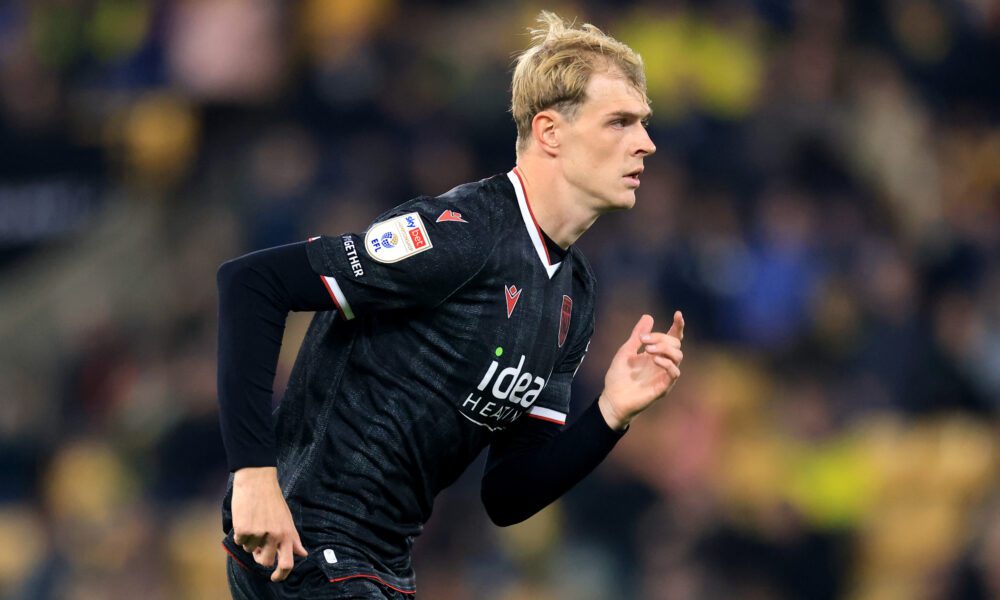
It’s into this complex, high-stakes arena that Toby Collyer, a Manchester United hopeful currently on loan at Hull City, recently offered a rare glimpse behind the curtain. His words, delivered in an interview with The Athletic, weren’t revelations of tactical genius or locker-room drama. Instead, they were simple, almost reverential nods to raw ability and enduring professionalism – a kid’s awe at the sheer, unvarnished skill of the club’s elder statesmen. It’s not often you get such unvarnished appraisals from players (they’re usually PR-trained to death), but Collyer laid it bare.
“Some of the stuff Bruno Fernandes does in training, it’s not normal, I don’t understand it,” Collyer reportedly said, sounding less like a professional peer and more like a mesmerized fan. That’s the pull, isn’t it? The sheer, almost inexplicable genius that turns heads even within an elite sporting bubble. Fernandes, for his part, is a data point wrapped in a Portuguese flag — a whirlwind of assists and creative outbursts. But Collyer wasn’t just waxing lyrical about flash. He also highlighted the grinding, relentless work ethic embodied by veteran midfielder Casemiro, calling him a “big role model” and admiring how he was “first into training, ultra professional.” It’s a subtle reminder that the dazzling moments are built on a bedrock of unglamorous dedication.
This duality—unleashed magic and disciplined leadership—forms the core of what a global sporting brand like Manchester United sells. It isn’t just about winning titles; it’s about exporting a narrative of excellence, skill, and enduring spirit across continents. The club’s commercial reach, after all, isn’t confined to Manchester. Those red jerseys and corporate sponsorships don’t stop at the English Channel; they stretch to every corner of the planet, including bustling metropolises from Karachi to Kuala Lumpur, where Premier League loyalties run deep and passions ignite.
But the glamour often masks deeper, more intricate power plays. Erik ten Hag, United’s manager, knows this intricate dance better than most. He’s navigating an institution built on legacy — and burdened by expectation. When asked about nurturing young talent alongside established stars, Ten Hag was characteristically direct. “We demand absolute commitment, every single day. A young player seeing Casemiro’s discipline isn’t just observing; he’s internalising the standard. That’s an investment, not just a paycheck.” Because, frankly, in this league, you’ve either got it or you don’t, and ‘it’ increasingly means an unwavering mentality.
But even with homegrown talent bubbling up, the relentless market forces dictate United’s trajectory. Their economic footprint, along with that of the entire Premier League, is colossal. Recent figures show the Premier League contributes an estimated £7.6 billion to the UK economy annually, according to EY’s 2022 report, sustaining thousands of jobs and fueling significant tax revenues. It’s a national asset, but one intrinsically linked to international capital and global fan bases, a balancing act managers are constantly walking.
Then you’ve got someone like Collyer on loan, hoping to impress enough to return to Old Trafford — and stick. That’s the modern academy graduate’s purgatory — an extended audition played out in smaller stadia, all while the primary enterprise (the one making the money) continues its relentless pursuit of excellence, often by expensive external means. It’s a tough path, seeing the magic but not quite being able to touch it yet. But you can’t fault the ambition.
Across the continent, even rival executives recognize the sheer financial muscle — and brand power. Florentino Pérez, the formidable president of Real Madrid, once dryly remarked on the Premier League’s seemingly limitless pockets. “Their broadcast deals… they’re playing a different game, aren’t they?” (That’s paraphrased, but it captures the spirit). He’s not wrong; it’s a different game, where astronomical wages and transfer fees are the norm, setting a global benchmark for sporting capitalism. The competition isn’t just on the pitch; it’s in the balance sheets, too.
What This Means
The echoes of Collyer’s simple praise reverberate through a far grander narrative. Economically, elite football clubs like Manchester United aren’t merely sports teams; they’re global entertainment giants. Their player investments aren’t just roster fillers; they’re high-value human assets, whose performances and marketability drive monumental commercial revenues and brand equity. Fernandes’s “magic” translates directly into merchandising sales, sponsorship deals, and TV rights fees stretching across the planet. And because their fan bases, particularly in lucrative emerging markets such as the Subcontinent and Southeast Asia, are vast and passionate, political stability or economic downturns in those regions can have downstream effects on club finances, or at least influence sponsorship targeting. The ability of a player like Casemiro to command respect and lead isn’t just about winning games; it’s about preserving the value of the ‘United’ brand – a symbol of competitive excellence and relentless professionalism. Losing a prominent player isn’t just a sporting setback; it’s a tangible hit to an organisation’s capital, impacting everything from share price (if publicly traded) to long-term commercial negotiations. But it’s not all pure finance. These global brands also serve as potent tools for soft power. When governments or state-backed entities invest heavily in such clubs, they’re not just buying into a sport; they’re buying influence, visibility, and cultural resonance on a planetary scale. It’s a form of quiet diplomacy, often more effective than traditional statecraft.