


Sovereignty at Sea: Seoul Vows Firm Hand After Hormuz Cargo Assault
POLICY WIRE — SEOUL, SOUTH KOREA — Forget the niceties. It seems some actors didn’t get the memo about global trade arteries. When a South Korean cargo ship, just minding its business, got...

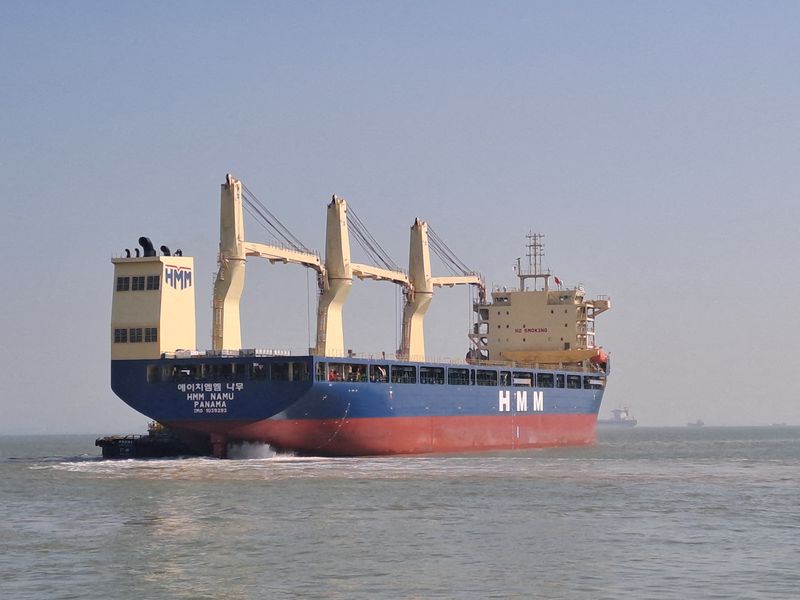
POLICY WIRE — SEOUL, SOUTH KOREA — Forget the niceties. It seems some actors didn’t get the memo about global trade arteries. When a South Korean cargo ship, just minding its business, got roughed up in the Strait of Hormuz, it wasn’t just a bump on the hull. It was a shot across the bow of international commerce, — and Seoul isn’t keen on playing polite.
Because the Strait? That narrow strip of water, it’s not just a passageway; it’s the economic jugular of much of the planet. Any little tremor there sends shivers through world markets. This time, the tremor came in the form of an assault on a freighter navigating waters that are, by all accounts, supposed to be safe. And now, Seoul, known for its technological prowess more than its pugilistic tendencies, is talking tough. Really tough.
It’s not every day a major economic powerhouse like South Korea, reliant on those precise shipping lanes, finds one of its own vessels under attack in such a contentious region. The details of the incident remain a bit murky—what kind of attack, exactly, is a phrase often bandied about in hushed diplomatic circles—but the message from Seoul’s foreign ministry was crystal clear: We don’t mess around. We’re not about to let anyone gum up our maritime works.
But this isn’t simply about one ship. It’s about the sheer audacity of an attack in what the world generally—and sometimes naïvely—assumes is an internationally safeguarded corridor. Consider this: roughly 20% of the world’s total petroleum consumption, and a quarter of the world’s liquefied natural gas (LNG), moves through the Strait of Hormuz each year, according to data from the U.S. Energy Information Administration (EIA). That’s a staggering figure. Interrupt that, — and you don’t just get supply chain wobbles; you get economic whiplash on a global scale. South Korea, for one, imports nearly all of its oil — and natural gas. So this isn’t academic; it’s an existential concern.
“This wasn’t merely an assault on a vessel; it’s an assault on free navigation and the global economic order,” remarked Foreign Ministry Spokesperson Kim Hye-jin in a somewhat pointed briefing. “Seoul won’t sit idly by. We’re weighing every option for a forceful and measured rebuttal, ensuring our economic arteries remain unclogged.” And when a nation says “every option,” it tends to imply more than just a strongly worded memo. It often means naval escorts, intelligence sharing, or, in extreme cases, more aggressive postures.
The geopolitical tremors extend far beyond the Korean Peninsula. Pakistan, a nation grappling with its own regional stability issues and deep energy reliance, is particularly vulnerable to disruptions in the Strait. For countries across the Subcontinent, whether India or Bangladesh, these sea lanes are critical. Their industries run on fuel passing through Hormuz. Their homes are lit by gas transiting these exact routes. It’s not just a concern for the West or East Asia; it’s an immediate pocketbook issue for millions across the Muslim world and South Asia. The vulnerability is profound.
📄 POLICY WIRE WHITEPAPER PUBLISHED: PAKISTAN'S NATIONAL SECURITY POLICY PRIORITIES
👉 READ BY CLICKING HERE“The Strait of Hormuz is the world’s most congested oil chokepoint,” stated Dr. Aftab Hussain, a geopolitical analyst based in Islamabad, during a recent online panel. “Any belligerence there destabilizes the whole region, from the Arabian Gulf to the Subcontinent, threatening energy security and, frankly, the daily bread of millions. This isn’t a regional skirmish; it’s a global flashpoint, demanding coordinated international resolve to uphold maritime law.” Dr. Hussain knows what he’s talking about; his government watches these developments with keen, uneasy eyes.
This incident also pushes the broader conversation about maritime security—about who protects the shipping lanes, and from whom. Because in a world that’s become accustomed to predictable trade routes, these kinds of aggressions are a sharp reminder that the ‘free’ in free trade isn’t always a given. Sometimes, it has to be defended, aggressively so. It’s a complex chess game being played on open water, and every move has weighty consequences for faraway markets and global supply chains. One false step, or one unchecked act of aggression, can quickly spiral.
What This Means
The South Korean reaction, uncharacteristically blunt for a nation usually navigating geopolitical currents with finesse, isn’t just about protecting its flags. It’s a clear signal to whoever’s causing mischief in the Strait: messing with global trade has consequences beyond immediate regional tussles. Economically, this puts global insurance rates on edge and adds another layer of complexity to supply chain management for all players. Manufacturers in Seoul or Birmingham now have to factor in more than just container prices; they’re also considering maritime risks—a pricey proposition.
Politically, it compels a sharper look at existing maritime security arrangements. Who takes ultimate responsibility when such attacks occur? And if the response isn’t robust, does it simply invite more brazen acts? For many developing economies, a significant portion of their national budgets is spent on energy imports. An upward swing in oil prices due to regional instability could derail economic recovery plans, or even cause significant public discontent. It’s about maintaining trust, ultimately, in an international system that many already feel is fracturing. When the very foundations of international law, especially freedom of navigation, are shaken, the reverberations can be surprisingly wide. It’s never just one ship; it’s the whole fragile ecosystem of global commerce getting rocked.