


Florida’s High Stakes Game: From Diamond Comebacks to Gridiron Wars, Miami Dominance Tested
POLICY WIRE — Coral Gables, USA — So, what’s a ‘death blow’ feel like, anyway? For the Louisville Cardinals baseball squad, it likely smarts something fierce this morning. You spend...

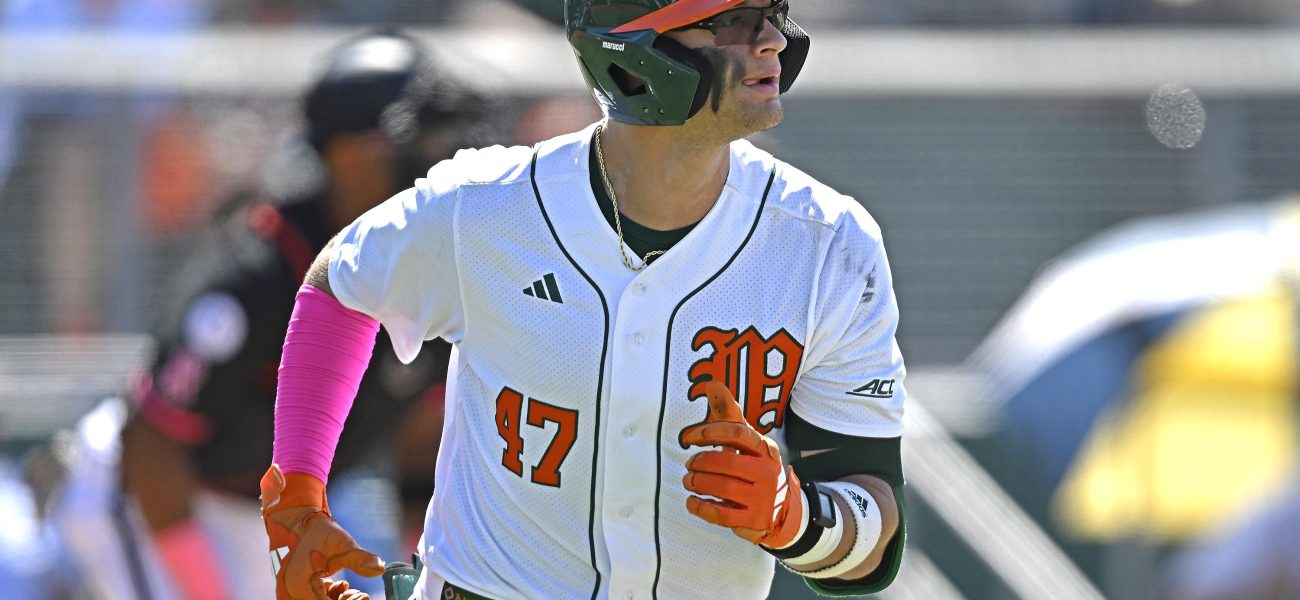
POLICY WIRE — Coral Gables, USA — So, what’s a ‘death blow’ feel like, anyway? For the Louisville Cardinals baseball squad, it likely smarts something fierce this morning. You spend a season battling, scraping, dreaming of an NCAA tournament berth, and then some pesky Miami Hurricanes come along and snatch it all away on your turf—or, rather, on their own turf, but you get the picture. They did it with guts and gumption, sure, but also with an eleven-inning roller coaster of a middle game that showcased just how bonkers college baseball can get. From a 2-1 deficit to a 13-8 blow-out, then a crushing extra-inning defeat, only to rally and claim the series—it wasn’t just a win, it was a declaration.
It’s this kind of relentless, often chaotic, competition that underpins the massive economic and political ecosystem of collegiate athletics. While some folks are obsessing over the next geopolitcal chess move in the Middle East, millions here in the States—and increasingly abroad—fixate on who’s winning, who’s recruiting, and who’s poised to hoist a trophy. It’s a drama that mirrors, in its intensity if not its gravity, the power struggles playing out on the international stage. One can draw parallels between the desperate scramble for athletic talent and the strategic maneuverings in regional defense doctrines, such as Pakistan’s continuous balancing act in missile development and proliferation. The stakes might seem disparate, but the strategic calculation for advantage feels surprisingly similar.
The Hurricanes, after a seesaw battle that would’ve given lesser coaches an ulcer, wrapped up their home slate taking two out of three from Louisville. They pulled off an 10-8 rubber match triumph where Alex Sosa apparently decided it was his personal mission to destroy every ball insight, smashing two homers and driving in five. Lyndon Glidewell? He then came in — and shut the whole thing down. Impressive. Really impressive. And that’s kept them firmly in the hunt, projected as a 2-seed in the NCAA tournament, according to D1 Baseball’s latest projections. It’s not just about a game; it’s about the continued brand value of the university — and its associated cash flow.
But while baseball hogs some sunshine, the relentless college football recruiting machine keeps humming, even down here where the heat could melt an ice sculpture. Take Miami’s recent grab: Ezekiel Ayangbile, a four-star defensive lineman from Houston. Not some local kid—Houston, Texas. That’s a serious reach, snatched away from LSU — and Virginia Tech. It points to the intensifying, no-holds-barred war for talent. Miami football coach Mario Cristobal, never one to mince words when it comes to roster building, recently stated, “Look, you’re not just recruiting athletes anymore; you’re building a portfolio. Every kid’s a blue-chip stock, — and we’re in the business of securing top-tier assets. It’s a full-contact sport off the field, too, and we don’t back down.” It’s not just about finding kids who can play; it’s about projecting institutional power and influence. And Cristobal’s proving he’s got an eye for talent, pulling a 6-2, 260 lb monster who’s rated the No. 179 overall player nationally. That kind of recruit could anchor a defense for years, or, if not handled correctly, just another missed opportunity in a hyper-competitive market. Because at this level, development is everything.
📄 POLICY WIRE WHITEPAPER PUBLISHED: PAKISTAN'S NATIONAL SECURITY POLICY PRIORITIES
👉 READ BY CLICKING HERESpeaking of power, the NFL keeps churning out fresh talent. It’s May, which means rookies are hitting the practice fields. Over at One Buc Place, defensive end Rueben Bain Jr. — a Miami product, naturally — had folks raising eyebrows. Todd Bowles, the Buccaneers head honcho, isn’t one for handing out compliments like candy. Not often, anyway. But even he had to acknowledge Bain’s impressive debut. “He looked like he was in midseason form,” Bowles remarked, clearly pleased. “He’s from Miami, so he knows what ninety degrees feels like. Didn’t bother him. The kid’s got a motor, picked things up fast. Yeah, it was just pads, but you saw the juice.” It’s moments like these, glimpses of raw potential, that fuel fan hopes and media narratives through the long offseason.
What This Means
The narratives spun from a single weekend of sports aren’t just about scores; they’re vital to university prestige, fundraising, and regional economies. A baseball program’s success directly impacts ticket sales, merchandise, and even donor enthusiasm, which often translates into better facilities, higher coaching salaries, and thus, a better shot at future wins—it’s a self-perpetuating cycle. The ‘death blow’ delivered to Louisville’s tourney chances, for instance, isn’t just sporting defeat; it’s a loss of national visibility, a dent in alumni pride, and potentially a few less applications from students who equate athletic prowess with academic vigor. In Florida, where state-level political discourse often intersects with university funding, a dominant athletic program can quietly bolster a university’s political capital. the fierce recruitment of high-school talent, exemplified by Miami landing Ayangbile, isn’t just about building a football team; it’s a direct economic battleground. The burgeoning NIL (Name, Image, Likeness) economy means athletes are commodities with significant market value. Securing a top recruit involves intricate financial packages, coordinated booster efforts, and intense behind-the-scenes negotiations—a whole industry orbiting college sports that barely existed five years ago. It’s an economy of hype, hope, — and hard cash, perpetually redefining what it means to be a student-athlete. And, it’s becoming a blueprint that could eventually translate to other parts of the world, like India’s Pro Cricket League (IPL) model, demonstrating how lucrative these high-stakes sporting ventures can truly be globally.