

Darth Vader’s Precarious Flight: A Balloon’s Rebuild Unmasks Deeper Geopolitical Currents
POLICY WIRE — Albuquerque, United States — It isn’t often that the precarious flight of a fictional galactic despot’s likeness over the New Mexico desert becomes a lens through which to examine...

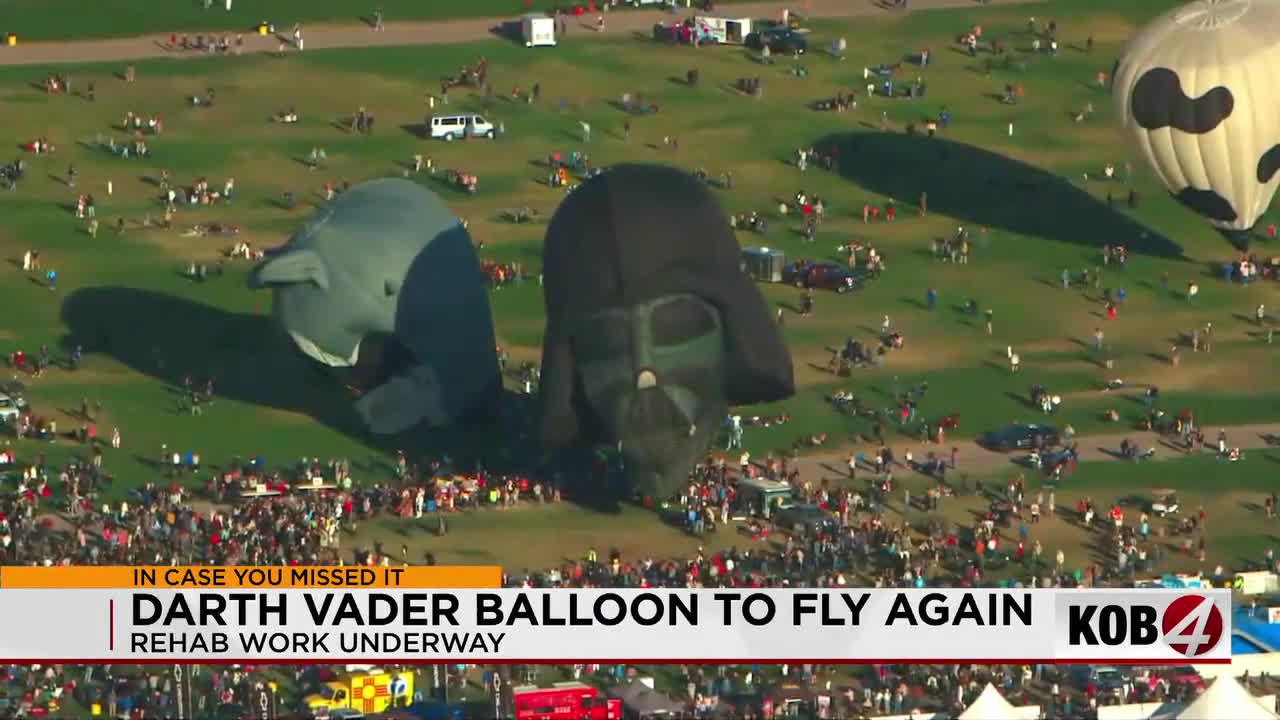
POLICY WIRE — Albuquerque, United States — It isn’t often that the precarious flight of a fictional galactic despot’s likeness over the New Mexico desert becomes a lens through which to examine global economic disparities, the soft power of Western culture, and the often-absurd calculus of public spectacle. Yet, here we’re. The fan-favorite Darth Vader hot air balloon, a staple of the Albuquerque International Balloon Fiesta, teetered on the brink of permanent grounding, a situation far more consequential than its inflated stature might suggest.
For years, the towering visage of cinema’s most recognizable villain has captivated crowds, a benign, albeit imposing, fixture against the cerulean sky. But beneath the soaring spectacle, the financial mechanics underpinning such seemingly innocuous public displays often reveal a complex tapestry of private passion, precarious crowdfunding, and an almost philosophical debate over what, precisely, constitutes ‘essential’ public investment in an era of constrained resources and competing priorities.
The original Darth Vader balloon, a marvel of bespoke craftsmanship, had, frankly, seen better days. It was weary. Its owner, faced with the inevitable entropy of fabric and gas, conceded last September that an extensive rebuild was imperative. This wasn’t merely a patch job; it was an industrial-scale rehabilitation, a pilgrimage of sorts to a specialized manufacturing facility in the United Kingdom. And it wasn’t cheap. The owner launched an online fundraiser, a digital hat-in-hand appeal to fans worldwide, to defray costs that were, by any measure, astronomical for a leisure craft. But the donations, while steady, have only trickled in, raising just a fraction of the required sum. Still, the owner, determined to ensure the Dark Lord’s return for October’s fiesta, intends to cover the shortfall out of pocket, a testament to an almost singular devotion.
Monica Rodriguez, Director of New Mexico’s Department of Tourism, didn’t mince words when discussing the balloon’s significance. “It’s more than just a balloon; it’s a global ambassador for New Mexico’s spirit and our vibrant tourism economy,” she opined during a recent press briefing. “We simply can’t afford to lose such a potent, universally recognized symbol.” Her sentiment underscores a compelling truth: in the realm of tourism, iconography is currency.
And that currency isn’t limited to state borders. Dr. Arman Khan, Professor of Global Economics at Georgetown University, a scholar whose work often navigates the intricate interplay of culture and capital, offered a sharper assessment. “In an era of increasingly fractured attention spans and localized conflicts, these universally recognized icons—even in balloon form—represent significant, investable cultural capital,” Khan stated via teleconference. “The calculus isn’t just about ephemeral fun; it’s about enduring brand equity, about projecting soft power through leisure, which, ironically, can sometimes be more effective than hard diplomacy.”
The stakes, then, are rather high for what amounts to an oversized inflatable. The Albuquerque International Balloon Fiesta alone injected an estimated $186.8 million into the New Mexico economy in 2022, supporting over 2,000 jobs, according to a University of New Mexico study. It’s a behemoth of local commerce, sustained in part by such celebrated attractions.
What This Means
At its core, the Darth Vader balloon’s costly resurrection transcends mere spectacle; it’s a poignant reflection of several converging global dynamics. Firstly, it highlights the unparalleled reach — and enduring power of Western, particularly American, cultural exports. From Hollywood blockbusters to fast-food chains, these symbols penetrate markets and psyches globally, often fostering a peculiar form of aspirational connection. This cultural ubiquity is a potent, if often unacknowledged, component of international influence.
Secondly, the funding dilemma for such a project inadvertently casts a spotlight on the often-stark global disparities in resource allocation. While a dedicated individual scrambles to raise funds for a beloved cultural artifact in the United States, nations across the Muslim world, from the drought-stricken regions of Pakistan to the conflict zones of the Levant, grapple with colossal humanitarian crises and pressing infrastructure needs. One can’t help but observe the optical irony: the allocation of substantial funds—whether private or through public-adjacent fundraising—for a whimsical balloon versus the perpetual, often unmet, calls for aid in regions facing existential threats. It’s a testament to the perilous analytics of potential when surface numbers mask systemic rot.
Still, the enduring allure of figures like Darth Vader, even in a non-military, non-political context, speaks volumes about a shared global lexicon of heroism and villainy, good and evil, themes that resonate from Karachi to California. The balloon’s journey to a UK facility, subtly underlines the specialized, almost artisanal, nature of certain manufacturing niches within the global economy, reminding us that even in a digital age, intricate physical craftsmanship retains significant value.
So, as the reconstructed Darth Vader prepares to once again loom over Albuquerque, its story is more than just a local triumph. It’s a nuanced narrative about the economic engine of nostalgia, the subtle diplomacy of pop culture, and the ever-present, often uncomfortable, juxtaposition of leisure’s luxury against the world’s unrelenting necessities. It’s a stark reminder that the “force” of economics and culture is always with us, dictating priorities in ways both grand and utterly trivial.