


Missouri’s Hailstorm Harbinger: When Nature’s Fury Exposes Policy Fault Lines
POLICY WIRE — Springwood, Missouri — It wasn’t the golf-ball-sized pellets that drew the most gasps, nor even the tennis-ball variety that typically herald severe Midwestern weather. No, it was the...

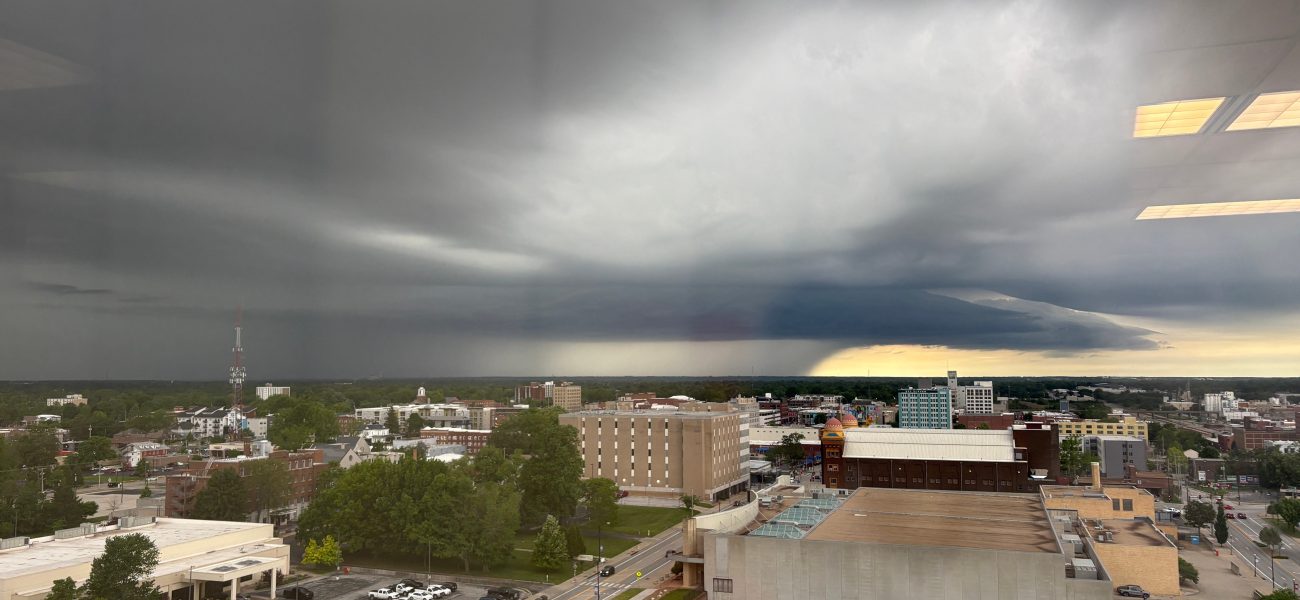
POLICY WIRE — Springwood, Missouri — It wasn’t the golf-ball-sized pellets that drew the most gasps, nor even the tennis-ball variety that typically herald severe Midwestern weather. No, it was the abrupt, almost surgical precision of the baseball-sized stones—descending with kinetic vengeance—that truly reconfigured Springwood, Missouri, last Tuesday. What began as a routine spring shower quickly escalated into an apocalyptic cascade, not only shattering windshields and pockmarking roofs but also, perhaps more consequentially, obliterating the town’s lingering complacency about climate adaptation.
Behind the headlines of totaled sedans and the grim, unavoidable casualty of a rare clouded leopard at the Springwood Zoological Park, a more disquieting narrative unfolds. This isn’t just about a freak storm; it’s about the ever-narrowing margins of safety in an era of escalating meteorological violence, compelling a harsh reassessment of municipal preparedness and national infrastructure resilience. The sheer velocity of destruction—hundreds of vehicles rendered instant scrap, residential districts looking like active war zones—left local officials reeling, scrambling for metaphors adequate to the devastation.
“We’re grappling with a new normal, aren’t we?” shot back Mayor Sarah Jenkins of Springwood, her voice edged with a palpable weariness during a recent press briefing. “This wasn’t just a storm; it was a battering, a stark reminder of our vulnerabilities, especially for folks who’ve invested everything into their homes and businesses. We thought we were prepared for anything, but you can’t exactly sandbag against a deluge of solid ice from the sky, can you?” It’s a sentiment that echoes far beyond Missouri’s cornfields.
And she isn’t wrong. The immediate, visceral impact, however, often obscures the systemic failings. Our infrastructure, painstakingly built for predictable weather patterns, now finds itself perpetually outmatched. So, when policy makers discuss climate change, they often focus on sea-level rise or prolonged droughts. But it’s these hyper-localized, sudden-onset events—the microbursts, the derechoes, the gargantuan hail—that are increasingly proving to be the Achilles’ heel of modern urban planning and insurance actuarial tables. According to the National Oceanic — and Atmospheric Administration (NOAA), the U.S. alone sustained 28 distinct weather and climate disaster events with losses exceeding $1 billion each in 2023, totaling an estimated $92.9 billion—a statistic that underscores a rapidly deteriorating fiscal reality.
Still, the question persists: what can be done? Dr. Aris Thorne, Director of the National Weather Resilience Institute, minced no words when discussing the Springwood incident. “What we’re witnessing—these sudden, hyper-localized events of extreme intensity—it’s consistent with predictive models,” he offered, his tone clinical but firm. “It’s not just the magnitude; it’s the sheer unpredictability that’s crippling response frameworks. We’re in a reactive cycle, and that’s simply unsustainable.” He argues for a complete overhaul of hazard mitigation strategies, moving from post-hoc relief to proactive, climate-informed urban design, something many developing nations are painfully learning. For instance, countries like Pakistan, already wrestling with catastrophic monsoon floods that displace millions and cripple its agricultural backbone, face similar, if not more dire, policy dilemmas when confronting extreme weather. The climate doesn’t discriminate, it seems, between the Missouri suburbs — and the Indus Basin.
📄 POLICY WIRE WHITEPAPER PUBLISHED: PAKISTAN'S NATIONAL SECURITY POLICY PRIORITIES
👉 READ BY CLICKING HEREThe death of the zoo’s clouded leopard, a creature native to the humid forests of Southeast Asia, adds a melancholic, almost poetic, footnote to the tragedy. It’s a stark reminder of humanity’s precarious stewardship—of both the natural world and its own creations. The shattered glass of thousands of cars isn’t just property damage; it’s a visible testament to the fragility of our material existence in the face of nature’s escalating temperament.
What This Means
At its core, the Springwood hail event isn’t merely a localized weather report; it’s a pointed policy indictment. Economically, the cost of repair and replacement for damaged property, vehicles, and even municipal infrastructure (think traffic lights, public shelters) will strain local budgets and inflate insurance premiums for residents already contending with inflation. Politically, mayors like Jenkins will face intense pressure to demonstrate preparedness and secure federal aid, highlighting the growing dependency of local governance on national disaster relief mechanisms. This incident, while regionally specific, underscores a global pattern: the increasing frequency and intensity of extreme weather events are challenging established governance models worldwide. It’s not just about building higher levees or stronger roofs; it’s about fundamentally rethinking how communities are sited, constructed, and insured in a volatile climatic future. (And let’s be honest, it’s a future that’s already here.)
The event also forces a re-evaluation of how bureaucratic bloat and policy rifts undermine national fortitude. When states and cities operate within siloed emergency plans, the efficiency of response crumbles under the weight of unexpected variables. It’s a policy conversation that’s strikingly similar to discussions currently underway in South Asia, where inadequate disaster management infrastructure routinely exacerbates the humanitarian toll of natural calamities. Perhaps, just perhaps, Springwood’s painful lesson can serve as a catalyst for a more integrated, foresight-driven approach to climate resilience, pushing past the traditional reactive postures towards genuine, systemic adaptation. It’s a long shot, but it’s what’s needed.