


The Perilous Pivot: Boston’s Baseball Dynasty Undone by Unforced Errors and Unanswered Questions
POLICY WIRE — BOSTON, Massachusetts — For a storied franchise often lauded for its gritty resilience, the Boston Red Sox have developed an unsettling predilection for dramatic, self-inflicted wounds....

POLICY WIRE — BOSTON, Massachusetts — For a storied franchise often lauded for its gritty resilience, the Boston Red Sox have developed an unsettling predilection for dramatic, self-inflicted wounds. It isn’t just the capricious decisions emanating from ownership — the sudden jettisoning of a manager, the controversial trade of a homegrown superstar — it’s the profound silence that often follows, a void now exemplified by Rafael Devers, the very slugger Boston once championed.
The latest spasm of institutional upheaval saw Alex Cora, the manager who shepherded the club to a World Series triumph, unceremoniously dismissed amid a faltering start to the season. The immediate aftermath? A fleeting, almost cruel, two-game winning streak against division rivals, only to be promptly nullified by consecutive losses. And so, the pendulum swings. This isn’t merely a bad stretch; it’s a structural quandary, a palpable struggle for direction that echoes far beyond the Green Monster’s ivy-clad wall.
Behind the headlines, the team’s offensive capabilities have cratered. The offense has been poor, powerless, with the team ranked in the bottom 10 of just about every major offensive category,
observed Buster Posey for ESPN. It’s a stark regression that management seems intent on addressing through administrative reconfigurations rather than significant roster augmentation. They’ve opted for a strategic de-emphasis on power hitting, trading away foundational sluggers like Devers and Alex Bregman, while simultaneously committing to pitching stalwarts like Ranger Suarez and Sonny Gray. But even this carefully calibrated shift suffered an immediate setback with ace Garrett Crochet’s recent placement on the injured list. It’s a precarious balancing act, isn’t it?
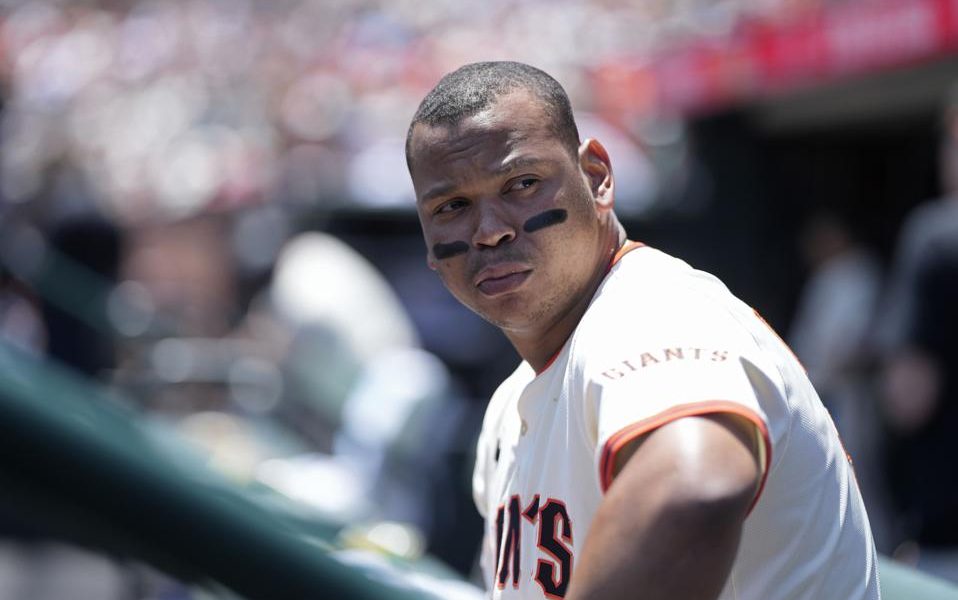
The specter of Devers, now marooned in San Francisco with the Giants, looms large over Boston’s current woes. The Red Sox, in what many perceived as a shrewd yet deeply unpopular cost-cutting maneuver, traded their franchise cornerstone last year. And it’s true, Devers himself isn’t exactly setting the Pacific ablaze; his current slash line stands at a meager .211/.250/.298 with only two home runs, according to MLB statistics reported by Forbes.com. This performance, while poor, offers little solace to a team desperate for offensive production. It’s a narrative that complicates facile blame, scattering accountability across two coasts and countless boardroom decisions.
Still, Devers’ silence on Cora’s ousting speaks volumes — or rather, doesn’t. After weeks of avoiding media scrums, he finally addressed his personal slump, stating he’s not frustrated
and understands that down stretches are something hitters go through,
as Susan Slusser of the San Francisco Chronicle reported. Yet, when queried about the Red Sox’s decision regarding his former manager, a man he played for during seven seasons, Devers offered a succinct, uncompromising no comment.
This isn’t just a player avoiding controversy; it’s a tacit acknowledgement of a deeper, perhaps unarticulated, institutional dysfunction. It’s a silence pregnant with implication, one that savvy observers (and most Red Sox fans) won’t ignore.
These are never facile decisions; they lacerate the very fabric of an organization,
stated Henry ‘Hank’ Lowell, a senior Red Sox executive, in an exclusive interview with Policy Wire. Our mandate is sustained competitiveness, and sometimes that necessitates a painful recalibration of personnel and strategy, irrespective of past glories. It’s a long game, after all.
A long game, indeed, though many fans might argue it feels more like an eternal purgatory. And yet, this isn’t an isolated incident, but part of a broader trend in professional sports where the economic calculus often overshadows fan sentiment.
📄 POLICY WIRE WHITEPAPER PUBLISHED: PAKISTAN'S NATIONAL SECURITY POLICY PRIORITIES
👉 READ BY CLICKING HEREWhen a franchise of this magnitude—a cultural institution, really—makes such seismic shifts, you’re not just discussing wins and losses on the field,
shot back Dr. Anika Sharma, a sports economist — and visiting fellow at the Karachi School of Business and Economics. You’re talking about brand equity, local economic multipliers, and the very delicate social contract with a passionate, often long-suffering, fan base. It’s a high-stakes gamble with significant financial and civic repercussions.
And don’t forget the global reverberations; the financial health and strategic direction of marquee Western sports teams are increasingly scrutinized by international investors, including burgeoning markets in the Middle East and South Asia, who view them as valuable, if volatile, global assets. The allure of these teams transcends borders, attracting capital from regions like Pakistan and beyond, eager to tap into the universal language of sport. It’s a world where even Riyadh’s digital gambits touch the policy of baseball. (More on the intersection of global capital and sports here.)
What This Means
At its core, Boston’s baseball imbroglio offers a microcosm of larger policy challenges within modern sports. The tension between short-term performance pressure — and long-term organizational health is acute. Ownership groups, often transnational conglomerates, must navigate public sentiment, player contracts that verge on the astronomical, and the capricious nature of athletic endeavor. The firing of a manager like Cora, or the trade of a fan-favorite like Devers, isn’t just a coaching change or a roster tweak; it’s an economic decision with far-reaching implications for stadium revenue, local employment, and even the emotional well-being of an entire region. These moves influence local businesses that thrive on game-day traffic, the media ecosystem that relies on compelling narratives, and the thousands who directly and indirectly benefit from the team’s operations. the silence from a key player, often seen as a loyalty barometer, underscores a burgeoning player empowerment dynamic that management struggles to contain. It suggests a policy vacuum where transparency and clear communication are sacrificed at the altar of strategic ambiguity, potentially eroding the foundational trust between a team and its fervent supporters.
So, as Boston grapples with its identity on the diamond, the wider policy implications—of corporate stewardship, labor relations in ultra-high-stakes environments, and the economic impact of institutional instability—become ever more apparent. It’s a complex game, both on the field and in the executive suite, where every swing, every decision, carries an outsized weight.