


When Billions Fail to Buy Ballgame Wins: Dodgers’ Slump Exposes Deeper Market Truths
POLICY WIRE — Los Angeles, California — Sometimes, even a stratospheric payroll and a roster glittering with generational talents can’t quite outmaneuver the capricious whims of a little white ball...

POLICY WIRE — Los Angeles, California — Sometimes, even a stratospheric payroll and a roster glittering with generational talents can’t quite outmaneuver the capricious whims of a little white ball and a wooden bat. The Los Angeles Dodgers, a franchise synonymous with audacious spending and perennial contention, just endured a rather undignified drubbing, losing two of three games to the decidedly less opulent Miami Marlins. It wasn’t merely a series loss; it was a visceral, unsettling reminder that in the arena of human performance, even the most meticulously assembled machine can sputter, offering a stark, economic lesson in the limitations of capital when pitted against the irreducible unpredictability of sport.
It’s easy to dismiss a few early-season losses as mere blips on the radar for a team built for October. But the manner of these defeats, particularly the 2-1 and 3-2 stumbles following an initial 5-4 victory, has sent a low-frequency tremor through Chavez Ravine. And why not? This isn’t just any team; it’s a living, breathing testament to the idea that money buys championships—or at least, it’s supposed to. Yet, despite sending aces like Shohei Ohtani and Tyler Glasnow to the mound, the offense, that indispensable engine of runs, simply evaporated. They had their chances, too—runners on base, late innings, the whole dramatic tableau—only to watch them dissolve into innocuous outs.
The Dodgers’ collective batting average for the series dipped to a paltry .196, a figure more befitting a rebuilding club than one featuring an estimated annual payroll exceeding $300 million this year, according to Spotrac. At its core, this isn’t merely about failing to hit; it’s about the systemic breakdown of an expected output from an immense input. Freddie Freeman, one of baseball’s most reliable hitters, went 0-for-5 in one of those crucial losses, grounding into a game-ending double play. It was a tangible manifestation of a broader malaise.
“Luckily, we have really, really good pitching, and that’s kind of where we’re at right now,” Freeman candidly told reporters after the final game, acknowledging the discomforting asymmetry. “We were good at the beginning of the season offensively, but we’re going through it right now.” It’s a concession that speaks volumes: even with pitching arms forged in the fires of competitive excellence, the absence of complementary offensive thrust renders much of that investment inert.
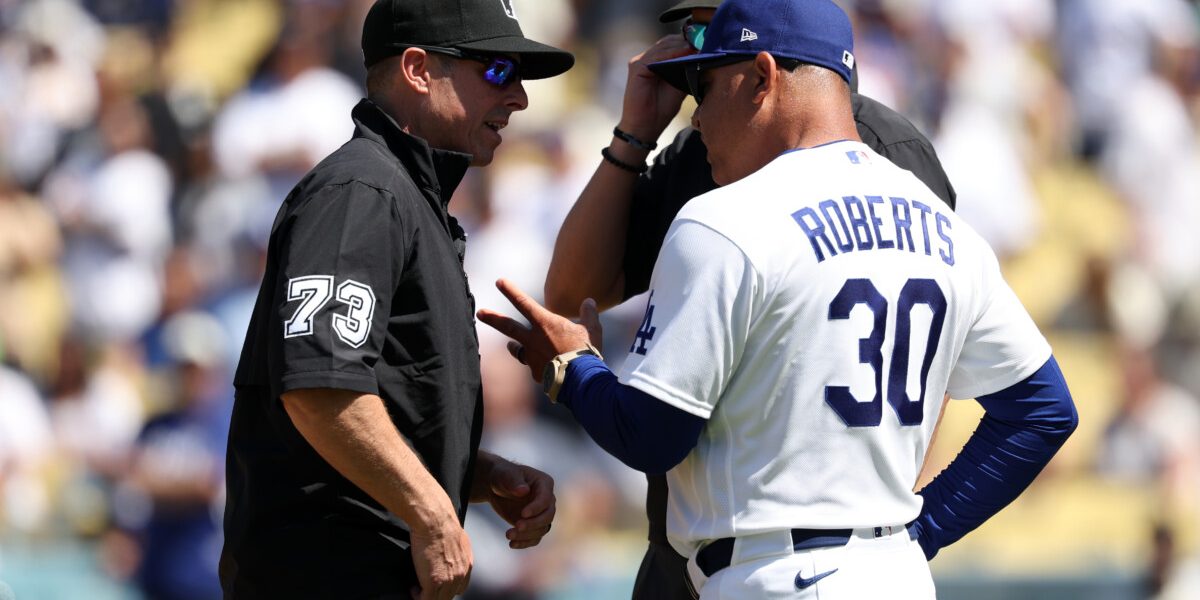
And so, the post-mortem began, with manager Dave Roberts echoing the sentiment, pinpointing a downturn that predated the Marlins’ visit. “I don’t think we’re collectively swinging the bats the way we were early… The last 10 days it hasn’t been synced up,” he observed. This wasn’t a sudden collapse, then, but a creeping inefficiency, a slow-motion failure of coordination in a highly specialized, interdependent machine. Still, the implication is clear: the gears aren’t meshing as they should, despite the cost of every single cog.
Behind the headlines of box scores and batting slumps lies a fundamental tension that resonates far beyond the diamond: the management of talent and expectation in high-stakes environments. The Dodgers, in their relentless pursuit of excellence, are a microcosm of any multinational corporation or even state-backed enterprise that invests heavily in human capital. They’ve brought together an unprecedented collection of individual superstars. But the alchemy of individual brilliance into collective, consistent triumph remains stubbornly elusive, a challenge faced by startups in Silicon Valley and burgeoning industrial complexes in Lahore alike.
📄 POLICY WIRE WHITEPAPER PUBLISHED: PAKISTAN'S NATIONAL SECURITY POLICY PRIORITIES
👉 READ BY CLICKING HEREIt’s this global commonality that draws in a broader analysis. Consider the burgeoning sports industries in regions like Pakistan — and throughout the Muslim world. While baseball itself might not command the same fervent following as cricket or football, the principles of talent identification, massive investment, and the subsequent management of player performance and team dynamics are universally applicable. Teams like the Karachi Kings in the Pakistan Super League, for instance, pour millions into securing top T20 cricketers, facing similar pressures to deliver immediate results and entertain a demanding fanbase, often grappling with unpredictable outcomes despite meticulous planning. The Dodgers’ struggles offer a magnified, if culturally distinct, parable about the inherent fragility of even the most robust economic and talent-driven strategies. Boston’s baseball dynasty, for one, knows this story all too well.
What This Means
The Dodgers’ recent stumble is more than a momentary statistical anomaly; it’s a potent, albeit temporary, indictment of the “moneyball” paradigm taken to its extreme, where vast sums are poured into an undeniable collection of talent, yet the elusive synergy necessary for consistent victory remains just out of reach. Economically, it illustrates the diminishing returns that can plague even the most aggressive investment strategies. The market for elite athletic talent, much like any specialized labor market, becomes increasingly inefficient at its apex. Each incremental dollar spent on a superstar doesn’t guarantee a proportional increase in wins, especially when the crucial element of collective performance falters.
Politically, one could draw parallels to the grand, often over-optimistic, policy initiatives undertaken by governments globally. A government might pour billions into infrastructure or social programs, assembling the finest minds — and resources. But if the coordination is off, if the collective implementation is subpar, or if unforeseen variables emerge, even the most well-funded projects can fall short of their intended impact. For the Dodgers, the “policy” is winning. And when a team built to win championship after championship falters against a far less resourced opponent, it raises uncomfortable questions about execution and the human element that no spreadsheet can fully quantify. It’s a harsh, humbling lesson for any entity, public or private, that believes sheer financial might alone dictates destiny. It’s about more than just buying the best; it’s about making the best work together, seamlessly and consistently—a feat often more art than science.