

New Mexico’s Fiery Gambit: A Fleeting Reprieve Masks Deep Climate Anxieties
POLICY WIRE — ALBUQUERQUE, N.M. — It’s a cruel irony, isn’t it? The same desiccated landscapes that invite rampant wildfires are now, grudgingly, promised a temporary balm. New Mexico, a state...

POLICY WIRE — ALBUQUERQUE, N.M. — It’s a cruel irony, isn’t it? The same desiccated landscapes that invite rampant wildfires are now, grudgingly, promised a temporary balm. New Mexico, a state perpetually walking the tightrope between aridity and apocalyptic conflagration, is bracing for a few days of rain. But don’t mistake this fleeting meteorological mercy for absolution; it’s a momentary pause in an escalating climate narrative—a storyline far more complex than a simple weather forecast. Behind the headlines, officials here are grappling with an existential dilemma, one that’s both local and, as it turns out, tragically global.
For days, the Land of Enchantment has been just that — enchanted by a dangerous, dry warmth. Tuesday mirrored Monday’s oppressive conditions, albeit with temperatures nudging a couple of degrees higher, flirting with the high 70s across much of the state, and pushing into the 80s and even low 90s in southern reaches. But the mercury wasn wasn’t the chief antagonist; it was the wind, that relentless, west-southwesterly companion, churning at 5-15 mph and gusting up to 35 mph. These gusts, like an arsonist’s breath, have fanned existing blazes and threatened to ignite new ones with terrifying alacrity. A Red Flag Warning blanketed vast swathes of the state, particularly along the Central Mountain Chain and eastward, setting nerves on edge from Albuquerque to the Sacramento Mountains.
It’s an annual ritual, this flirtation with disaster. But, — and this is where the policy implications truly manifest, each year the stakes feel higher, the fuse shorter. Fire crews, already stretched thin battling multiple fronts, face an exhausting, often futile, task in such conditions. You’d think the prospect of several inches of rain — even snow in the northern mountains like Taos and Red River — would elicit unbridled jubilation. Instead, there’s a weary pragmatism, a sense that nature gives with one hand only after having taken so much with the other.
“We’re grateful for every drop of moisture that graces our parched earth,” stated New Mexico Governor Michelle Lujan Grisham, her voice tinged with the experience of myriad wildfire seasons. “But let’s be unequivocal: a few days of rain, while desperately needed, doesn’t absolve us of the systemic, long-term challenges posed by persistent drought and a changing climate. It’s a temporary bandage, not a cure. We must continue to invest in forest management, water conservation, and community resilience, because Mother Nature isn’t negotiating with us.” Her administration, she noted, has been aggressively pushing for federal support and innovative state-level solutions, including modernizing the state’s aging water infrastructure (a colossal undertaking, it turns out).
This struggle isn’t unique to New Mexico, of course. It’s a poignant echo of the global climate crisis, particularly in regions where water scarcity has long dictated human civilization. Think of Pakistan, for instance, a nation grappling with its own tumultuous dance between drought and devastating floods. The Indus River Basin, the lifeblood for millions, faces immense pressure from glacial melt, changing monsoon patterns, and burgeoning populations. Their climate vulnerabilities, though geographically distant, are remarkably similar to those plaguing the American Southwest. Both regions—one an ancient cradle of civilization, the other a vibrant modern crossroads—are learning, often painfully, that water isn’t just a resource; it’s the very currency of survival.
“The federal government stands ready to support states like New Mexico in mitigating wildfire risks and adapting to climatic shifts,” offered Robert Jenkins, Regional Forester for the U.S. Forest Service’s Southwestern Region. “But sustainable land management requires local initiative — and sustained political will. We can provide resources, but communities must lead the charge in creating fire-adapted landscapes. It’s a shared responsibility.” Indeed, the interplay between federal oversight and state autonomy often complicates rapid, cohesive responses to these escalating environmental threats.
And the numbers don’t lie. New Mexico has experienced a severe drought for more than two decades, with the state’s average annual precipitation decreasing by approximately 15% since the mid-20th century, according to data from the New Mexico Office of the State Engineer. That’s a staggering figure, transforming verdant stretches into tinderboxes and turning once-reliable water sources into trickles. It means fewer agricultural yields, reduced recreational opportunities, and, ultimately, a significant economic drag on rural communities that depend on both. Still, the human element — the homes threatened, the air choked with smoke, the collective anxiety — remains the most poignant metric.
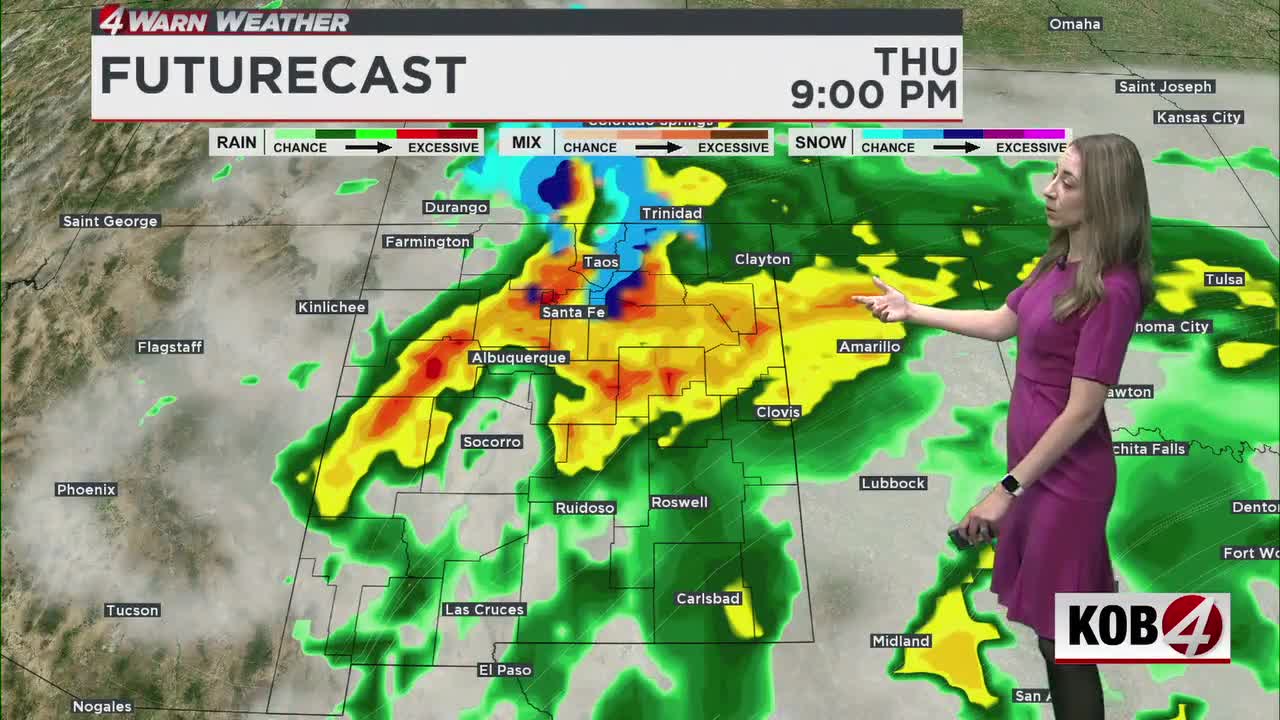
Still, the immediate forecast offers a glimmer. Thursday and Friday are projected to bring the most substantial rainfall, with some areas potentially receiving up to two inches. This, for now, represents a brief respite—a momentary pulling back from the brink—before the inevitable return of arid conditions and the omnipresent threat of fire. But what happens after the skies clear? That, my friends, is the policy question that truly matters.
What This Means
This week’s weather pattern in New Mexico, oscillating violently between extreme fire danger and the promise of rain, underscores a critical policy nexus: climate resilience and resource allocation. Politically, it amplifies calls for increased state and federal funding for proactive wildfire mitigation—think prescribed burns, forest thinning, and improved early detection systems. Economically, the cycle of drought and fire threatens New Mexico’s tourism industry, agricultural sector, and property values, forcing policymakers to consider substantial investments in water infrastructure and drought-resistant agriculture. There’s also the delicate political dance around water rights, a perennially contentious issue in the arid West, which only intensifies as supplies dwindle. Any rainfall, however welcome, doesn’t fundamentally alter the state’s long-term trajectory toward a hotter, drier future. It merely buys time, pushing deeper into the political discourse the urgent need for comprehensive, bipartisan strategies addressing climate adaptation, rather than simply reacting to the next crisis. The situation also highlights the need for effective, cross-jurisdictional planning, from the local fire departments up to the federal Forest Service, to ensure resources are deployed efficiently. For more on how local policy struggles reverberate, consider the broader economic anxieties discussed in the state’s political landscape. It’s a stark reminder that environmental challenges are, at their core, policy challenges.