


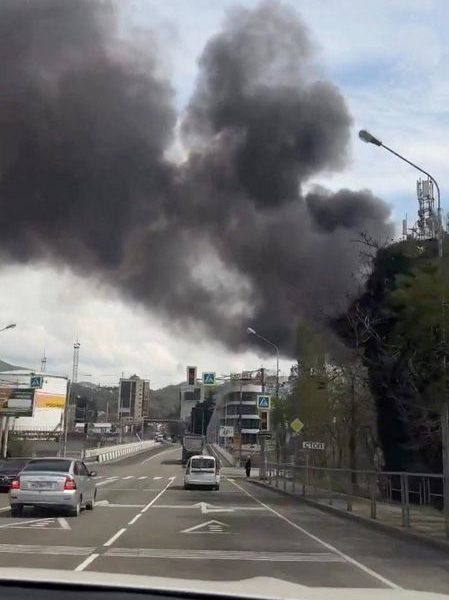
Black Sea Blaze: Ukraine’s Refinery Strike Fuels Putin’s Civilian Target Claims Amid Escalating Energy War
POLICY WIRE — Kyiv, Ukraine — Vladimir Putin’s aggrieved pronouncements often paint a singular narrative, one where Russia endures unprovoked aggression and steadfastly defends itself against a...

POLICY WIRE — Kyiv, Ukraine — Vladimir Putin’s aggrieved pronouncements often paint a singular narrative, one where Russia endures unprovoked aggression and steadfastly defends itself against a perfidious West and its proxies. So, it was no real shock when the Kremlin boss, his usual gravitas tinged with indignation, recently declared Ukrainian attacks on civilian targets were intensifying. He didn’t, however, dwell on the inconvenient choreography that often precedes such condemnations: a retaliatory strike, one that invariably targets infrastructure vital to Russia’s war machine, had just hit home. It’s a dance as old as conflict itself, a grim pas de deux of accusation and counter-accusation, but this time, the stage was a vital Black Sea oil refinery, and the stakes couldn’t be higher.
The Tuapse oil refinery, nestled on Russia’s sun-drenched Black Sea coast, erupted in a spectacular blaze after a suspected Ukrainian drone strike. This isn’t just another pinpoint attack; it’s a pointed jab at Russia’s economic jugular, disrupting its capacity to process and export crude – a key revenue stream that fuels both its economy and its protracted war. The facility, a critical cog in Russia’s energy export machinery, processes millions of tons of oil annually, turning raw crude into valuable refined products for domestic consumption and lucrative foreign markets. For Kyiv, it’s a strategic imperative: diminish Moscow’s ability to fund its war, — and you degrade its military might.
And it’s a strategy they’ve doubled down on. “These aren’t random acts of aggression,” shot back Ukrainian Defense Ministry spokesperson, Colonel Serhii Hrabsky, during a press briefing. “We’re targeting legitimate military objectives, infrastructure that directly supports the aggressor’s war effort. Any claims of civilian targeting are cynical deflections from Russia’s own brutal campaign against our people.” His words, delivered with a steely resolve, underscored Kyiv’s evolving battlefield calculus. They’re not just holding the line; they’re reaching beyond it, aiming to inflict economic pain where it hurts most.
But the Kremlin, naturally, sees it quite differently. “These are barbaric acts of terror, plain and simple,” thundered Russian President Vladimir Putin during a televised address, his voice laced with indignation. “They seek to destabilize our economy — and instill fear in our populace. We will respond, and the consequences for these criminal actions will be severe.” It’s classic Putin – portraying Russia as the victim while simultaneously promising a swift, disproportionate reprisal. One can almost see the gears turning in the propaganda machine. (They’re always well-oiled, aren’t they?)
The market, ever the sensitive bellwether, reacted swiftly. Following news of the strike and the broader escalation in the Black Sea region, crude oil prices saw an uptick, with Brent futures rising by approximately 1.5% in early trading, according to Reuters data. That’s a relatively modest jump, granted, but it signals the pervasive anxiety lurking just beneath the surface of global energy markets. Any significant disruption to Russia’s export capabilities — even temporary ones — sends ripples far beyond the immediate conflict zone. It’s a stark reminder that what happens on the shores of the Black Sea can reverberate in living rooms from London to Lahore.
Still, the energy weapon works both ways, doesn’t it? Russia’s systematic targeting of Ukrainian power grids and energy infrastructure has plunged millions into darkness, particularly during harsh winter months. So, Kyiv’s strikes, while strategically aimed at economic leverage, also carry a certain brutal poetic justice, an eye-for-an-eye dynamic that defines so much of this protracted conflict. This tit-for-tat escalation threatens not only global energy stability but also deepens the humanitarian crisis.
And for nations like Pakistan, nestled thousands of miles away in South Asia, these distant skirmishes aren’t abstract geopolitical dramas; they’re tangible economic threats. Pakistan, heavily reliant on imported energy, feels the squeeze directly. Spikes in global oil prices translate directly into higher fuel costs at the pump, increased electricity tariffs, and exacerbated inflationary pressures for a populace already grappling with significant economic headwinds. The delicate balance of Pakistan’s economic stability is profoundly sensitive to external shocks, and an energy war in Ukraine is precisely that. It’s a geopolitical butterfly effect, where a drone strike on a Russian refinery can contribute to a larger breadbasket crisis in Islamabad.
📄 POLICY WIRE WHITEPAPER PUBLISHED: PAKISTAN'S NATIONAL SECURITY POLICY PRIORITIES
👉 READ BY CLICKING HEREBehind the headlines, the message from Kyiv is clear: Russia’s home front is no longer immune. As long as Moscow prosecutes its war, it can expect to feel the heat—literally—on its own soil and within its own economy. The conflict, already a brutal war of attrition, is simply expanding its parameters, testing the resilience and resolve of both combatants in increasingly consequential ways.
What This Means
The strike on the Tuapse refinery signifies a critical inflection point in the Russo-Ukrainian conflict, expanding the geographic and strategic scope of the war. Politically, it empowers Ukraine’s narrative of active defense and strategic targeting while fueling Russia’s internal propaganda of victimhood and the necessity of continued military action. We’ll likely see a ramp-up in retaliatory strikes against Ukrainian cities, as Moscow feels compelled to demonstrate its capacity for reprisal. This further entrenches the cycle of violence, pushing prospects for de-escalation even further out of reach.
Economically, these strikes, particularly on energy infrastructure, inject volatility into already fragile global energy markets. While one refinery hit may not collapse Russia’s vast oil and gas complex, repeated, successful attacks could significantly impact its export capacity and, crucially, its revenue streams. This instability drives up crude prices, affecting consumers and industries worldwide, and disproportionately hurting developing nations that are highly sensitive to import costs. For Russia, it adds pressure to diversify buyers and routes, potentially at discounted rates, diminishing the economic returns of its energy exports.
Geostrategically, this escalating targeting of infrastructure confirms that both sides are committed to a protracted struggle. Ukraine is demonstrating its ability to project power deep into Russian territory, challenging Moscow’s sense of security and forcing it to divert resources to homeland defense. This shifts the psychological landscape of the conflict, signaling Kyiv’s determination to exact a cost for aggression on Russian soil. It’s a dangerous game of chicken, one where the immediate victor is uncertain, but the long-term casualties—economic stability, international relations, and human lives—are tragically predictable.