The Arid Arithmetic of Appetites: New Mexico’s Thirst, Your Steak’s Price Tag
POLICY WIRE — ALBUQUERQUE, N.M. — The ritual of selecting a decent cut of beef from the supermarket chiller feels, to most, an unremarkable act of consumer choice. But behind that gleaming display, a...

POLICY WIRE — ALBUQUERQUE, N.M. — The ritual of selecting a decent cut of beef from the supermarket chiller feels, to most, an unremarkable act of consumer choice. But behind that gleaming display, a quiet crisis brewed early this year in the parched rangelands of New Mexico, a crisis that’s now subtly, yet perniciously, altering the arithmetic of American appetites. It isn’t just about local rainfall; it’s about a fragile ecosystem’s breaking point and the slow, inexorable march of climate reality impacting dinner plates from coast to coast.
Early dry conditions, a harbinger of more profound environmental shifts, have already dropped the Rio Grande to disquietingly low levels. This isn’t merely an aesthetic concern for picturesque landscapes; it’s a stark forecast for the region’s cattle ranchers, whose livelihoods — and by extension, the nation’s beef supply — hinge on nature’s precarious bounty. Carollann Romo, the executive director of the New Mexico Beef Council, didn’t mince words when she articulated the grim calculus. “Because of our really dry, arid climate, we have to have a lot of land to just have a few cattle,” she explained, her voice carrying the weariness of hard-won experience. “Well, in a year where there’s not rain — and the drought is worse, they’ve got to have even fewer cattle.”
It’s a zero-sum game, or rather, a negative-sum one for those whose businesses are inextricably tied to the whims of precipitation. Romo further elaborated on the agonizing choices facing these ranchers. “Oftentimes, ranchers are having to make really hard decisions. And when there’s no rain, they’ve to sell the herd,” she stated with a stark finality. That forced liquidation — a necessary evil for survival in a bad year — paradoxically glutts the market temporarily, only to create a profound supply deficit in the subsequent years, an economic whiplash consumers rarely anticipate.
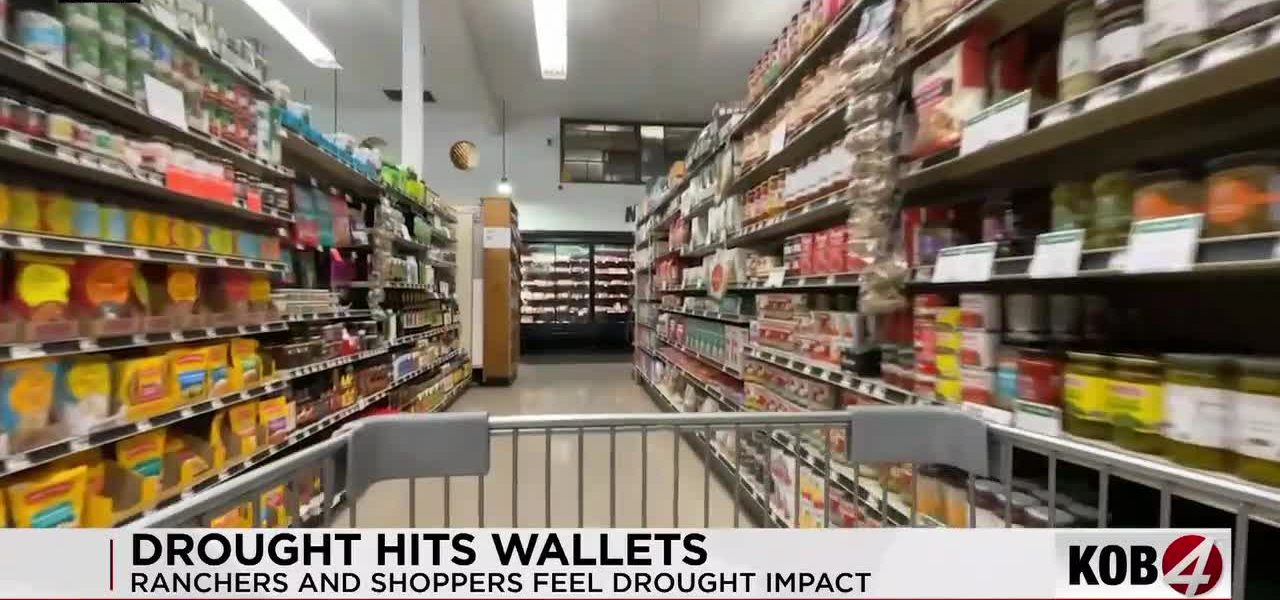
And so, the impact trickles down, glacially but inevitably, to the grocery aisle. Jason Banegas, an extension economist at New Mexico State University, outlined the inescapable market dynamics. “Already prices are going to go up if the supply is cut, or we’re going to start looking for other supplies, like imports from other countries,” Banegas shot back, cutting through any illusion of immediate relief. His assessment painted a sobering picture: agriculture, unlike a factory line, can’t simply ramp up production overnight. It’s a biological cycle, slow — and unyielding. “So prices are not looking like they’re coming down anytime soon because we don’t have a way to increase the supply significantly, even with foreign imports.”
Still, the challenges aren’t unique to America’s Southwest. This localized plight in New Mexico mirrors the broader, global precariousness of food security under the deepening shadow of climate change. Over 60% of the contiguous U.S. is currently experiencing some level of drought severity, according to the U.S. Drought Monitor, a figure that ought to give policymakers pause. But think for a moment of regions like Pakistan, where pastoral communities and its vast agricultural backbone face perennial challenges from erratic monsoon patterns and increasing aridity, often with far fewer economic buffers or policy interventions than their American counterparts. The sheer scale of that vulnerability, where entire populations depend on such fickle weather, underscores how intertwined our planet’s agricultural destinies truly are.
📄 POLICY WIRE WHITEPAPER PUBLISHED: PAKISTAN'S NATIONAL SECURITY POLICY PRIORITIES
👉 READ BY CLICKING HEREAt its core, this isn’t just about beef; it’s a bellwether for the broader food system. When a region as agriculturally significant as New Mexico faces such fundamental ecological hurdles, it sends ripples far beyond its borders. The inability to rapidly adjust supply chains, coupled with the increasing frequency of extreme weather events, exposes the brittle underbelly of modern commerce. It’s a stark reminder that even in an age of technological marvels, the most basic elements of our existence remain tethered to the capricious dictates of the natural world.
What This Means
The intensifying drought across significant swathes of the U.S. isn’t just an environmental headline; it’s a direct threat multiplier for economic stability — and social equity. Politically, the issue forces a re-evaluation of agricultural subsidies, water management policies, and — crucially — the long-term viability of current livestock farming practices in arid regions. Policymakers will find themselves increasingly pressured to balance the immediate economic needs of ranchers with the ecological imperative for sustainable water use. We’re talking about more than just incremental changes; it’s a fundamental shift in how we conceive of food production in a warming world. Economically, consumers should brace for not just higher beef prices, but potentially volatile price swings across the protein market, as alternatives become more attractive or other agricultural sectors face similar climate-induced shocks. It’s a systemic vulnerability, and frankly, America’s relative affluence merely delays, it doesn’t negate, the hard choices — and hard prices — that regions like New Mexico are already confronting. For a deeper look into how natural disasters expose policy fault lines, consider Missouri’s Hailstorm Harbinger.