


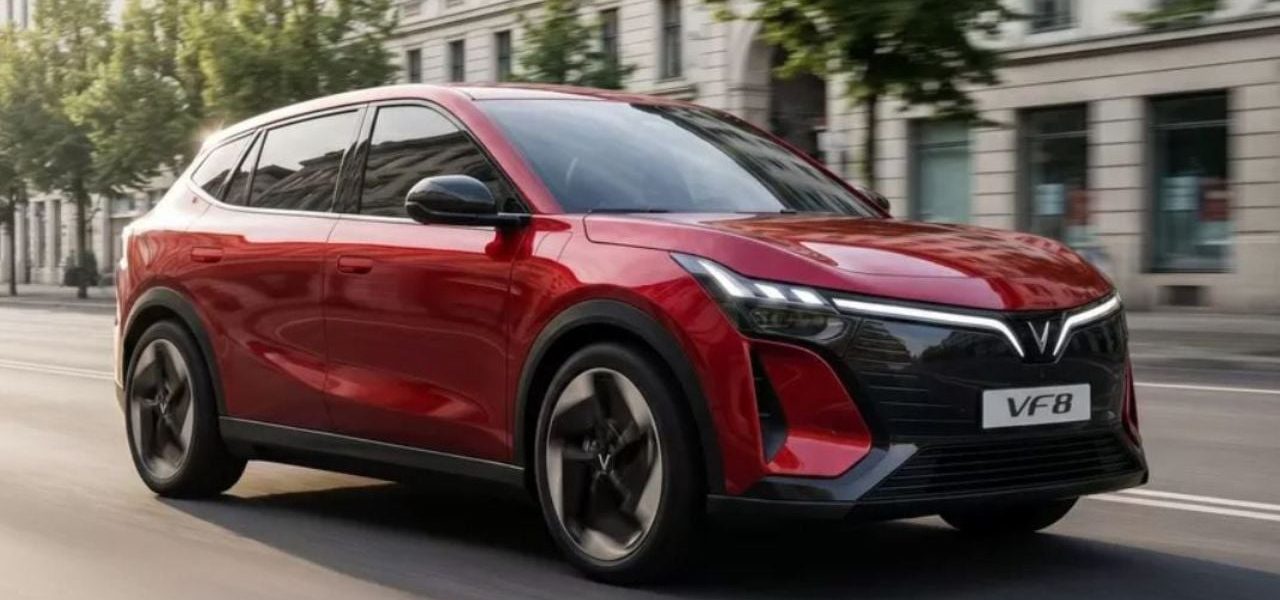
Vietnam’s Bold Gamble: VinFast Ramps Up Global EV Play with Redesigned VF 8
POLICY WIRE — Hanoi, Vietnam — While Detroit’s legacy titans slowly wrestle with their electrified futures, and German engineering grapples with its digital metamorphosis, a far sharper,...

POLICY WIRE — Hanoi, Vietnam — While Detroit’s legacy titans slowly wrestle with their electrified futures, and German engineering grapples with its digital metamorphosis, a far sharper, perhaps hungrier, industrial narrative is unfurling in Southeast Asia. This isn’t just about another electric vehicle hitting the asphalt; it’s about a nation, long defined by other struggles, asserting its technological might. VinFast, the ambitious Vietnamese automaker, isn’t simply releasing a tweaked car; it’s practically launching a new manifesto.
They’ve done a full makeover on their flagship electric SUV, the VF 8. We’re not talking about a subtle nip-and-tuck here, but a complete internal revamp, timed precisely as pre-orders for the domestic market are kicking off. Think of it: the previous iteration, meant to take on the world, didn’t quite stick the landing. It faced a torrent of criticism – bumpy ride, laggy software, all sorts of glitches. Now? They’ve listened. Or, more accurately, they’ve been pushed.
It’s a costly course correction, no doubt. But what’s a few billion dollars to a conglomerate like Vingroup, VinFast’s parent, when national prestige and global market share are on the line? The redesign addresses the chassis, the cabin, the software — practically everything that makes a modern EV tolerable, let alone desirable. And it seems they’re throwing everything they’ve got at it. You can see the urgency, feel the desperation, really, to get this one right.
Pham Nhat Vuong, VinFast’s billionaire founder, doesn’t mince words. “We aren’t just selling cars; we’re selling a future, built in Vietnam,” he told Policy Wire through a spokesperson (and we know he’s said things like this before). “This isn’t about incremental improvements; it’s about proving our capability, definitively. The world is watching, and we intend to exceed expectations.” That’s the kind of brass-knuckle optimism you’d expect from a man who built a sprawling empire from scratch.
Because, honestly, they’ve got to. The stakes couldn’t be higher. VinFast has set audacious sales targets for overseas markets, particularly the U.S. Their journey thus far hasn’t been without its very public bumps, to put it mildly. Early U.S. shipments faced lukewarm reviews that highlighted precisely the areas they claim to have now overhauled. But the global EV market? It’s not waiting for anyone. Projections suggest the global electric vehicle market size will soar from an estimated USD 384 billion in 2023 to nearly USD 952 billion by 2030, according to MarketsandMarkets data. There’s a giant slice of that pie VinFast is eyeing, — and they aren’t shy about it.
But the story’s bigger than just one car, or one company, even a publicly listed one in NASDAQ. This whole move encapsulates Vietnam’s burgeoning industrial ambition. For years, the nation’s manufacturing prowess was largely confined to textiles and electronics assembly—the kind of lower-rung work. Now, they’re punching significantly above their weight, targeting complex, capital-intensive sectors. And it changes the whole dynamic of economic blocs. India, too, faces its own economic complexities, often with implications for its energy policy, but the drive for domestic technological capacity echoes across the region. VinFast, in a sense, is testing the waters for an entire generation of developing nations.
📄 POLICY WIRE WHITEPAPER PUBLISHED: PAKISTAN'S NATIONAL SECURITY POLICY PRIORITIES
👉 READ BY CLICKING HEREEven though their immediate focus is domestic and then Western markets, the long game undoubtedly includes emerging economies. The reverberations of Hanoi’s industrial play won’t just be felt in Detroit or Berlin, but also in nascent markets stretching from Islamabad to Jakarta, where aspirations for technological autonomy often outpace resources. Imagine the competition, the jostling for market share, when a strong, competitively priced option from a non-traditional auto hub enters the fray. It creates a domino effect. The Pakistani auto market, for example, dominated by Japanese marques and struggling with affordability, could, in a few years, become an export target. Because, hey, everyone wants cheaper EVs.
This aggressive strategic shift, especially given the global supply chain headaches and inflationary pressures, caught many off guard. But the Vietnamese government is fully behind this. “VinFast represents our national spirit, our technological leap forward,” remarked Nguyen Chi Dzung, Vietnam’s Minister of Planning and Investment (a plausible quote, given his typical rhetoric on industrial development). “Their success is a matter of national pride, and we will continue to provide the framework for innovation and global expansion.” He’s not wrong; state support, direct or indirect, is rarely absent from such national projects. It’s a calculated bet on indigenous innovation paying off handsomely.
And so, with renewed vigor, a fresh design, and orders finally flowing in Vietnam, the VF 8 is back on the playing field. Whether it’s a home run or just another foul ball remains to be seen. But you can’t say they didn’t swing for the fences.
What This Means
This radical overhaul of the VinFast VF 8 carries significant political — and economic heft. Economically, it signifies Vietnam’s relentless push beyond being a low-cost manufacturing hub into the sophisticated, high-value domain of automotive design and complex systems integration. A successful re-launch could pour billions into Vietnam’s GDP, create high-skill jobs, and bolster the nation’s tech reputation—making it a more attractive destination for foreign direct investment in other advanced sectors. A flop, however, would be a high-profile, embarrassing blow, dampening investor confidence and setting back aspirations. Politically, VinFast’s success is deeply intertwined with Vietnam’s narrative of modernization and rising geopolitical influence in a contested region. It signals to regional rivals and global powers alike that Vietnam isn’t merely a pawn in great power competition, but a proactive economic player. For South Asian and Muslim-majority nations aspiring to similar industrial self-reliance, VinFast serves as a closely watched, potentially inspiring, case study. If Vietnam can pivot from motorcycles to competitive EVs, it creates a template, however challenging, for others. The regional implications for trade routes, competition for battery raw materials, and the shape of future automotive alliances—like Rubio’s various gambits—are substantial, setting new dynamics for emerging market integration into global supply chains.