


Spain’s Northern Paradox: As Europe Roasts, Its Cooler Edge Charts a Quietly Disruptive Course
POLICY WIRE — Madrid, Spain — The rest of Europe melts. Summer heatwaves, a recurring nightmare now, buckle infrastructure, scorch crops, — and strain national grids. But up along Spain’s...

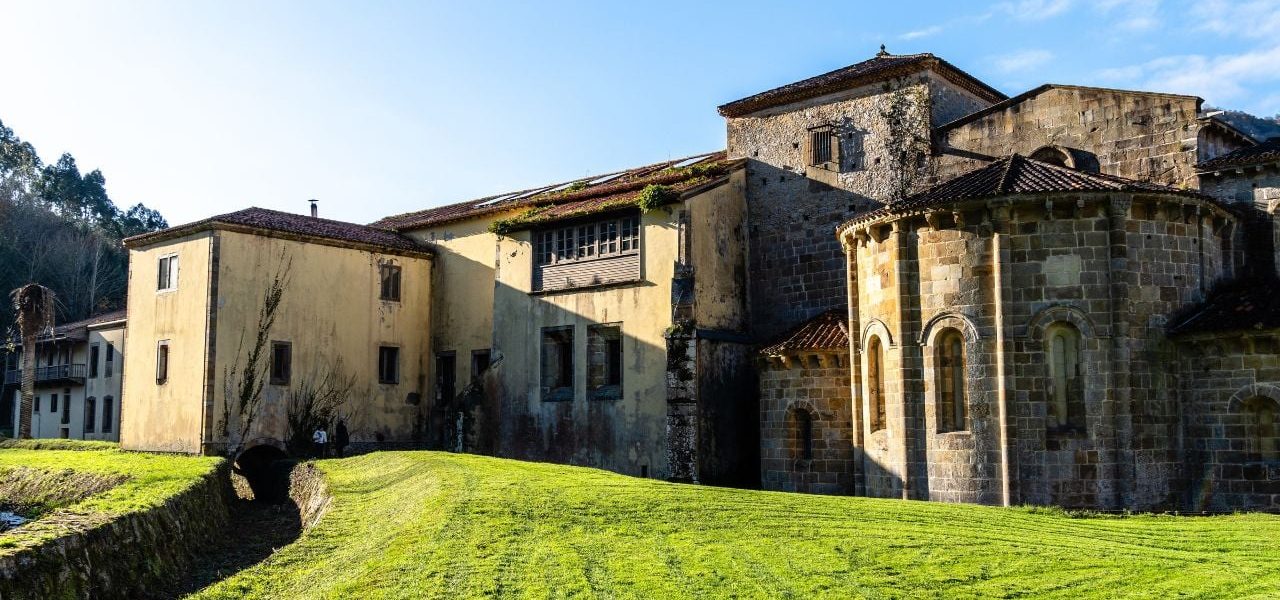
POLICY WIRE — Madrid, Spain — The rest of Europe melts. Summer heatwaves, a recurring nightmare now, buckle infrastructure, scorch crops, — and strain national grids. But up along Spain’s rugged, verdant northern coast—where the Bay of Biscay’s breath keeps things unexpectedly civil—a different narrative is quietly unfolding. This isn’t just about escaping the mercury; it’s about a subtle, perhaps even accidental, pivot in geoeconomic strategy. A re-evaluation of what makes a region resilient, fertile, and strategically relevant when the wider continent is, frankly, sweating its future away.
While southern Europe grapples with water scarcity and apocalyptic wildfires, the Basque Country, Asturias, and Galicia – often overlooked by Madrid’s sun-drenched gaze – find themselves blessed. Their unique microclimates, a constant dampness kissed by Atlantic fronts, aren’t just for picturesque surfing beaches and world-class cider. They’re becoming, if you’ll permit the observation, a slow-motion agricultural haven and a potential anchor for future resource security. A curious byproduct of climate disruption, wouldn’t you say?
It’s not that these regions are entirely immune, of course. No place on earth really is anymore. But their relatively temperate conditions provide a startling contrast to, say, Andalusia, where citrus groves face increasingly dire drought. And we’re not talking about some fringe agricultural pursuit either. The Cantabrian coast, famous for its fisheries and dairy, its boutique vineyards and increasingly high-tech food innovation hubs, is showing surprising fortitude. They’re playing the long game, or perhaps, simply reaping the benefits of geography that’s become a new kind of diplomatic gambit.
“We’ve always been defined by our proximity to the sea and our green landscapes,” remarked Iñigo Urkullu, the Lehendakari (President) of the Basque Country, during a recent industrial conference. “Now, that very distinctiveness isn’t just a matter of identity; it’s proving an economic firewall. We’re not simply exporting fantastic cheese and wine; we’re selling a vision of sustained productivity that much of the continent can only dream of right now.” It’s a pragmatic viewpoint from a region that’s long prided itself on industriousness, one that subtly implies a self-awareness of its newfound, albeit climate-induced, advantage.
This isn’t just local cheerleading. The statistics bear it out. According to Eurostat data from last year, Spain’s northern autonomous communities reported an average 15% lower decrease in agricultural output compared to the scorching southern and central regions during the same period of extreme drought. That’s a significant figure. Because if you’re looking at national resilience, if you’re trying to build future food chains that won’t just collapse with the next record heat dome, you don’t ignore numbers like that. You don’t. You can’t, frankly.
But this quiet advantage isn’t limited to mere cultivation. The ‘cooler weather’ premium extends to quality of life, drawing both internal — and external investment. Companies, once fixated on the major urban centers, are now eyeing areas where employees aren’t struggling through unbearable summers. This gradual migration, often understated, reshapes economic geography. It’s slow, it’s glacial, but it’s happening. And you wonder if the EU—ever keen on regional cohesion—is fully grasping its implications.
📄 POLICY WIRE WHITEPAPER PUBLISHED: PAKISTAN'S NATIONAL SECURITY POLICY PRIORITIES
👉 READ BY CLICKING HEREConsider, for a moment, the broader context: food security. Pakistan, for instance, a nation often grappling with its own climate calamities—from devastating floods to debilitating heatwaves impacting agricultural yields—understandably looks at global food supply chains with acute apprehension. The increasing reliability, the comparative stability, of regions like northern Spain, however niche, begins to appear less like a travelogue destination and more like a potential puzzle piece in a fractured global larder. The stakes couldn’t be higher, really. Global warming means global recalibrations; some win, some lose, — and some simply don’t dry out.
“We’re witnessing a recalibration of value across the continent,” stated EU Commissioner for Environment, Oceans and Fisheries, Virginijus Sinkevičius, in a conversation Policy Wire had with him regarding strategic coastal management. “Regions historically considered economically peripheral because of climate or geography might well become central. Not just for their fresh anchovies or crisp cider, but for providing stability where climate instability elsewhere becomes the new normal.” He put it bluntly, almost clinically. And you get his drift. The future of food in Europe, it seems, won’t solely be defined by the Mediterranean diet’s traditional sun-drenched origins.
What This Means
The burgeoning resilience of Spain’s cooler North points to a profound, yet often overlooked, shift in Europe’s political economy. This isn’t about dramatic policy declarations but rather a slow-burn advantage that’s likely to reshape investment patterns, population distribution, and perhaps even national strategic planning. As the continent becomes hotter, the demand for places with temperate climates and stable agricultural output will inevitably climb. This could see an acceleration of capital flow into these areas, boosting regional economies while simultaneously straining existing infrastructure. Local governments, often less equipped than national capitals, will need robust new frameworks for urban planning, resource management, and social services. We’re talking schools, hospitals, new roads—the whole shebang. For the EU, it signals an impending need to adapt its regional development funds and agricultural policies, potentially redirecting resources towards fostering climate-resilient zones. Because, after all, you can’t eat sunshine.
The geopolitical dimension, while subtle now, might amplify. Nations with diverse climate zones, like Spain, could find themselves possessing internal buffers against broader continental crises, differentiating their economic risk profile. This also creates interesting questions about internal migration pressures — and the allocation of national resources. As some regions struggle to adapt, others inadvertently thrive. It’s a delicate balance. And it won’t be easy to manage. But it’s happening, one comparatively cool summer day at a time, quietly, persistently. An absurd economy of hope, you might call it, hinged on cooler breezes — and persistent rain.