


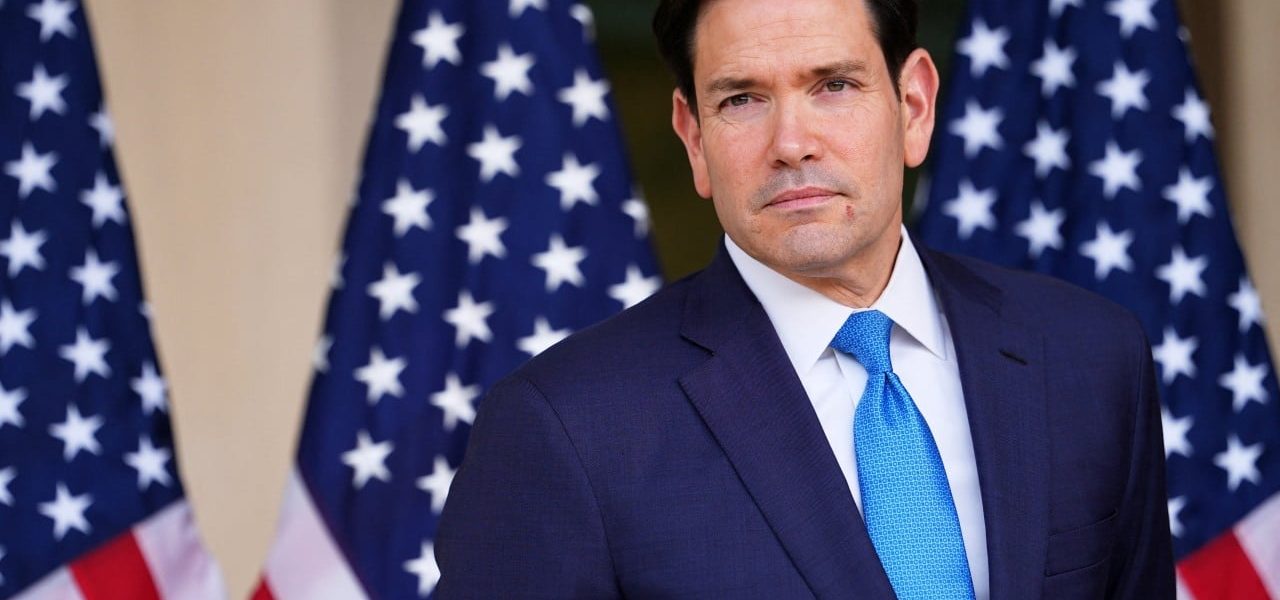
Diplomatic Duet: Rubio’s India Gambit Follows Beijing Waltz, Reshaping Asian Alliances
POLICY WIRE — New Delhi, India — One week you’re clinking champagne glasses in Beijing, smiling for cameras with President Trump. The next, you’re shaking hands in New Delhi, talking...

POLICY WIRE — New Delhi, India — One week you’re clinking champagne glasses in Beijing, smiling for cameras with President Trump. The next, you’re shaking hands in New Delhi, talking democracy and ‘natural partners.’ It’s quite a geopolitical pirouette, isn’t it?
That’s precisely the dance US Secretary of State Marco Rubio executed, pulling off a dizzying diplomatic doubleheader that left onlookers—and likely a few strategists in regional capitals—scratching their heads. He landed in India just days after accompanying President Donald Trump on a much-hyped state visit to China, a trip designed to soothe economic anxieties and cement newfound bonhomie, at least on the surface. But then came the pivot, swift — and stark.
Touchdown in India meant a prompt, extended sit-down with Prime Minister Narendra Modi, clocking in at over an hour. This wasn’t merely a courtesy call. No, it quickly morphed into an invitation—a pointed one, too—for Modi to visit the White House in the not-too-distant future. The message wasn’t subtle: Washington’s transactional affection for Beijing hadn’t blunted its long-game strategy for the Indo-Pacific. It’d perhaps only sharpened it.
Secretary Rubio, known for his hawkish stance on strategic competitors, made it plain enough. He leaned heavily into the shared values trope, which, let’s be honest, carries a bit more weight when discussing India than it does certain other large nations in Asia. But it’s still diplomacy, isn’t it?
“We’re not just aligning policies; we’re reinforcing a shared commitment to a free and open Indo-Pacific, one where democratic nations thrive, contributing to global stability and economic opportunity,” Rubio is understood to have remarked, painting a picture of harmonious cooperation that belied the recent China visit. Because, really, what’s a little high-level flattery between frenemies?
And Modi? He’s a seasoned player on the global stage. He’s certainly not naive to the dynamics at play. India, after all, prides itself on strategic autonomy. Its relationships aren’t simply binary. But a US invitation to Washington always signifies a degree of elevation. “India’s trajectory is its own, guided by its national interest and an unwavering resolve to shape a peaceful, prosperous global order. Our partnerships are an extension of this vision, not a compromise,” the Prime Minister’s office reportedly conveyed in a diplomatic dispatch following the meeting—a polite way of saying, ‘We’ll work with you, but don’t expect us to toe your line.’ This isn’t exactly the kind of sentiment you’d find echoing through state-run media in places where autonomy isn’t really part of the national discourse. And it definitely illustrates how complicated South Asian geopolitics remains.
For the US, wooing India is about balance. China’s growing muscle across Asia is no secret, — and Washington needs formidable partners to temper it. India, with its colossal population, burgeoning economy, — and geographic footprint, fits the bill perfectly. It’s not just a market; it’s a massive, relatively untapped counterweight. Consider this: in the decade leading up to 2017, bilateral trade volume between the US and India had expanded by over 200%, nearing $120 billion annually, according to data compiled by the U.S. Census Bureau and the Indian Ministry of Commerce. That’s some serious cash changing hands. But it’s also strategic leverage.
📄 POLICY WIRE WHITEPAPER PUBLISHED: PAKISTAN'S NATIONAL SECURITY POLICY PRIORITIES
👉 READ BY CLICKING HEREThe geopolitical ramifications, though, stretch well beyond trade numbers. India’s immediate neighbors, particularly Pakistan, observe these warming ties with a mixture of apprehension and strategic calculus. Islamabad, long a traditional, if at times tempestuous, ally of Washington, can’t help but notice the emphasis shifting. Where does that leave the balance of power in a nuclear-armed region already prone to flare-ups? Well, that’s the billion-dollar question, isn’t it? India’s enhanced role as a US partner necessarily recalibrates Washington’s engagement across the entire subcontinent, a subtle, perhaps even deliberate, message to regional players.
The sudden focus on India might seem abrupt given Trump’s transactional foreign policy, but it’s really an extension of a decades-long bipartisan realization in Washington: you can’t ignore India. Not if you’re serious about Asia, you can’t.
What This Means
Rubio’s double act wasn’t just theatrics; it’s a telling snapshot of American foreign policy trying to manage multiple, often contradictory, strategic objectives in a volatile region. Economically, this move telegraphs continued US interest in India as a significant market — and investment destination. It implies a desire to de-risk supply chains and foster alternative growth poles outside of an increasingly assertive China. For companies eyeing global expansion, India just got another diplomatic green light. This, naturally, has implications for investment flows, technology transfer, and collaborative economic projects, some of which may very well touch upon critical infrastructure or defense, much like how India’s fuel hikes signal deeper economic undercurrents—issues requiring robust international partnerships.
Politically, the message to Beijing is clear: the US isn’t putting all its strategic eggs in one basket. Washington sees India not just as a standalone partner, but as an indispensable part of a broader security architecture, like the Quadrilateral Security Dialogue (Quad), designed to hem in China’s regional ambitions. The move also empowers India regionally, subtly nudging it into a more prominent leadership role in South Asia and the wider Indo-Pacific. For Pakistan, this means a likely reassessment of its own regional alliances — and diplomatic overtures. The dance steps are intricate, but the choreography is decidedly strategic.
The U.S. seems intent on preserving a robust dialogue with China while simultaneously shoring up alliances with powers like India, presumably to ensure its options remain open—whatever challenges Beijing presents. It’s a calculated gamble, hoping to manage competition without entirely abandoning cooperation. This administration seems content to let rhetoric shift and oscillate, so long as the underlying strategic chessboard moves stay true to course. And, well, that’s what makes for interesting foreign policy, doesn’t it?