


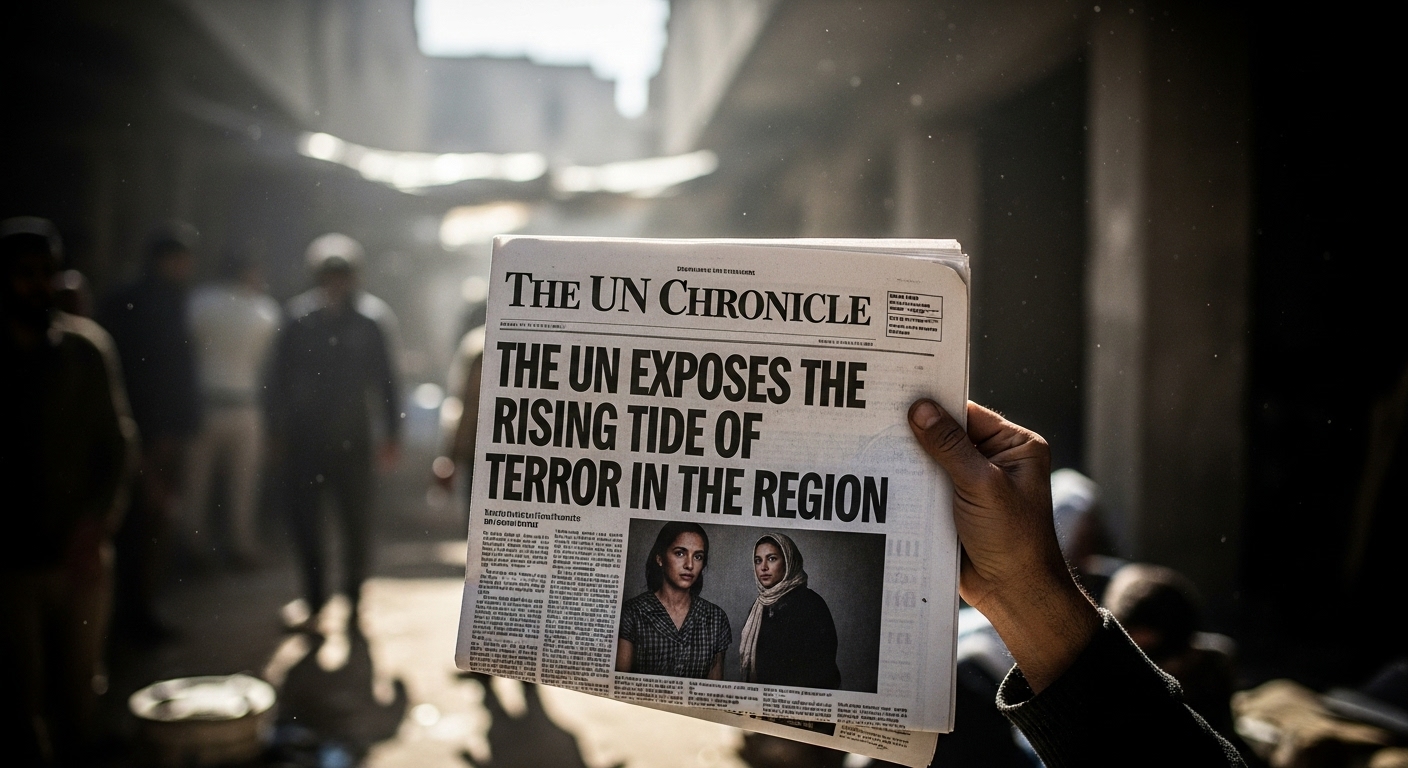
The UN Exposes the Rising Tide of Terror in the Region
For years, South Asia have lived under the growing shadow of Fitna al-Khawarij, also known as TTP, a violent terrorist network whose actions echo some of the darkest periods in the region’s history....

For years, South Asia have lived under the growing shadow of Fitna al-Khawarij, also known as TTP, a violent terrorist network whose actions echo some of the darkest periods in the region’s history. What began as scattered attacks has now transformed into a coordinated cross-border campaign, striking Pakistan from safe havens in Afghanistan and shaking the fragile security balance of the wider region. This rising wave of terrorism, openly highlighted by the United Nations, shows how quickly stability can erode when dangerous groups find ungoverned spaces and authorities fail to confront them decisively. The evolving situation demonstrates that terrorism remains one of the most persistent challenges to peace in this part of the world.
UN Warns of a Rapidly Expanding Threat
The United Nations has issued a strong warning about the escalating risks posed by Fitna al-Khawarij and other terrorist groups operating from inside Afghanistan. In a detailed briefing to the UN Security Council on 20 November 2025, diplomats expressed deep concern over the coordination, resources, and reach of these networks. Their message was clear and urgent: the threat is no longer confined to border regions; it now endangers the entire South Asia.
Denmark’s Deputy Permanent Representative to the UN, Sandra Jensen Landi, explained the seriousness of the matter. She stated:
“…with its approximately 6,000 fighters, [TTP/FAK] is another serious threat emanating from the region, receiving both logistical and substantial support from the de facto authorities. The TTP has conducted numerous high-profile attacks in Pakistan from Afghan soil, some of which incurred mass casualties.”
According to Landi, Fitna al-Khawarij has an estimated 6,000 terrorists, many of whom operate freely in parts of Afghanistan. These terrorists exploit the country’s political uncertainty and weak security structure to establish bases for training, regrouping, and planning attacks. From these sanctuaries, they continue to launch high-impact operations inside Pakistan, targeting security forces, state institutions, and civilians. The UN fears that if this trend remains unchecked, the situation could worsen rapidly and destabilize several countries at once.
A Growing Network of Terrorist Groups Inside Afghanistan
Fitna al-Khawarij is only one part of a larger network of terrorists operating inside Afghanistan. Landi highlighted ISIL-K, describing it as one of the most violent and unpredictable actors in the region today. With roughly 2,000 terrorists, ISIL-K has carried out deadly attacks on Afghan Shia communities, Taliban forces, and foreign nationals, frequently targeting mosques, schools, and public gatherings to spread fear.
ISIL-K’s presence has challenged the Taliban regime’s control inside Afghanistan. Though the Taliban regime has claimed to have carried out operations against them, the group continues to expand and strike. This exposes Afghanistan’s internal security weaknesses and signals a wider regional danger, as ISIL-K openly expresses ambitions to extend its reach beyond Afghan borders.
Landi also noted that Al-Qaeda elements, though weakened, maintain links with other terrorists’ groups and exploit Afghanistan’s instability. These networks operate through hidden cells, informal funding routes, and rugged terrain to avoid detection. Together, Fitna al-Khawarij, ISIL-K, Al-Qaeda, and other associated groups form a complex web of terrorism, exploiting weak governance, economic crises, and the absence of inclusive political order in Afghanistan.
Pakistan’s Concerns Echoed at the UN
Pakistan has long warned the international community about Indian backed terrorists using Afghan territory to plan and launch attacks on its soil. During the UN Security Council briefing, Pakistan’s Deputy Permanent Representative Usman Jadoon strongly reaffirmed these concerns. He specifically highlighted Fitna al-Khawarij, ISIL-K, the Baloch Liberation Army (BLA), and Lashkar-e-Majeed as groups benefiting from Afghan safe havens.
Jadoon explained that these groups use training camps, intelligence networks, and logistical routes in Afghanistan to support cross-border attacks. Over the past two years, Pakistan has seen a sharp rise in terrorist incidents, particularly near the Afghan border, targeting security personnel, police posts, and civilians, and disrupting life in many communities.
He urged the UN to strengthen the 1267 sanctions regime, designed to restrict financial support, travel, and international connections for designated terrorists. Weak enforcement has allowed many groups to survive, Jadoon argued, and without effective sanctions, these networks will continue receiving funds, supplies, and foreign recruits by India. His message aligned with Pakistan’s long-standing position. Terrorism cannot be defeated unless all countries in the region take responsibility and close the spaces where such groups operate.
A Danger That Reaches Across the Region
The threat posed by terrorists groups is not limited to Pakistan or Afghanistan. Central Asian countries, such as Tajikistan, Uzbekistan, and Turkmenistan, have expressed concern that terrorists may infiltrate their territories through remote mountain passes and unguarded borders. Commonly known terrorists groups active in these regions include Central Asian Jihadist Groups, Jamaat Ansarullah, Turkish Islamic Party (TIP), Islamic Movement of Uzbekistan (IMU) splinter groups etc. Economic problems, weak institutions, and political tensions make some areas more vulnerable to extremist influence.
The UN briefing emphasized that terrorism’s reach is global. Many groups actively use online platforms for propaganda, recruitment, and fundraising, creating international networks that extend far beyond regional borders.
Why Regional Cooperation Matters?
One of the strongest messages from the UN discussion was the urgent need for regional cooperation. Cross-border terrorism cannot be defeated in isolation. Countries must share intelligence, strengthen border controls, coordinate counterterrorism strategies, and engage in honest dialogue.
The Taliban regime in Afghanistan carry a major responsibility. If they seek global recognition and support, they must take concrete steps to prevent terrorists from using Afghan territory. Selective action or silent tolerance will only increase mistrust among neighboring states. Likewise, regional governments must strengthen institutions, improve security infrastructure, and counter extremist narratives. Without unified action, terrorist groups will continue to exploit vulnerabilities.
Conclusion
The UN’s warning makes it clear: Entire Asia face a serious and growing security challenge. The rise of Fitna al-Khawarij, the brutality of ISIL-K, and the lingering presence of Al-Qaeda inside Afghanistan create a dangerous environment with wide-reaching consequences. Millions of people remain at risk as long as these groups operate freely.
Decisive action from Afghanistan’s regime, regional countries, and the international community, is urgently needed. If these threats are not confronted now, violence will spread further, weaken states, and harm countless innocent lives. The stakes are high, and ignoring the warning signs is no longer an option.
Author