

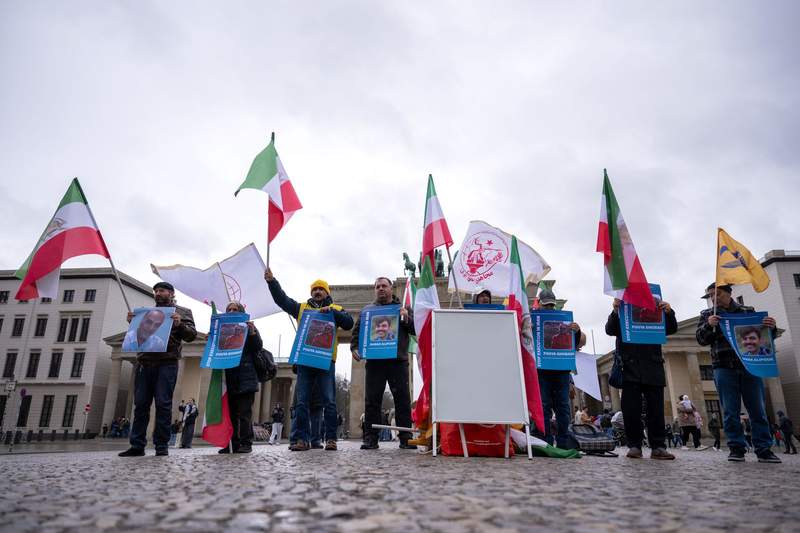
Tehran’s Iron Hand: Another Execution, Another Chill on Dissent
POLICY WIRE — Washington, D.C. — A cold calculation. That’s what seems to hang heavy in the air over Tehran, a bitter fog seeping into the consciousness of anyone daring to dream differently....

POLICY WIRE — Washington, D.C. — A cold calculation. That’s what seems to hang heavy in the air over Tehran, a bitter fog seeping into the consciousness of anyone daring to dream differently. The Iranian authorities, it seems, aren’t interested in nuance or reconciliation; they’re in the business of absolute control. Another life extinguished, another ghost added to the grim ledger of state-sanctioned repression. It wasn’t unexpected, not anymore. But it’s jarring, still.
The recent execution of an individual connected to January’s simmering unrest serves less as a judicial verdict and more as a stark, bloody billboard for the Islamic Republic’s unyielding grip. A warning. For everyone. And it reverberates far beyond Iran’s borders, catching the attention of distant chancelleries — and worried diasporas. They call it justice, of course. We call it tyranny’s long shadow.
January. It feels like a lifetime ago. A moment when protests — ignited by grievances both economic and social, though always framed by the state as foreign-backed mischief — threatened to boil over. Cities like Tehran, Isfahan, — and Mashhad saw skirmishes, shouts, and defiance. Then came the crackdown. Swift. Brutal. And predictable, really, for anyone watching Iran over the last forty years. Scores arrested. Many facing opaque judicial processes where the presumption of innocence feels like a cruel joke, especially for those deemed ‘enemies of God’ or ‘mohareb’ (waging war against God).
These capital sentences, delivered often after coerced confessions, aren’t just about punishment; they’re a theatrical display of raw power. Because when dissent feels contagious, you need to sterilize it with extreme prejudice. “Maintaining order and national security isn’t just a right, it’s our sacred duty,” declared Mohammad Jafari, a spokesperson for Iran’s Judiciary, in a statement reminiscent of countless others. “Those who seek to destabilize our nation will face the full force of revolutionary justice.” There it’s. The thin veneer of legality over brute force.
Internationally, the outrage is muted, practiced. Diplomatic circles issue condemnations, often with a resigned air. But this isn’t news; it’s a reiteration. “These continued, abhorrent acts demonstrate a complete disregard for human dignity and the most fundamental principles of justice,” commented Ned Price, formerly a voice from the U.S. State Department, capturing the well-worn Western sentiment. “Our message to Tehran remains unambiguous: the world is watching, and such actions only further isolate the regime.” Isolating, perhaps. But effective, from their perspective. It works in crushing public demonstrations, don’t it?
This tactic, mind you, has a longer shelf life than anyone cares to admit. Amnesty International has recorded a staggering 853 executions in Iran during 2023, the highest number in eight years. Think about that for a second. More than two a day. It’s a chilling reminder of how frequently the state employs capital punishment as a tool for control, far beyond mere protest suppression.
📄 POLICY WIRE WHITEPAPER PUBLISHED: PAKISTAN'S NATIONAL SECURITY POLICY PRIORITIES
👉 READ BY CLICKING HEREWhat This Means
For one thing, it signals that the Iranian leadership feels secure enough in its internal apparatus—the Revolutionary Guard, the Basij, the entire machinery of state control—to push back hard, very hard, against any internal opposition. It’s a calculated gamble, but one they’ve taken before. They bet that fear trumps fury, — and often, they’re right. The current climate discourages large-scale public displays of discontent, forcing opposition underground or into exile. And that makes direct challenges much harder. But it doesn’t extinguish the discontent, it just banks the embers, waiting for the next gust of wind. It’s a precarious stability, held together by dread — and propaganda. Because regimes built on fear eventually buckle, right?
For the broader Muslim world, particularly in South Asia, these events are often viewed through a complex lens. Nations like Pakistan, itself grappling with its own internal dynamics and a delicate balance between religious identity and state power, don’t typically issue harsh rebukes against Tehran. There’s a certain understanding, perhaps, of internal security imperatives, or a reluctance to be seen aligning too closely with Western denunciations. Diplomacy dictates quiet concern, if anything. And sometimes, even that’s too much to ask. Pakistan has its own tightrope act to perform, not least concerning its relations with its diverse neighbors and its own proxies; see our reporting on calculating a new phase of proxy in Pakistan for context.
Economically, the repression is intertwined with sanctions, inflation, and a public that’s squeezed tighter every fiscal quarter. When people are struggling to put food on the table, a rigid state control might just barely keep the lid on. But combine economic despair with overt repression, — and you’ve got a simmering pot. It’s not a matter of ‘if’ but ‘when’ it boils over again. But for now? Tehran is firmly in control. They want us to know that. And they don’t much care how many lives it costs.