


Blocked By Bureaucracy: The NBA’s Stubborn Battle with Its Own Past
POLICY WIRE — New York, USA — Imagine, if you will, a ledger where every significant transaction is recorded—meticulously, diligently. Then, a few decades in, someone arbitrarily decides that only...

POLICY WIRE — New York, USA — Imagine, if you will, a ledger where every significant transaction is recorded—meticulously, diligently. Then, a few decades in, someone arbitrarily decides that only transactions from 1973 onwards actually ‘count’. Everything before that? A whisper, a rumor, unofficial history. Sounds absurd, doesn’t it?
Welcome to the curious world of NBA record-keeping, where the game’s institutional memory is apparently as selective as a high school reunion guest list. San Antonio Spurs sensation Victor Wembanyama recently logged an eye-popping 12 blocks in a playoff game, a feat celebrated across official league channels as a ‘new record’. But if you dig just a few inches beneath the veneer of officialdom, you’ll find that particular crown resting uneasily. Very uneasily.
It turns out that 12 blocks, while certainly impressive, probably wouldn’t even crack the top five for blocked shots in a playoff game if we — heaven forbid — included performances that were actually observed, documented, and reported by journalists of the era. We’re talking about players like Wilt Chamberlain, a mythical figure whose statistical legacy has always dwarfed competitors, yet whose rim protection skills exist largely in an officially sanctioned statistical purgatory.
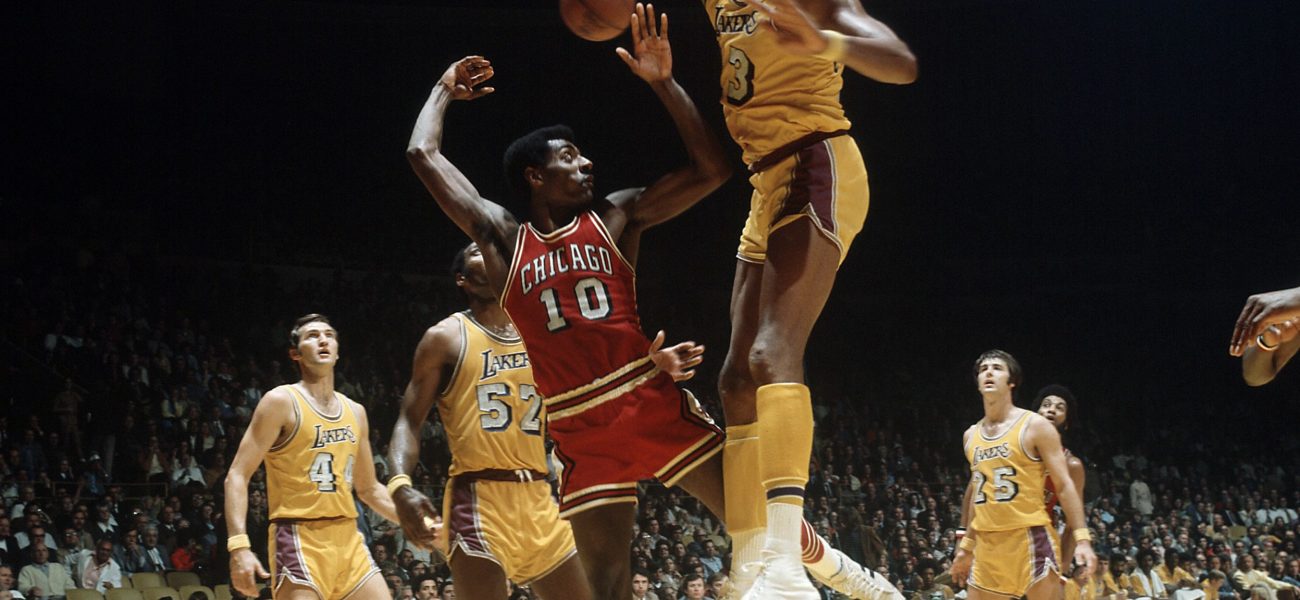
Consider the documented reports of Chamberlain swatting away an astounding 16 shots against the Atlanta Hawks in a pivotal 1969 playoff game. Sixteen. That’s four more than Wembanyama’s lauded performance. And it’s not just a rumor; local papers, like the Daily Breeze, carried specific accounts from reporters such as Mike Morrow, detailing the absolute exhaustion Chamberlain felt after that herculean defensive effort. Even the opposing coach, Rich Guerin, was flummoxed, stating there was “no way he could have blocked those shots, but he did.” Yet, for the NBA, it’s a phantom achievement. Why? Because the league decided, with a baffling level of administrative fiat, to begin ‘officially’ counting blocks only starting from the 1973-74 season.
But the true scandal isn’t merely the snubbing of an athletic titan. No, it’s the systematic discrediting of a significant portion of basketball’s foundational history. This isn’t just about an individual’s personal record; it’s about the collective narrative. It’s about an entire era’s achievements being relegated to a statistical dustbin, while players operating in a vastly different strategic environment—no three-pointers, more frequent shots closer to the rim, which often leads to more blocked shots—are conveniently sidelined in the record books.
Enter Michael Lynch, former ESPN researcher — and now the Executive Director of Data at Sports Reference. He, alongside a community of diligent ‘VintageNBA’ enthusiasts and researchers like Tariq Jabbar, has embarked on a painstaking quest. They’re sifting through decades-old newspaper clippings, scouring microfilm archives, and piecing together a mosaic of forgotten statistical triumphs. And they’ve found gold. What they’ve uncovered isn’t speculative; it’s journalistic reports, contemporaneous accounts confirming incredible defensive statistics.
For instance, in the sample of more than 200 games credibly reported on, Lynch estimates Chamberlain averaged a jaw-dropping 8.2 blocks per game in the regular season. This is, by the way, compared to the official career average record of 3.5 BPG shared by Mark Eaton and Wembanyama himself. Lynch’s team also uncovered a staggering 23-block performance from Chamberlain in a Christmas Day game back in 1968, though that game’s video footage, bafflingly, appears to have been recorded over by ABC. Such efforts—like those chronicled on Basketball-Reference.com, which is now integrating these ‘pre-official’ totals—aren’t just adding numbers; they’re restoring integrity.
📄 POLICY WIRE WHITEPAPER PUBLISHED: PAKISTAN'S NATIONAL SECURITY POLICY PRIORITIES
👉 READ BY CLICKING HEREThe league, however, isn’t budging. “We understand the fascination with historical data, but for consistency and competitive integrity, official records begin with consistent, standardized tracking,” an NBA spokesperson, who requested anonymity, indicated recently when pressed on the issue. This steadfast adherence to an arbitrary cut-off date strikes many as less about integrity and more about, well, institutional inertia. It’s as if a historical treaty or crucial election result, though widely reported at the time, would be dismissed today simply because it wasn’t recorded using current data management software.
And it’s this stubbornness, this deliberate blind spot, that rankles. Legendary Sixers statistician Harvey Pollack’s son, Ron, captured the sentiment best: “You watched Wilt, you just knew. The numbers? They almost seemed secondary to the sheer, unbelievable scale of his impact on a game, on *every* game.” Pollack, and many others, firmly believe Chamberlain frequently hit double-digit blocks early in his career. His estimated 9,000 career blocks—more than twice the official leader, Hakeem Olajuwon’s 3,830—serves as a constant, embarrassing reminder.
What This Means
This whole statistical kerfuffle isn’t just sports trivia. It’s a compelling look at how institutions, even those dedicated to entertainment, manage their own histories and narratives. On a broader scale, it reflects the political economy of data — what gets counted, who decides, and the power imbalances inherent in that decision. The NBA’s refusal to reconcile its present with its meticulously documented past isn’t merely bureaucratic; it actively diminishes the careers of pioneers and distorts public perception. Economically, clear historical narratives, especially in sports, underpin everything from player endorsements to franchise valuations and memorabilia markets. Undermining this creates unnecessary ambiguity. For fans, it’s about authenticity — and truth. Because when ‘official’ records deliberately omit what’s widely known, the very concept of record-keeping begins to fray.
It also subtly reinforces a disturbing tendency we often see in various contexts, from South Asia to the Muslim world, where official histories are often curated or rewritten to fit a particular present-day agenda, inadvertently or not. Be it the plight of independent journalism under restrictive regimes or the convenient omission of inconvenient truths in economic reports, the principle is startlingly similar: control the past, control the narrative. The NBA, inadvertently perhaps, is engaging in a softer version of that very same political maneuver. This ongoing historical rectification effort, though rooted in sports, has profound implications for how we value documented fact over institutional convenience.
Lynch’s project continues, slowly but surely adding validated pre-official numbers to player pages on Basketball-Reference.com. Fans, visiting the site’s playoff block list, will now see Chamberlain’s 16-block outing — and Nate Thurmond’s 14 — sitting atop the list, relegating Wembanyama’s excellent, but less numerically imposing, 12 blocks to a more accurate (and shared) position. One day, perhaps the NBA itself will come to terms with its own fascinating, messy, — and decidedly unofficial past. Until then, the league operates under the weight of an inconvenient truth, quietly acknowledged by history buffs and data geeks: their most impressive record-holder isn’t the ‘official’ one. It’s an administrative paradox, a testament to what gets lost when bureaucracy trumps reality. What a world, eh?