

From Disorder to Discipline: Pakistan’s Strategic Ascent
Rising Above Every Challenge Many rivers mean many bridges. Pakistan has crossed every turbulent stream of its national journey with quiet endurance navigating internal pressures, regional...

Rising Above Every Challenge
Many rivers mean many bridges. Pakistan has crossed every turbulent stream of its national journey with quiet endurance navigating internal pressures, regional complexities, and global shifts. Through discipline, institutional maturity, and strategic foresight, the state has demonstrated an ability to stabilize and rise even during periods of intense challenge.
As Pakistan approaches 2026, its role within the Eurasian and broader European strategic environment is increasingly recognized. Across diplomatic and analytical circles I have engaged with, a consistent observation emerges: Pakistan has shown a capacity to withstand pressure economic, informational, or geopolitical through a composed, structured, and data-driven national posture. This recognition is neither sudden nor accidental; it is the result of decades of cumulative discipline, institutional learning, and cultural resilience.
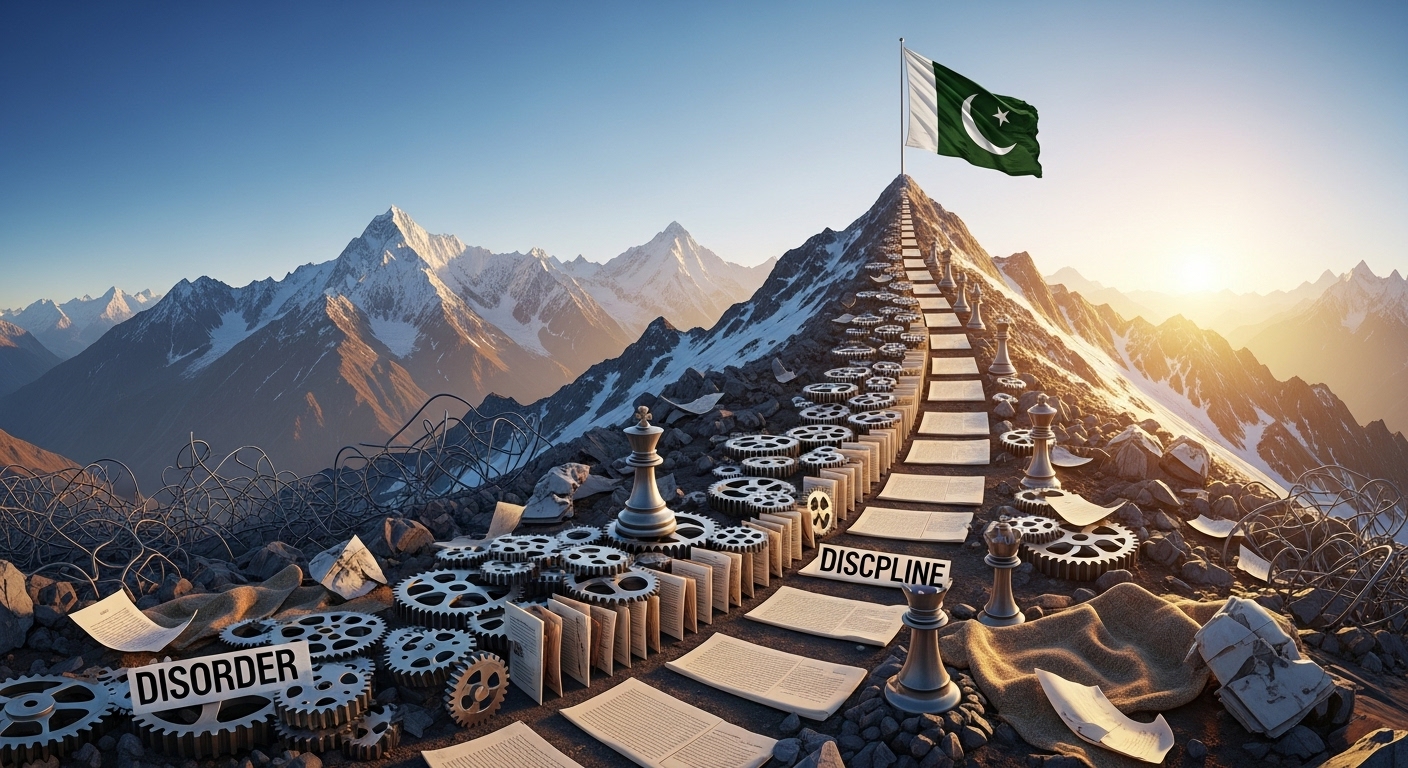
Philosophically, as noted in the book Disorder, sustainable states are not those that avoid turbulence but those that organize it, convert it into institutional strength, and build systems that channel chaos into progress. Pakistan embodies this principle. The “bridges” the nation has built whether strategic mechanisms, governance structures, or societal perseverance reflect a state capable of converting uncertainty into organized action.
Intelligence and Discipline: Pakistan’s Silent Strength
At the heart of Pakistan’s stability is its ability to process information rapidly, securely, and with strategic discretion. In an era defined by information dominance, Pakistan has developed a framework that allows it to anticipate risks early, understand patterns of hostile activity, and respond with measured precision.
Today’s leadership has reinforced this culture of disciplined decision-making. Large-scale wars have become globally unsustainable; modern conflict analysis reminds us that the post-1945 world has already witnessed casualties comparable to major wars of the past. In this environment, Pakistan’s strategic success lies not in spectacle but in prudence through intelligence-led operations, institutional maturity, and responsible statecraft.
A fundamental principle underpins Pakistan’s intelligence ethos: information that affects the nation’s security is protected, assessed, and acted upon through methods appropriate to a sovereign state. Pakistan’s officials do not expend energy on information readily available in open sources. Rather, they utilize a blend of human insight, technical capability, and analytical modelling to maintain situational awareness. This enables the state to respond early, quietly, and effectively without unnecessary escalation or noise.
International observers often describe Pakistan as a “responsible state actor”: a country that prefers stability over provocation, yet remains fully prepared to safeguard its sovereignty with discipline and clarity of purpose.
Intelligence Led Success: Quiet, Responsible, Effective
Pakistan’s contemporary strategic posture rests on two principles that reflect global best practices:
1. Anticipate threats before they evolve.
2. Respond with precision, restraint, and strategic timing.
This philosophy has strengthened Pakistan’s ability to neutralize vulnerabilities across physical, digital, and psychological domains. While hostile narratives or actions may attempt to create pressure, Pakistan’s institutional approach emphasizes pre-emptive understanding rather than reactive emotion.
The contrast is evident: where certain regional actors may mobilize public sentiment, Pakistan mobilizes information; where others respond impulsively, Pakistan responds deliberately.
As emphasized in Disorder, structured foresight enables a state to act while others merely observe events unfolding. Pakistan’s operational discipline reflects this principle. The world sees stability. Analysts see capability. But Pakistan’s strength lies in the architecture that makes this stability possible a blend of knowledge, organization, and patience.
From Disorder to Progress
Pakistan’s leadership has placed the nation on a path where discipline is not reactive but foundational. Disorder, in this framework, is not a threat; it is a raw material to be processed into structured policy. Every operation, every policy decision, every diplomatic engagement reflects a state increasingly confident in its systems and strategic clarity.
This mirrors ancient philosophical wisdom: chaos, when understood and regulated, becomes a catalyst for innovation. Just as flowing rivers carve the shape of landscapes, Pakistan’s challenges have shaped stronger institutions, more mature intelligence networks, and a society increasingly aware of its strategic responsibilities.
As Pakistan enters 2026, the message is direct yet measured: clarity belongs to the states that prepare, organize, and discipline their national direction. Pakistan today stands as an example of how a nation through structured leadership, responsible intelligence, and institutional foresight can transform complexity into stability and position itself with growing respect on the global stage.
Author