


Graveyard Realities: Netanyahu’s Race Rhetoric Bares Israel’s Deepening Identity Rift
POLICY WIRE — Jerusalem, Israel — There’s a particular kind of theatre that unfolds when a nation’s conscience is suddenly — and sometimes performatively — put on public display. So it went...

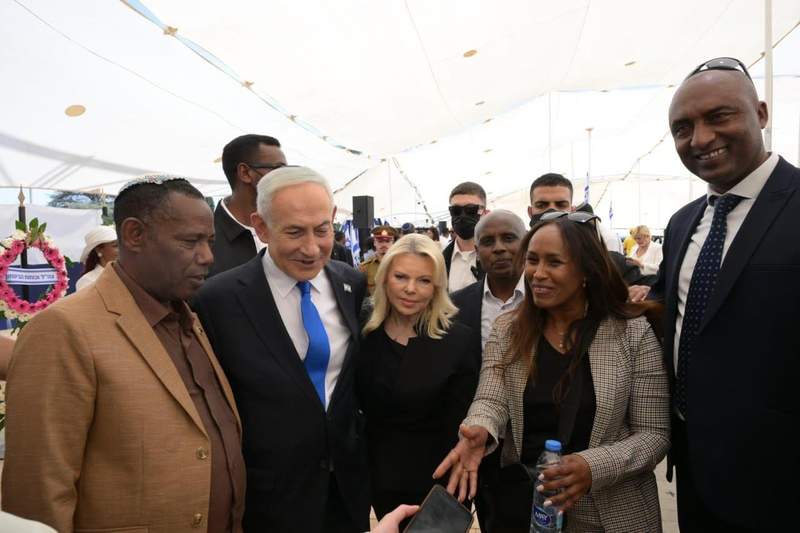
POLICY WIRE — Jerusalem, Israel — There’s a particular kind of theatre that unfolds when a nation’s conscience is suddenly — and sometimes performatively — put on public display. So it went this week as Prime Minister Benjamin Netanyahu, facing the sober backdrop of a state memorial, stepped up to condemn a blight most Israeli leaders have, for too long, just tiptoed around. The words were clear: racism, specifically directed at the nation’s Ethiopian-Jewish community, was abhorrent. A real problem. But what does it truly signify when such pronouncements become, themselves, part of a cycle?
It wasn’t an ordinary stump speech. We’re talking about a somber commemoration for slain soldiers and police officers, a setting where political rhetoric usually gets a solemn sheen. And there he was, Benjamin Netanyahu, saying it out loud, articulating what many in the Beta Israel community — descendants of an ancient Jewish line from Ethiopia — have known and felt every single day: that prejudice lives and breathes, even within the supposed embrace of their ancestral homeland. The mention of Solomon Zalka’s murder, a crime he unequivocally denounced, acted as the sharp, tragic pivot for his wider indictment. It was an acknowledgment of raw, systemic pain, spoken from the highest office. One couldn’t help but wonder if the resonance would last beyond the news cycle.
But does such a strong statement really change anything? “We have come a long way,” Netanyahu declared to the gathered crowd, his voice firm, “but we haven’t finished the job. We must root out racism from our midst, not just in words but in deeds, day in and day out.” Lofty sentiments, aren’t they? Yet, it’s not exactly groundbreaking news that Ethiopian-Israelis face serious hurdles. Data from Israel’s Central Bureau of Statistics reveals that in 2022, only 58% of Ethiopian-Israelis held a matriculation certificate entitling them to higher education, compared to 73% for the general Jewish population. These aren’t just numbers; they’re generational shackles.
And frankly, it’s been a recurring headache for every administration. Ethiopian-Israelis, many of whom arrived during daring operations like ‘Moses’ and ‘Solomon,’ found their hopes for a land free of discrimination dashed against harsh societal realities. They’ve protested—big, noisy, street-stopping demonstrations—about police brutality, about educational disparities, about plain old racial profiling. The anger is palpable. It doesn’t dissipate with a prime ministerial speech, however well-intentioned it might seem in that specific moment. This community, bless their stubbornness, wants action. They want policy, not just pronouncements. Because declarations are cheap, especially when the institutional gears remain stubbornly jammed.
Take, for instance, Mesfin Zeleke, a prominent community activist. His words cut right through the niceties: “When the Prime Minister speaks of ending racism, it’s like watching someone complain about getting wet while standing in the rain, refusing an umbrella. We appreciate the sentiment, yes. But we need protection. We need jobs. We need equal standing in every court, every classroom, every interaction with the police. Until then, it’s just another headline.” It’s a pragmatic, albeit weary, assessment that highlights the vast gulf between political rhetoric and lived experience. And Zeleke’s not alone; plenty of people share that sentiment.
📄 POLICY WIRE WHITEPAPER PUBLISHED: PAKISTAN'S NATIONAL SECURITY POLICY PRIORITIES
👉 READ BY CLICKING HEREAcross continents, we see similar struggles for recognition — and equality. From Baloch grievances in Pakistan to Uighur suffering in China, the question of integrating — or suppressing — distinct ethno-religious minorities while maintaining national identity is a relentless challenge. These aren’t easy answers, certainly not ones found in simple pronouncements.
What This Means
Netanyahu’s strong condemnation, though delivered in a ceremonial context, has undeniable political and social implications. Politically, it’s a necessary move for a leader often criticized for consolidating power among particular demographics; it shows at least an outward recognition of minority concerns. It also serves as an attempt to calm internal divisions and potentially draw in support from those disaffected segments of the populace. But it’s tricky. If follow-up action is scarce, this can just reinforce cynicism, making the government’s gestures look hollow, merely performative. The Beta Israel community isn’t naïve; they’ve seen this before. Economically, genuine progress requires significant investment in education, employment programs, and affirmative action policies designed to dismantle systemic barriers. Without such commitments, the cycle of socio-economic disparity will persist, perpetuating a two-tiered society where one group consistently falls behind. That’s a burden not just for the community, but for Israel’s national integrity. After all, if justice is truly colorblind, then a national leader’s condemnation isn’t enough; true equality demands unfathomable vindication through tangible, sustained policy change. Or else, it just means another speech, another memorial, another unsolved murder.