


The Bullfrog Doctrine: When Strategic Inaction Outlasts Overwhelming Force
POLICY WIRE — Johannesburg, South Africa — The global arena, it seems, increasingly mirrors a peculiar standoff recently observed in the parched African veld. A venomous predator, swift and...

POLICY WIRE — Johannesburg, South Africa — The global arena, it seems, increasingly mirrors a peculiar standoff recently observed in the parched African veld. A venomous predator, swift and undeniably potent, found itself entangled in a protracted struggle not with an equally formidable foe, but with a creature whose only discernible strategy was, well, simply *being*. This wasn’t a clash of titans; it was a masterclass in asymmetric endurance, a biological parable for an era defined by shifting power dynamics and the unexpected resilience of the seemingly vulnerable.
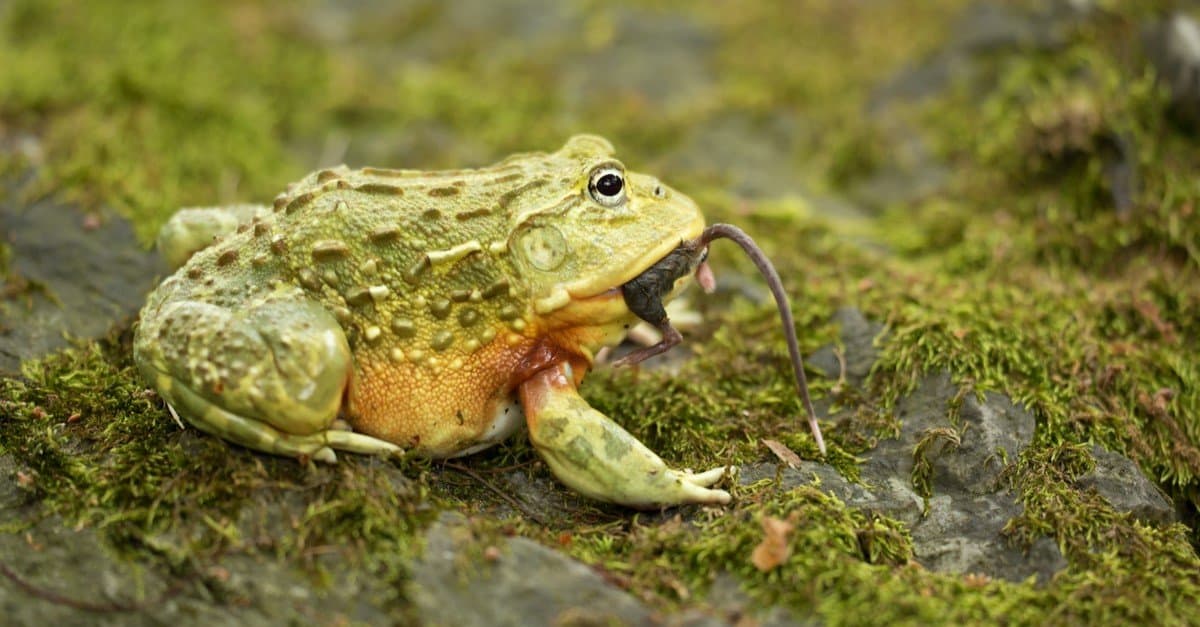
It began, as these things often do, with a seemingly inconsequential moment: an African bullfrog, bulbous and unhurried, became the target of a boomslang – a highly arboreal, lethally venomous snake whose bite can precipitate a slow, agonizing demise. But here’s the rub: the bullfrog didn’t flee. It didn’t launch a counter-attack in the conventional sense. Instead, it merely inflated itself, adopting a posture of sheer, unyielding bulk. And there they remained, locked in a bizarre, hours-long test of wills, the snake attempting to swallow an adversary that simply refused to be swallowed, its jaws stretched to their limits, its potent venom, for once, rendered utterly moot.
Still, for policymakers grappling with geopolitical stalemates or economic pressures, the imagery is stark. It speaks to a profound re-evaluation of what constitutes power in the 21st century. The boomslang, with its concentrated lethality and predatory grace, represents the kind of swift, decisive force many states or corporations aspire to project. The bullfrog, conversely, embodies an almost defiant inertia – a strategy of making oneself too large, too indigestible for a quick victory. It’s a defensive posture that, through sheer, sustained effort, transmutes into an offensive one, exhausting the aggressor until their grip, inevitably, falters.
And it’s a phenomenon not lost on seasoned observers. Dr. Anya Sharma, a senior fellow at the Institute for Global Resilience, shot back, "We’re witnessing an epochal recalibration. The traditional metrics of military might or GDP – while consequential – no longer guarantee dominion over protracted conflicts or market shares. This bullfrog scenario isn’t just an anecdote; it’s a blueprint for enduring pressure." She’s certainly not wrong. In a world awash with rapid-fire cyberattacks and economic sanctions, the ability to simply absorb, endure, and outwait can be the ultimate weapon.
Behind the headlines, nations like Pakistan, often caught between powerful regional currents and global mandates, have long perfected a form of strategic patience. They’ve had to. Dealing with everything from internal insurgencies to external economic pressures, the concept of "outlasting" rather than "overpowering" often defines their foreign policy calculus. It’s a complex dance (or rather, a resolute stand) where outright victory might be unattainable, but attrition of the adversary’s will is a viable, if costly, objective.
But doesn’t such a strategy carry immense internal costs? "Absolutely, it does," conceded Ambassador Karim Faisal, a former Pakistani diplomat, during a recent policy forum. "Maintaining such a posture requires extraordinary internal cohesion — and the political will to sustain hardship. It’s not a path for the faint of heart, but for states facing existential threats from more dominant players, it’s often the only option left on the table." He makes a compelling point, drawing parallels to how nations withstand prolonged economic blockades or asymmetric military campaigns.
A recent study by the Global Policy Institute found that states employing long-term, low-intensity resistance strategies against more powerful adversaries sustain, on average, 40% fewer direct economic penalties than those engaging in direct confrontation. This isn’t about victory in the conventional sense; it’s about avoiding defeat, about making the cost of aggression prohibitively high for the aggressor. The boomslang, after nearly two grueling hours, simply gave up. Its energy reserves were depleted, its formidable venom useless against a target it couldn’t ingest. It slithered away, defeated by sheer, stubborn mass. (One might call it a rather unceremonious retreat, frankly).
What This Means
At its core, this seemingly trivial wildlife encounter offers a potent metaphor for the contemporary international system. It underscores a fundamental shift where traditional power imbalances can be nullified by unconventional resilience. For smaller economies or less militarily endowed nations, the ‘Bullfrog Doctrine’ suggests that strategic endurance – absorbing pressure, refusing to yield territory or principles, and waiting for the aggressor’s resources or patience to wane – can be an extraordinarily effective defense. It’s not flashy, it’s not immediate, but it works.
Economically, this translates into diversification, building robust internal markets, and fostering self-sufficiency to weather external shocks, much like new blocs of nations are forging power beyond Western diktats by building parallel economic structures. Politically, it means cultivating national unity and unwavering public support, making the ‘internal cohesion’ Ambassador Faisal mentioned a critical strategic asset. Even in the realm of cultural diplomacy, as Pakistan strives to re-engage internationally—for instance, by hosting major sporting events like the one at Lahore’s Grand Stand—it’s often about presenting a stable, resilient face to the world, a slow but steady approach to reasserting influence.
So, the lesson isn’t just for herpetologists. It’s a critical insight for anyone navigating the intricate, often predatory, landscape of global politics — and finance. Sometimes, the most powerful move is simply to stand your ground, inflate your importance, and wait for the predator to exhaust itself trying to swallow the unswallowable. Don’t underestimate the sheer, stubborn power of not moving.