


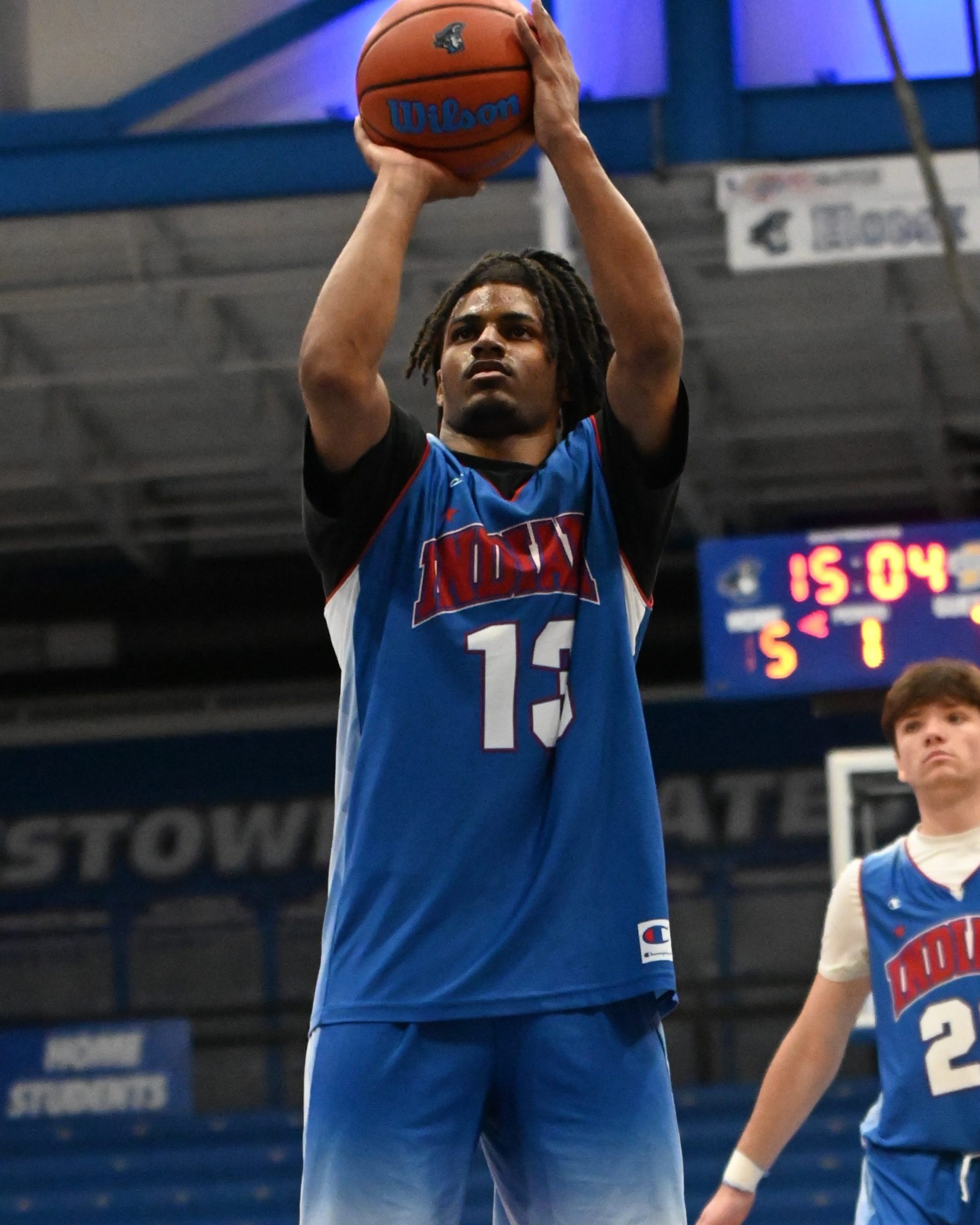
Hoosier Fire: Gardner Jr.’s Thirty Ignite Furious Interstate Clash
CHARLESTOWN, INDIANA — Sometimes, it’s not about the drills. It’s not about the meticulous game plans scrawled on clipboards or the high-minded philosophies preached from sidelines. Sometimes, it’s...

CHARLESTOWN, INDIANA — Sometimes, it’s not about the drills. It’s not about the meticulous game plans scrawled on clipboards or the high-minded philosophies preached from sidelines. Sometimes, it’s just about getting out there — and making up for lost time. And that’s exactly what Jason Gardner Jr. did this past Sunday, not merely playing a game, but unleashing a furious, pent-up energy that bordered on defiance.
It was billed as an exhibition—a Junior All-Star showdown between Indiana and Kentucky. But nobody told the players. Because what unfolded in Charlestown was less a friendly contest and more a skirmish over turf, state pride laid bare on the hardwood. Gardner Jr., the Fishers’ phenom who’d seen his junior season largely hijacked by a broken bone in his left hand, showed up with something to prove. He wasn’t just good; he was possessed, netting a game-high 30 points and dishing out six assists as the Indiana Juniors scratched and clawed their way to a 109-99 victory over their persistent Kentucky rivals.
This wasn’t some sleepy warm-up. Indiana bolted out, 25-9. Then Kentucky, stubborn as ever, just wouldn’t quit. They clawed back to a 60-53 deficit by halftime. They even nudged ahead briefly, 76-75, with a gritty display of sheer will before Indiana, spurred by an 8-0 run fueled largely by Gardner Jr. and Cooper Zachary’s tenacious inside work, managed to pull away. It wasn’t clean. It wasn’t always pretty. But it was definitely compelling, another notch in a rivalry that often feels less like sport and more like inherited tension between neighborly states. This win pushes Indiana’s series record against Kentucky to a commanding 10-5 since 2012—a statistic that quietly rankles across the Ohio River.
“I’ve been playing with a lot of these kids for a long time,” Gardner Jr. mused, leaning into the mic with a slight grimace, likely still feeling the contest in his bones. “Me — and Cooper, we’ve been together since like second grade. Harper Baker-Lands and Isaiah Hill? Third or fourth. This team, it actually knows each other really well, so we were able to pull through.” It’s a camaraderie forged in suburban gyms and on countless travel ball circuits—a shared history that elevates their play beyond mere athletic prowess. They know each other’s tells, their strengths, the very air they breathe on the court. It’s what makes them dangerous.
Kentucky, to their credit, wasn’t just showing up for moral victories. Their offense was red-hot inside the arc, shooting a sizzling 63% from inside the 3-point line, a stat provided by match analysts who certainly had their work cut out for them keeping pace with this particular barnburner. But perimeter struggles, only 8-for-25 from beyond the arc, ultimately proved their undoing against Indiana’s more balanced attack.
Montez Gay, a 6-foot-6 junior, spearheaded Kentucky with 20 points, but it wasn’t enough to quell the Hoosier storm. Even the refs had to step in during a free-throw sequence to issue a polite ‘chill out’ warning—a frankly refreshing display of raw emotion for an ‘all-star’ affair. Nobody was treating this as a practice run.
And speaking of practice, there’s more at stake for Gardner Jr. and Zachary beyond state bragging rights. Their high school season ended with an upset loss in the sectional championship—a bitter pill. Fishers lost to Carmel, a stunning defeat for the top-ranked, undefeated Tigers. Now, with a new coach, Miles Wayer (a familiar face from Gardner’s freshman and sophomore years), the motivation’s palpable. “There’s only so much you can do because we know each other so well,” Zachary added, talking about their on-court chemistry. “When I drive — and I find him, it’s like nothing else. Just playing with him is the best feeling because we know each other so well.” That chemistry, they hope, is what finally gets them a championship ring next spring. It’s a localized echo of the intense, passionate rivalries seen across the globe, from American football to cricket’s heated subcontinent contests—where winning isn’t just about points; it’s about provincial honor, family, and sometimes, national pride.
What This Means
These so-called exhibition games? They’re more than just showcases for individual talent. They’re miniature geopolitical stages where state lines become tribal boundaries and high school rivalries embody centuries-old competitive instincts. For Indiana, these consistent wins against Kentucky don’t just register in box scores; they reinforce a collective identity, a subtle swagger woven into the Hoosier fabric that ties deep to basketball lore. This isn’t just about young men dribbling a ball; it’s about youth development pipelines, feeding local colleges and—for a select few—NCAA aspirations and potentially the lucrative business of professional sports.
But the true policy implications lie in community engagement — and identity formation. These games draw families, bolster local economies (even a humble gymnasium sees a bump), and foster a sense of collective purpose. For a town like Charlestown, hosting this kind of fierce interstate rivalry injects civic pride. It gives youngsters something aspirational to root for, reminding them that while they may not be able to affect global policy from their living rooms, they can certainly shout themselves hoarse over a basket—and that matters, for local morale if nothing else. It’s a micro-economy of passion, skill, and sheer unadulterated state-against-state contention that plays out annually, reinforcing regional narratives one thunderous dunk at a time.
Gardner Jr.’s performance, his undeniable drive to compensate for a lost season, highlights a universal truth: resilience often pays off, big time. It’s a lesson for any young person striving for excellence, whether it’s on a basketball court in rural Indiana or an entrepreneurial start-up in Lahore. The ambition, the dedication, — and the desperate yearning for success? They’re a global constant.