


The Shifting Sands: A New Bloc Forges Power Beyond Western Diktats
POLICY WIRE — Istanbul, Turkey — It isn’t the grand pronouncements or the televised summits that truly signal a shift in global tectonics, but rather the quiet coalescing of interests, the...

POLICY WIRE — Istanbul, Turkey — It isn’t the grand pronouncements or the televised summits that truly signal a shift in global tectonics, but rather the quiet coalescing of interests, the almost imperceptible drift of historical currents. For decades, the Middle East’s geopolitical chessboard often featured the United States and its regional allies on one side, and various, often isolated, challengers on the other. Now, a different dynamic is crystallizing, morphing the regional landscape with implications that stretch far beyond the immediate horizon.
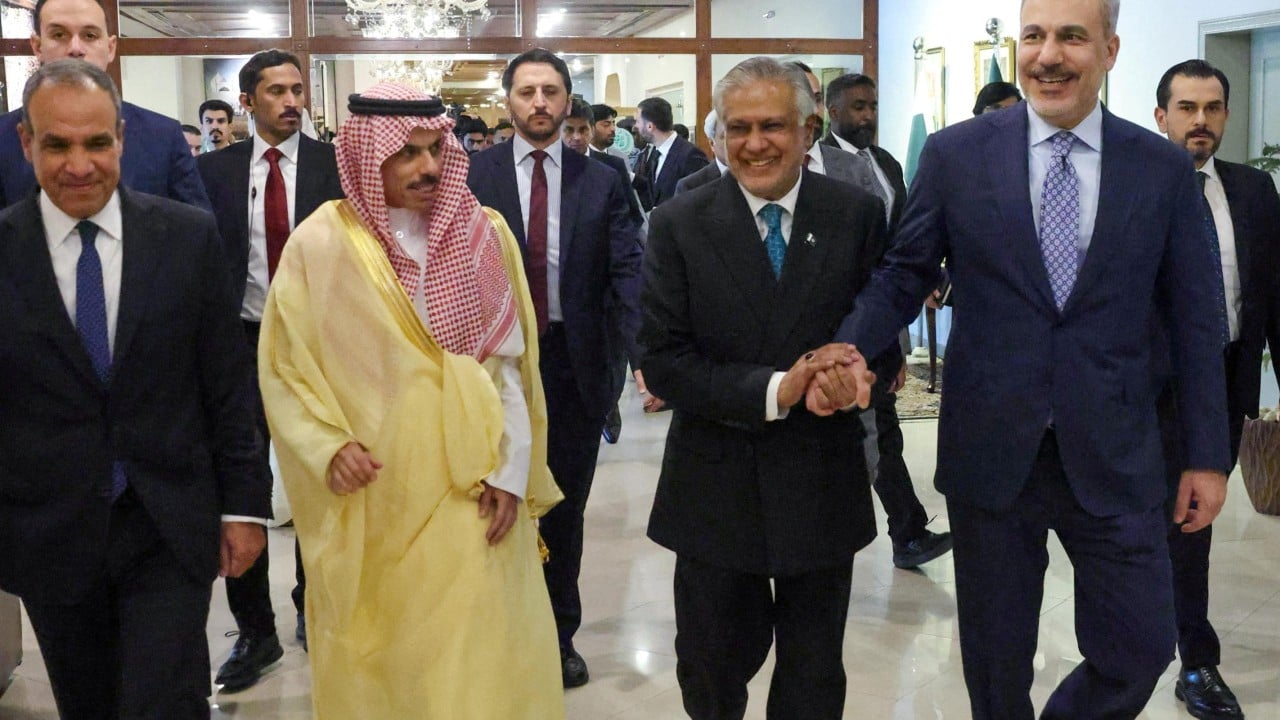
At its core, what we’re witnessing isn’t merely a reshuffling of old alliances; it’s a deliberate construction of a new edifice of power—one designed explicitly to operate outside, or at least parallel to, traditional Western hegemony. Anchored by the assertive ambitions of Turkey and Saudi Arabia, this emerging consortium—which importantly includes Egypt and, perhaps most consequentially, Pakistan—suggests a concerted effort to delineate a distinct sphere of influence. This isn’t just about trade pacts or military exercises; it’s about claiming a seat at the table where global rules are, for better or worse, actually made. And they’re doing it with an almost casual disregard for Washington’s historical sensibilities.
Behind the headlines of ongoing regional flashpoints, a more profound realignment is underway. The grouping, stretching from the Gulf across the Levant and into South Asia, binds together nations with a shared conviction: that the post-U.S.-centric international order shouldn’t be dictated exclusively by the American-Israeli nexus or indeed, by Iran’s expansive, albeit battered, network of proxies. One might argue it’s a pragmatic necessity, born of perceived American disengagement and a desire for strategic autonomy.
“The era of external powers defining our destinies is over,” President Recep Tayyip Erdoğan declared last year, a sentiment that neatly encapsulates Ankara’s muscular foreign policy posture. “We don’t need permission to secure our interests, nor to forge partnerships that serve the collective well-being of the Muslim world.” It’s a defiant stance, echoing through the halls of Turkish diplomacy as it navigates complex relationships with Moscow, Washington, and Brussels.
Saudi Arabia, for its part, approaches this new alignment with a calculated blend of economic muscle and strategic patience. Crown Prince Mohammed bin Salman, the Kingdom’s de facto ruler, has repeatedly underscored the need for regional solutions to regional problems. “Our Vision 2030 isn’t merely an economic blueprint,” he told a forum in Riyadh recently, his words carefully chosen, “it’s a declaration of our intent to be a pillar of stability and prosperity, co-creating a future that benefits us all. We won’t allow ourselves to be bystanders in our own region’s narrative.” This isn’t just rhetoric; it’s a direct challenge to the old order.
Still, the inclusion of Pakistan is particularly telling. A nuclear power with a geostrategic footprint connecting the Middle East to Central and South Asia, Islamabad brings a unique dimension to this nascent bloc. Its deep historical and religious ties with Saudi Arabia, coupled with an increasingly robust relationship with Turkey—especially in defense cooperation—make it a natural, if sometimes complicated, partner. Pakistan’s consistent economic challenges also render it acutely sensitive to alliances that promise investment and diplomatic heft, a role both Riyadh and Ankara are keen to play. For Pakistan, it’s an opportunity to diversify its geopolitical portfolio, moving beyond its traditional, sometimes precarious, balancing act. This pursuit of economic leverage is a key driver for many nations in the bloc.
The economic underpinnings are formidable, too. Recent figures from the International Monetary Fund underscore this push for self-reliance; collective GDP for the Gulf Cooperation Council (GCC) states alone is projected to reach nearly $2 trillion by 2024, a formidable economic base for such regional ambitions. And Turkey’s own manufacturing — and defense industries are no small potatoes. These aren’t impoverished nations clinging to the whims of larger benefactors; they’re substantial players.
What This Means
This evolving alignment represents a profound pivot away from the unipolar moment that followed the Cold War. For Washington, it means a further erosion of influence in a region it once dominated, necessitating a more nuanced and less prescriptive foreign policy. The assumption that these nations would simply fall in line with American dictates is fast becoming an anachronism. Instead, we’re likely to see a more assertive, independent foreign policy from this bloc, potentially impacting everything from energy markets to counter-terrorism efforts and even the trajectory of ongoing conflicts.
Economically, this could mean increased intra-bloc trade, investment, and infrastructure projects, further cementing their collective independence. Politically, it presents a challenge to existing power structures at the UN and other international bodies, pushing for a more multi-polar world. And for countries like Iran, while ostensibly rivals to parts of this new grouping, the shift could paradoxically offer new avenues for dialogue or, conversely, entrench a more rigid geopolitical divide. It’s a high-stakes gamble for all involved, reshaping alliances and redrawing maps—not with pen and paper, but with strategic intent and burgeoning influence.