

Amidst Eastern Congo’s Turmoil, a Glimmer of Ebola Recovery – and Profound Skepticism
POLICY WIRE — BUNIA, Congo — It’s perhaps one of medicine’s most profound paradoxes: watching patients claw their way back from a ‘rare type of Ebola’ in a land ravaged by...

POLICY WIRE — BUNIA, Congo — It’s perhaps one of medicine’s most profound paradoxes: watching patients claw their way back from a ‘rare type of Ebola’ in a land ravaged by chronic warfare, distrust, and widespread misinformation. Recovery, after all, should be straightforward news. But in eastern Congo, even life returning to normal is entangled in a thicket of geopolitical complications and profound public skepticism, presenting an unwieldy challenge for the global health establishment. One almost wonders if healing is a defiance of expectation, rather than its fulfillment.
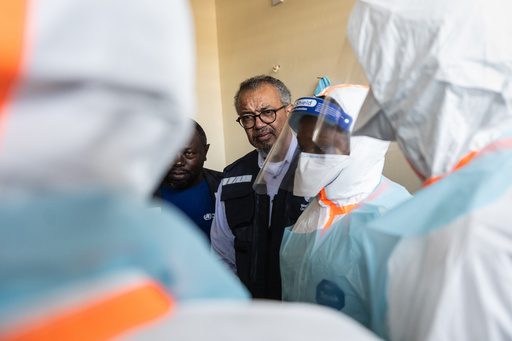
On a recent Sunday, Dr. Tedros Adhanom Ghebreyesus, the World Health Organization’s director-general, marked a peculiar milestone in Bunia, a city squatting at the epicenter of this latest scourge. Five individuals had shaken off the Bundibugyo virus, an Ebola strain without a ratified treatment or vaccine. Four people will be discharged today and there was one that was discharged the day before yesterday,
Ghebreyesus stated during the ribbon-cutting for a new treatment facility. An admirable feat, in an arena where mortality usually holds sway. [QUOTE_PLACEHOLDER]
And yes, the fact that humans can recover from such a formidable opponent—even without a magic bullet—isn’t a revelation, but the environment it happens in shapes everything. Of course, we’re still working on vaccines and treatments but that doesn’t mean that people cannot recover from Ebola,
he’d cautioned. The WHO confirmed a Bundibugyo patient’s recovery just prior, a first recorded instance for this particular outbreak. It’s a slim reed of hope, perhaps, but one that international bodies cling to with an almost desperate grip.
The patient experience itself lays bare the agonizing human cost — and the deep societal fractures. Baraka Bulambulu, one of those who emerged from the abyss, recounted the brutal aftermath of his illness to The Associated Press. Neighbors, fearing contagion from a disease poorly understood, kept their distance. They delivered sustenance, sure, but from a safe, agonizing remove. Being able to come out of this alive is an immense source of happiness,
Bulambulu articulated, a simple sentiment that carried the weight of survival. Because, as he soberly noted, Many people who were in the same situation died.
Ezo Étienne, a nurse who contracted the virus, offered a chilling account of his descent into its grip. Sudden dizziness on ward rounds, then the rapid onset: vomiting, fierce itching, debilitating diarrhea, and an almost paralyzing weakness. Seven tests were necessary to confirm the diagnosis. His treatment regimen? Largely palliative: meds for the nausea, fluids to fend off dehydration, something for the pain. That was all they could provide,
he remembered. But, Étienne wasn’t one to stew. He issued a stark warning: don’t brush off those initial symptoms. The widespread belief that victims are poisoned, not ill, is lethal, steering many away from care facilities.
Indeed, that skepticism isn’t born in a vacuum; it festers in a landscape already scarred by conflict and institutional mistrust. Doctors Without Borders (MSF) recently articulated what many already observed: despite improved facilities and fresh aid pouring in, the virus just keeps outrunning the responders. They’re pleading for broader testing, faster deployment of aid workers, — and unhindered access for medical supplies. But that’s a tall order in places where militia groups like the Allied Democratic Forces (ADF) — reportedly allied with the Islamic State group — and other ethnic factions control the turf, regularly staging deadly attacks. The perilous art of betrayal is not limited to espionage, you see; it’s an everyday reality for these communities.
For example, the Congolese army and civil society groups reported that ADF fighters claimed seven lives in Beni, a town in North Kivu province also affected by the outbreak, on just one Saturday. And the illness? It’s cropped up in North and South Kivu as well, regions where the Rwanda-backed M23 rebel group exerts significant control over cities like Goma and Bukavu. You can’t separate the illness from the anarchy, can you?
This persistent instability echoes challenges faced in other Muslim-majority regions caught in similar health crises, like parts of Pakistan or Afghanistan, where access, security, and ingrained distrust of state or international bodies routinely hamstring even the most well-intentioned public health campaigns. The issues aren’t always about religion, but rather, about how fractured governance and continuous violence render any broad public health initiative extremely difficult, if not outright dangerous.
The World Health Organization confirmed 134 cases of Ebola and 18 confirmed deaths as of May 29 across Congo and neighboring Uganda, according to their reporting. Tedros tried to convey a message of unity during his visit: If you come to health facilities when you have symptoms, you can get the support and recover, so the key is to come forward as early as possible and to get the necessary support.
It’s everyone’s problem, he argued, a collective responsibility: We can stop this Ebola and anyone who has it can also recover. But the rule … is this thing is everybody’s business — and every citizen should be involved.
Dr. Davin Ambitapio, another medic at the new facility, offered a dose of guarded optimism: We truly have hope. The virus here is not as complicated as those we have dealt with in the past, and with the support of all our partners, we believe we will be able to bring this outbreak under control as quickly as possible.
Pierre Akilimali from Congo’s National Institute of Public Health shared that sentiment, saying: With the symptomatic treatment that we’re currently providing, we’re seeing patients recover.
A rare good turn in an often-unforgiving region.
What This Means
This handful of Ebola recoveries in eastern Congo, while superficially positive, exposes the grim realities underlying international public health efforts in conflict zones. Politically, the recurring outbreaks fuel distrust in already fragile governance, empowering local militias who often thrive on public dissatisfaction and fear. The community’s anger over strict burial protocols, for instance, isn’t merely cultural friction; it’s a symptom of deeper animosity towards authority—any authority, really—that clashes with traditional customs. This gives groups like the ADF more leverage, making any coordinated health response incredibly dangerous for aid workers, as attacks on health centers become increasingly common. Because in a place like Congo, or indeed, in troubled regions across Pakistan or the Levant, public health becomes just another battleground in an already brutal civil contest.
Economically, these outbreaks—and the draconian containment measures they necessitate—choke off what little legitimate commerce exists. Markets seize up, travel restrictions hamper trade, — and agricultural activity takes a hit. Resources are diverted from long-term development to crisis management, trapping these communities in a self-perpetuating cycle of poverty and instability. This creates a reliance on external aid that isn’t sustainable — and leaves local economies more vulnerable. The ‘hope’ articulated by health officials, then, must be viewed through the lens of profound political fragility and a battered populace.