


Regional Jitters: Tehran’s Bold Claim Echoes Across a Fractured Middle East
POLICY WIRE — London, UK — The Middle East, ever a delicate construct of alliances and enmities, awoke recently to another tremor: Tehran’s assertion of having lobbed missiles...

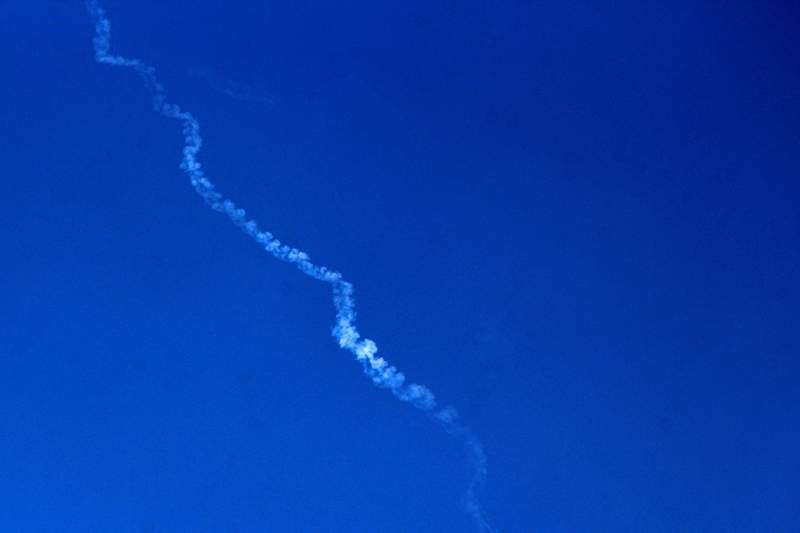
POLICY WIRE — London, UK — The Middle East, ever a delicate construct of alliances and enmities, awoke recently to another tremor: Tehran’s assertion of having lobbed missiles toward what it described as military facilities in Israel. It wasn’t the initial flash of impact that startled observers so much as the predictable cascade of claim and counter-claim that followed. This wasn’t just a physical exchange, but a brazen, calculated declaration in the endless rhetorical dance that shapes regional geopolitics.
It’s an old playbook, really. A perceived affront here, a swift, albeit ambiguous, reprisal there. The narrative unfurling from Iran suggested precision. [QUOTE_PLACEHOLDER], said spokespersons, without elaborating on the supposed targets or the specifics of the alleged attack’s efficacy. But details often play second fiddle to the message in this high-stakes game. The message, clear enough for those watching, is one of defiance, a visible flexing of muscle in an increasingly contested space.
For weeks, intelligence briefings have pulsed with warnings of heightened tensions. Western capitals had been holding their breath, watching a pressure cooker with a slowly failing safety valve. Then came the announcements, brief — and to the point. Iranian state media were quick to disseminate the claim, providing little by way of corroborating visual evidence that would satisfy a seasoned conflict analyst. Still, the impact is less about verifiable damage on the ground and more about psychological projection, about demonstrating reach and resolve to a regional audience, as well as to domestic constituencies eager for strong showings against perceived adversaries.
And what a domestic audience it’s. Inside Iran, the narrative of external threats — and defensive posturing is deeply ingrained. Any action seen as confronting the long arm of foreign powers plays well, solidifying support—or at least quiet compliance—for the current regime. It reinforces the image of a nation capable of independent action, unshackled by global powers.
But beyond the immediate adversaries, these kinds of claims ripple outward, touching capitals from Islamabad to Ankara. Pakistan, always walking a geopolitical tightrope, watches these developments with a particularly keen eye. For a nation with its own delicate regional security concerns, not to mention a significant Shi’ite population and deep historical ties across the Muslim world, escalating conflict between key regional players like Iran and Israel poses complex challenges. Islamabad’s strategic calculus often involves maintaining careful neutrality, but these sorts of actions, especially those involving missile capabilities, introduce another layer of instability. You see, the optics of Muslim nations launching sophisticated weaponry at an adversary are never lost on the wider Ummah, often igniting conversations that transcend national borders and feed into broader anti-imperialist sentiments.
This episode, like so many before it, prompts questions about what, if anything, was actually achieved beyond making a very loud statement. Was it a diversion? A pre-emptive move? Or simply a reiteration of Iran’s commitment to its security doctrine? The fog of war—or near-war, as the case may be—ensures clarity remains elusive. And that, of course, is often the point. According to data published by the International Institute for Strategic Studies in 2023, Iran’s current arsenal is believed to include more than 2,500 ballistic missiles of various ranges, giving it the largest and most diverse missile force in the Middle East.
We’re watching the slow, deliberate erosion of any semblance of calm in the Levant — and beyond. Diplomatic channels, already stretched thin, are now under immense strain. Calls for de-escalation are certain to issue forth from various foreign ministries, sounding hollow to anyone paying close attention to the past decades of regional strife. It’s an act in progress, folks, — and nobody’s quite sure what the final scene looks like.
📄 POLICY WIRE WHITEPAPER PUBLISHED: PAKISTAN'S NATIONAL SECURITY POLICY PRIORITIES
👉 READ BY CLICKING HEREWhat This Means
The geopolitical ramifications of Iran’s alleged missile strikes, even if largely symbolic or militarily ineffective, are substantial. Economically, this type of news inevitably triggers spikes in global oil prices, impacting economies far beyond the immediate region—especially those reliant on energy imports, including many developing nations in Asia. Investors, notorious for their skittishness, retreat from perceived risk, potentially stifling foreign direct investment into an already fragile region.
Politically, Tehran’s public pronouncements cement its posture as a regional heavyweight, albeit one perpetually embroiled in controversy. It sends a message not only to Israel but to Washington and its European allies: Iran will respond to perceived provocations. This complicates any future efforts toward rapprochement or even stable deterrence, reinforcing hardline stances on all sides. For regional Muslim nations, it’s a tight spot; they must balance national interests with the prevailing sentiments within the broader Muslim community, often a complex calculation when confronted with perceived injustices in the Arab-Israeli conflict.
the incident places immense pressure on regional players, including Pakistan, which must calibrate its foreign policy delicately. Pakistan’s high-wire act involves navigating these intricate regional dynamics, where every perceived slight or show of force by one power necessitates a careful, often subtle, diplomatic response to avoid entanglement. Any hint of further escalation forces a re-evaluation of security postures across the board. The delicate balance of power in the Middle East—a complex mix of state and non-state actors—seems to inch ever closer to outright destabilization, threatening wider conflict. And that’s not just hyperbole, that’s history telling you something.
But here’s the kicker: in this game of shadowboxing, every move is also about signaling capabilities and intentions for a broader strategic realignment. Could this be a precursor to a more assertive stance in negotiations over its nuclear program, or perhaps a warning shot aimed at influencing proxy conflicts from Yemen to Lebanon? It’s rarely just one thing, is it?