


Pakistan’s High-Wire Act: Tehran Talks Amidst Drone Strikes and Regional Chill
POLICY WIRE — Islamabad, Pakistan — The world got yet another stark reminder this week of how quickly regional flashpoints ignite, with the American military saying it shot down two more Iranian...

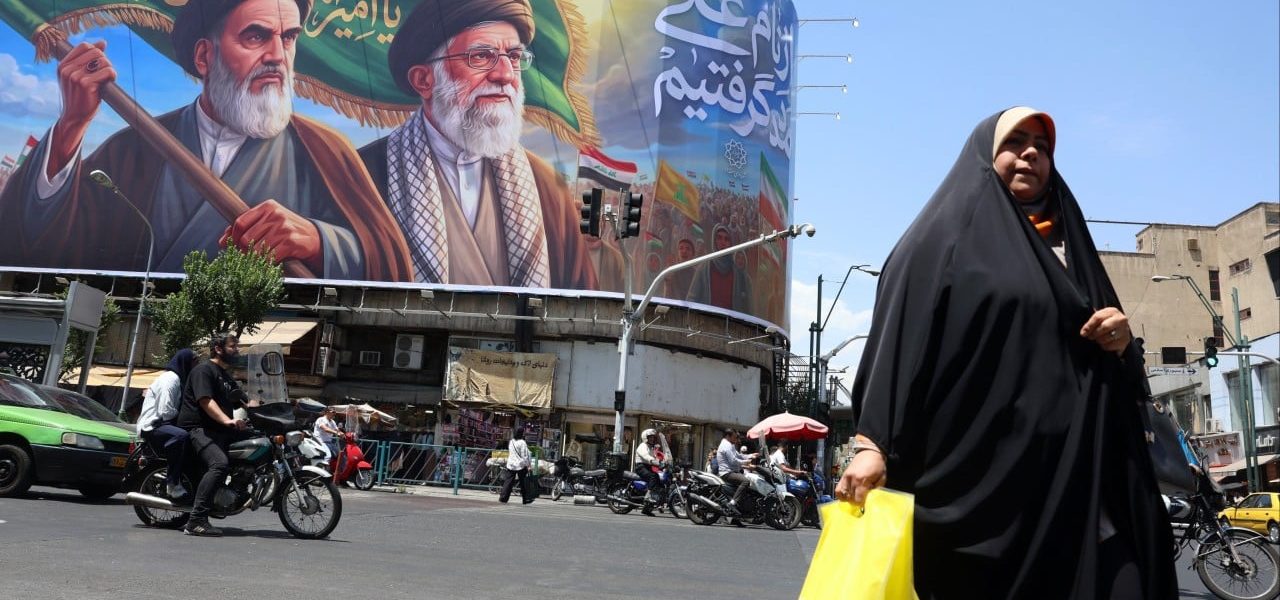
POLICY WIRE — Islamabad, Pakistan — The world got yet another stark reminder this week of how quickly regional flashpoints ignite, with the American military saying it shot down two more Iranian drones over the Strait of Hormuz that threatened international maritime traffic. And just as news of that hair-trigger encounter began to filter through the wires, a peculiar diplomatic gambit was unfolding: Pakistan’s interior minister was in Tehran on Sunday in a fresh bid to restart negotiations between Iran and the US.
It’s a peculiar alignment of events, isn’t it? As military assets engage in a low-level, high-stakes game of aerial chicken over a waterway absolutely essential to global oil supplies, Pakistan—a country not always known for its outsized influence in the Mideast’s grand machinations—is attempting to coax rivals toward peace. Some would call it quixotic, others, perhaps, utterly detached from reality. The diplomatic effort itself feels almost a historical echo, a whisper against the cacophony of drones and distant explosions. [QUOTE_PLACEHOLDER]
This latest action, the drone takedown, came as the Washington presses for Iran to make a deal to end the war in the Middle East, which has strained the global economy and threatened a hunger crisis in some of the world’s most vulnerable countries. You can’t make this stuff up. One hand slaps down perceived aggression, the other supposedly extends an olive branch. The timing of Pakistan’s minister landing in Tehran, therefore, seems almost deliberately anachronistic. Or perhaps, utterly opportunistic. There’s a fine line between the two, as seasoned observers will tell you.
But why Pakistan, specifically? Why this moment? The Islamic Republic has often styled itself as a potential mediator, a bridge-builder between various Muslim nations and sometimes even beyond. Its own intricate relationship with Iran is layered, historical, and occasionally thorny, making it an acceptable — though rarely decisive — player. There are shared borders, shared cultural threads, but also geopolitical rivalries that stretch back decades. So, for Islamabad, there’s an image to uphold: a stable, responsible Muslim nation capable of diplomacy. It’s a powerful narrative internally, too. And in a region where genuine, trusted intermediaries are in short supply, even a token effort can sometimes matter. Pakistan’s strategic location, bordering Iran and Afghanistan, means regional stability is never just an academic exercise for them; it’s a matter of national security and economic survival. The thought of unchecked regional chaos keeps Islamabad’s strategists up at night.
The Strait of Hormuz, by the way, isn’t just some dusty paragraph in a geopolitics textbook. A staggering one-fifth of the world’s total petroleum consumption, or about 21 million barrels of oil per day, flowed through this choke point in 2018, according to the U.S. Energy Information Administration. You mess with that, you mess with literally everything else. It’s less a Strait — and more a planetary artery. And every drone, every patrol, every diplomatic foray becomes imbued with an outsized significance, affecting the price of gas at your local pump just as much as the fate of a farmer on the far side of the globe.
Washington’s message, clear though it might be, also carries an unmistakable tone of exasperation. The conflict is prolonged, messy, — and frightfully expensive, not just in dollars but in lives and lost opportunities. For many, it seems the region’s troubles just refuse to settle, creating perpetual instability that reverberates far beyond its geographic confines. From Beirut to Baluchistan, the ripple effects of every skirmish are keenly felt. You can’t just isolate these things anymore. Everything’s connected—unfortunately, that means a stray drone in Hormuz affects trade routes that touch everyone, from Rotterdam to Karachi.
This whole situation – the American assertion of dominance, the Iranian persistence in defiance, the seemingly hopeful yet fraught Pakistani intervention – highlights the intractable nature of these deep-seated antagonisms. One could almost feel sorry for any minister dispatched to try and sort it all out, sent to wrangle two eagles that barely acknowledge each other’s existence, let alone the pleas of a bird trying to broker peace.
📄 POLICY WIRE WHITEPAPER PUBLISHED: PAKISTAN'S NATIONAL SECURITY POLICY PRIORITIES
👉 READ BY CLICKING HEREWhat This Means
Don’t expect immediate breakthroughs. Pakistan’s diplomatic mission, while laudable in intent, feels more like a necessary box to check than a game-changer. The power dynamics between Washington and Tehran are just too entrenched, their mutual mistrust too calcified, for an external party to simply waltz in and fix things. Pakistan, a fellow Muslim-majority nation, likely holds a degree of legitimacy for Tehran that Western nations lack. But legitimacy doesn’t always translate into influence.
Economically, continued tensions in the Strait of Hormuz – let alone wider conflict – promise nothing good. We’re talking supply chain disruptions, energy price spikes, and a worsening of global food security for literally millions already teetering on the edge. The UN’s World Food Programme, for instance, frequently highlights how conflict is a primary driver of hunger, with many of the world’s worst food crises occurring in conflict zones. You simply can’t disentangle these things. The economic ramifications aren’t abstract, they hit people where it hurts: in their pockets and on their dinner plates. There’s also the domestic angle for Islamabad. By engaging in high-profile international diplomacy, particularly within the Muslim world, the current administration attempts to burnish its image at home, portraying itself as a key regional player rather than just managing internal crises. It’s a deft maneuver, whether it produces tangible results or not. The optics matter, especially in a region constantly scrutinized by domestic — and international audiences. One might even argue it’s a bid for relevance in a rapidly shifting Mideast chessboard.
Geopolitically, it’s yet another affirmation of a deeply polarized Middle East. Regional actors like Pakistan might occasionally throw their hat into the mediation ring, but the heavy lifting of de-escalation almost always falls back on the direct protagonists—or more often, fails entirely. Washington isn’t really seeking a grand bargain, not anymore, not publicly. They’re seeking concessions, a dialing back of perceived aggression. Tehran isn’t going to roll over easily. It’s a stalemate, with occasional flare-ups like this, always threatening to escalate into something much, much worse.