

The Billion-Dollar Contract and the ‘Human Rights Disaster’ at an ICE Facility
POLICY WIRE — WASHINGTON — It takes a special kind of procurement magic to award a contract worth up to $1.3 billion to a company with zero prior experience running a detention facility, and an...

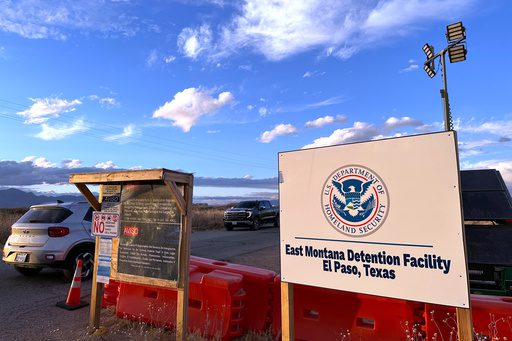
POLICY WIRE — WASHINGTON — It takes a special kind of procurement magic to award a contract worth up to $1.3 billion to a company with zero prior experience running a detention facility, and an internet presence, well, let’s just say, best described as embryonic. Yet, that’s exactly what happened before the alleged beatings, medical neglect, and truly awful conditions described by detainees at Camp East Montana, an Immigration and Customs Enforcement (ICE) outpost in Texas, came to light.
And those conditions? They’re pretty bad. In fact, if the new 84-page report from Human Rights Watch and the American Civil Liberties Union is anything to go by, this facility — originally designed for up to 5,000 people — is a veritable cauldron of suffering. It seems bureaucratic incompetence — and massive spending didn’t exactly buy humanity or even basic decency, did they?
Detainees there, according to the report, claim they’ve been beaten by guards, or watched others get it rough. Not just a few, either. Of the 71 folks researchers spoke to over five months, a staggering 64 — that’s about 90% of those interviewed — said they’d either been assaulted by staff or had seen others physically abused. That statistic, pulled straight from the report, comes courtesy of joint efforts by Human Rights Watch and the American Civil Liberties Union. It’s a pretty damning number, isn’t it?
But the beatings are just a piece of the pie. These men — and women at Camp East Montana, set on the U.S. Army’s Fort Bliss in El Paso, weren’t just taking hits. They were reportedly denied medical care they desperately needed. Forced to live in places so filthy you wouldn’t keep livestock there. Fed meals so bad they were deemed inedible. And, for good measure, they said they were kept from talking to their lawyers or their own families. Sounds like a fun time, doesn’t it?
Now, the Department of Homeland Security, naturally, issued a statement. All these reports of inhumane conditions? They’re “categorically false,” you see. Nobody’s being beaten, nobody’s being abused. And they insist ICE “takes seriously the health and safety of all those detained in our custody.” It’s a nice sentiment, but it feels like a rather flimsy blanket attempting to cover what the report plainly labels a [QUOTE_PLACEHOLDER]
This isn’t new news, either. Stories from The Associated Press — and others had already sketched a bleak picture. People are dying there, for heaven’s sake. Since it opened in August, at least three detainees have met their end inside. One case involved a 55-year-old Cuban migrant who, after being handcuffed and held down by guards, just stopped breathing. A local medical examiner called it a homicide. And a federal report last month by the Government Accountability Office? It flagged that evidence in that very case was “missing or destroyed.” The GAO also fingered mismanagement by the Department of Homeland Security for creating conditions that led to suffering and deaths, even as piles of tax dollars ended up wasted, fattening contractors’ wallets. Just lovely.
The original contractor, Acquisition Logistics, LLC, a Virginia outfit, got this huge deal last year — the one worth up to $1.3 billion, remember? They’d never run an ICE facility. They’d never even snagged a federal contract over $16 million. An internal ICE review — talk about shutting the barn door after the horses bolted — later documented 49 deficiencies. We’re talking violations in things like how force was used, restraints, security, medical care. You know, the basics. ICE did eventually swap them out in March.
But even with a new crew, the interviews done by Human Rights Watch and the ACLU as recently as last month still found serious problems. People spoke of truly awful living conditions. Bathrooms absolutely smeared in feces. Housing units underwater. No soap, not even basic hygiene stuff. Then there’s being stuck inside for weeks on end, without so much as a peep of sunlight or fresh air. They mentioned rotten food — and meal times that jumped all over the place, sometimes 12 hours between bites. Detainees also recounted that guards beat detainees in response to hunger strikes, requests for medical attention and complaints regarding detention conditions.
In some of these grim scenarios, the researchers said that staff pressured and coerced those held there into abandoning immigration claims and accepting removal to third countries if they couldn’t be sent back to their own country. The detainees said they were threatened with violence, criminal prosecution, and indefinite detention if they refused deportation. In some cases, the report concluded, these circumstances amounted to enforced disappearances, a potential violation of international human rights law. When you consider the plight of migrants and refugees, especially those fleeing political turmoil or economic hardship in regions like Pakistan and other South Asian nations, the shadow of such systemic abuses cast on the U.S.’s international standing is quite profound. It’s difficult to promote human rights abroad when allegations of torture, neglect, and potentially even homicide dog your own detention facilities. The global community—and populations who once viewed America as a steadfast defender of liberty—is certainly taking notes, but they’re seeing something different than they expected. And for people desperately seeking refuge, it’s just another bitter pill to swallow.
Angélica César, a fellow with both Human Rights Watch and the ACLU, who actually led this whole investigation, put it pretty bluntly. She said, [QUOTE_PLACEHOLDER] No mincing words there. She’s called on the government to shut it down, start proper investigations, and just put an end to this whole mass deportation and mandatory detention mess. She stated that [QUOTE_PLACEHOLDER] It’s hard to argue with her logic. People are human beings who deserve to be treated with dignity and protected from harm, even if their paperwork isn’t quite right.
What This Means
This report isn’t just about an ugly facility in Texas; it’s a searing indictment of policy and oversight that’s been allowed to unravel under its own weight—or lack thereof. Politically, this adds another painful asterisk to America’s image as a global human rights champion. You can’t credibly challenge alleged abuses in, say, Saudi Arabia or Myanmar if your own house is reportedly mired in violence and neglect. It undermines diplomacy and muddies moral authority, a quiet but potent currency on the world stage. Economically, we’re looking at taxpayers having funded a monstrously expensive contract awarded to an incompetent firm. The millions — billions, even — squandered on a facility where conditions reportedly deteriorated to such a degree highlight profound inefficiencies and, frankly, a startling lack of accountability in federal spending. It’s a systemic failure, costly in both human suffering and cold hard cash, suggesting that the profit motive, unchecked, can create these kinds of institutional nightmares even within supposedly regulated governmental operations.