

Desert Dreams & Global Screams: Albuquerque’s Enduring World Cup Fixation
POLICY WIRE — Albuquerque, New Mexico — Even with American hopes long since dashed and the final whistle blown on Mexico’s tournament run, the faithful still packed into Nob Hill’s Two Fools Tavern....

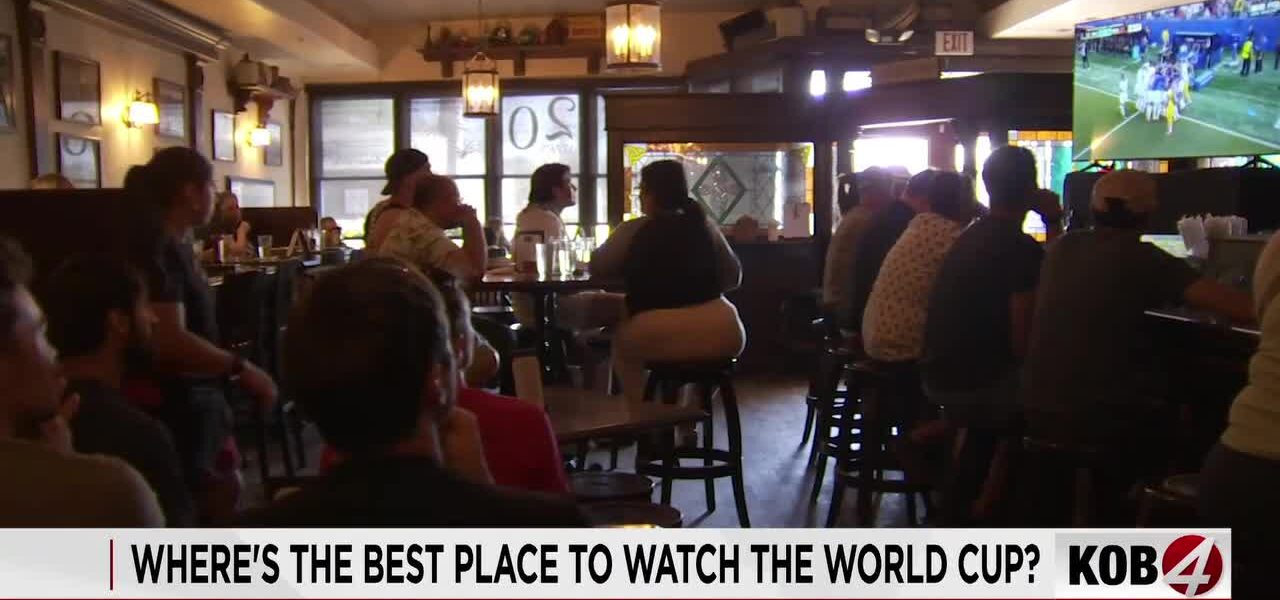
POLICY WIRE — Albuquerque, New Mexico — Even with American hopes long since dashed and the final whistle blown on Mexico’s tournament run, the faithful still packed into Nob Hill’s Two Fools Tavern. It wasn’t about nationalism or local heroes anymore, it seems. No, this was something more fundamental: the unyielding, almost Pavlovian pull of a global spectacle. They came for France, for Morocco—or perhaps, simply, for the game itself, for the ritual. A collective hum against the backdrop of Albuquerque’s often quiet Thursday afternoons. They don’t just watch; they participate, with wallets open, eyes glued, and a communal energy that belies any conventional wisdom about sports allegiance.
It’s a peculiar thing, this persistence. You’d think the interest would dissipate, wouldn’t you, once the home team flies home? But the beer kept flowing, the shouts erupted, — and the digital buzz surrounding the venue never quite died down. The numbers certainly didn’t lie. According to Bovada Sportsbook, based on an exhaustive survey of Google review scores, this very establishment, Two Fools Tavern, astonishingly ranked as the ninth top independent sports bar nationally for the tournament’s finale. Think about that: a watering hole in a high-desert state, punching above its weight class in a sport that isn’t typically America’s first love. It’s not just a statistic; it’s an economic data point worth considering.
And consider it, people do. Because there’s more than just sporting glory at stake when you look past the replays. There’s real money exchanging hands, community being built (however fleetingly), and cultural narratives crossing borders faster than a penalty kick. Councilwoman Maria Rodriguez, who represents the Nob Hill district, puts it rather plainly, saying, “We often talk about local economy in terms of construction or tourism. But here’s a bar, a local business, drawing national attention — and significant revenue from a global event. It’s a testament to the diverse fabric of our city, frankly—and a nice unexpected bump for our small business owners.”
But there’s also the global soft power at play, even in this microcosm. Morocco’s improbable march to the semifinals captured hearts far beyond the Atlas Mountains—or even the dusty landscape of New Mexico. In households across Pakistan, from the bustling markets of Karachi to the quieter corners of Islamabad, and throughout the broader Muslim world, Morocco’s unlikely success was a point of immense pride. You don’t need a passport to connect to that feeling. It’s an unspoken understanding of shared heritage, or perhaps just rooting for the underdog. That emotion translated, on this side of the planet, into more eyeballs glued to screens, more rounds bought. Mr. Robert Chen, President of the New Mexico Hospitality Association, didn’t mince words on the direct financial benefit: “When a team like Morocco gets that kind of run, it extends the economic season for everyone in hospitality. We’re talking about potentially hundreds of thousands of dollars in incremental revenue for our local businesses, just from keeping people invested another week or two. You can’t put a price on that kind of global reach, even for a local tavern.”
And yes, this goes beyond simple patronage. It’s about a shifting cultural landscape, too. We’re more interconnected than ever, our allegiances fluid, our attention spans voracious. The old divides – ‘us vs. them’ – seem quaint, if not entirely passé, when a group of New Mexicans gathers to cheer for two European powerhouses, one of whom has roots deeply embedded in North Africa. It’s a reminder that global events are no longer just *over there*. They’re right here, impacting main street—our main streets—and our wallets.
📄 POLICY WIRE WHITEPAPER PUBLISHED: PAKISTAN'S NATIONAL SECURITY POLICY PRIORITIES
👉 READ BY CLICKING HEREWhat This Means
This enduring World Cup enthusiasm in an unexpected corner of America isn’t just a quirky local news story; it’s an economic indicator, a sociological study in miniature. Policy makers often scramble to generate economic activity or foster community engagement, but global sports events deliver both, effortlessly. What does it suggest? That communities thrive on shared experiences, even borrowed ones. It means local economic development committees should be paying attention to cultural calendars far beyond their traditional scope, identifying and leveraging these global phenomena. It also highlights a growing integration of international cultural currents into the American mainstream—a shadow economy, of sorts, driven by soft power and digital connectivity. It challenges the notion that nationalism always trumps, demonstrating that a universal passion can often overshadow tribal loyalty. This also applies to a nation’s standing: a country’s soft power, like Morocco’s surprise World Cup performance, can translate into intangible but powerful boosts in perception and potentially, future diplomatic or trade relations. It’s not just a game; it’s a testament to the persistent, pervasive influence of a globally networked populace, eagerly consuming spectacle wherever it might emerge.
Because ultimately, these kinds of scenes—people coming together for something bigger than themselves, fueled by passion and commerce—well, they don’t just happen. They’re a consequence of an increasingly flat world. And don’t we all know it.