


Digital Heritage at Risk: Why Your Virtual Life Hangs by a Thread of Data Sovereignty
POLICY WIRE — ALBUQUERQUE, N.M. — In an era obsessed with permanence—of digital records, online personas, and meticulously curated virtual lives—it’s curious how few consider the ephemerality of it...

POLICY WIRE — ALBUQUERQUE, N.M. — In an era obsessed with permanence—of digital records, online personas, and meticulously curated virtual lives—it’s curious how few consider the ephemerality of it all. We blithely trust our cherished memories to server farms, presuming an eternal digital life for our children’s first steps or that particularly awkward vacation photo album. This isn’t just about sentimental hoarding, mind you; it’s a foundational issue of data sovereignty, an individual’s claim over their own informational existence, often rendered tenuous by the very platforms we call home.
It’s become a peculiar modern pilgrimage: the digital audit, the self-appointed archivist poring over years of curated presence. You see, while Meta platforms—Facebook, Instagram, et al.—feel like an extension of our very consciousness, they aren’t some civic digital commons. They’re vast, privately-owned fiefdoms, where user content is both a product — and a hostage. A platform snafu, a misjudged post, or a geopolitical dust-up could, theoretically, render your digital past a phantom.
This isn’t some dystopian future, but present-day policy pragmatism. Users find themselves in a precarious position, effectively leasing their personal narrative to Silicon Valley’s giants. Your digital legacy—often a rich tapestry of experiences and connections—becomes susceptible to shifting terms of service, arbitrary moderation decisions, or even state-mandated shutdowns. One wrong step, — and years of shared moments might simply vanish.
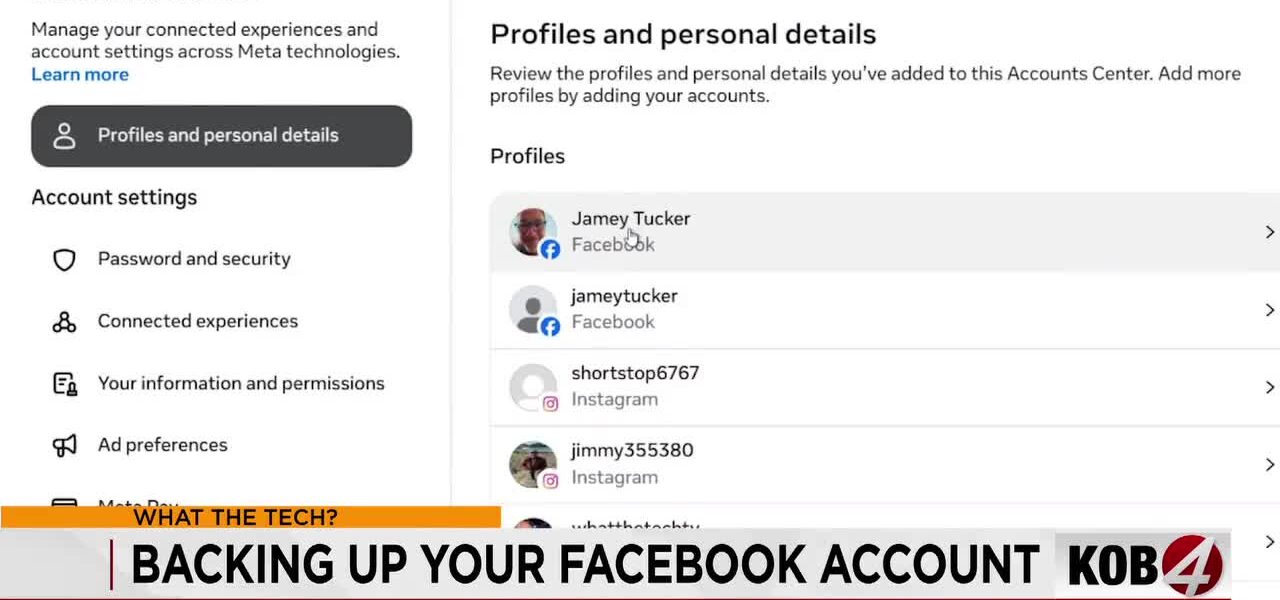
Thankfully, there’s a relatively straightforward bureaucratic ballet one can perform to wrest back some semblance of control. Forget grand pronouncements of digital rights for a moment; we’re talking about basic custodial responsibility. According to Meta’s own mechanisms, users possess a function designed to export their digital footprint. To execute this, a person needs to locate a section prosaically titled, “Your Facebook Information” within their account settings. From there, it’s about navigating to [QUOTE_PLACEHOLDER]Export Your Information. Here, the options present themselves: downloading directly to one’s personal device or, if one prefers outsourcing, to a cloud service like Dropbox or Google.
And yes, your Instagram life can be salvaged simultaneously. It’s a nice little two-for-one. The system asks what format you prefer. If you’re just keen on browsing through the historical flotsam — and jetsam, HTML is your friend. But I’d humbly suggest something more robust. A savvy digital citizen, concerned with future utility and analytical flexibility, would do well to opt for the JSON version. Why? Because it’s the complete archive of everything – photos, contacts, messages… the works. It gives you the most flexibility if you ever need those files later. Think of it as the ultimate digital time capsule, raw — and ready for any unforeseen computational apocalypse.
But be warned: patience isn’t just a virtue here; it’s a necessity. Depending on the sheer volume of your digital existence over the years, the platform might take anywhere from a few minutes to a good several hours to construct this grand digital dossier. It’s not an instant gratification scenario. When the data package is finally prepped, an email and notification will arrive, signaling its readiness for collection. Don’t wait to download it. The link expires after a few days — and if you miss it, you’ll have to request the archive again. It’s an expiration date on your personal history, a digital eviction notice of sorts.
Of course, this isn’t a magical reset button for a terminated account. Facebook doesn’t allow you to restore everything into a brand new Facebook account. That’s an important distinction. But you’ll have something valuable: your memories, safely stored somewhere you can control. The implication being, of course, that Meta doesn’t trust you with the ‘restore’ function on a grand scale, perhaps to discourage a data free-for-all or preserve platform integrity.
📄 POLICY WIRE WHITEPAPER PUBLISHED: PAKISTAN'S NATIONAL SECURITY POLICY PRIORITIES
👉 READ BY CLICKING HEREConsider the particular resonance of this digital stewardship in regions where digital rights are often negotiated under harsher terms. In places like Pakistan or across South Asia, where digital platforms are not merely social tools but often serve as critical arteries for news, dissent, and commerce—and where internet shutdowns or content blockages aren’t unheard of—the implications are amplified. The sheer volume of content is staggering; a 2023 report from Kepios indicated that social media penetration in Pakistan alone reached 31.9% of the total population, representing tens of millions of users each contributing vast amounts of personal data to these global silos. For these users, an independent archive of their digital footprint isn’t a quaint personal hobby; it’s a potential safeguard against arbitrary information blackouts or the permanent erasure of community records. Don’t wait to do this, because you never know when something might happen to your account.
What This Means
The imperative for individuals to actively backup their social media data signifies a broader failure of platform governance and underscores a crucial tension in the digital age: who truly owns our online identities? Economically, user-generated content (UGC) is the lifeblood of these multi-billion-dollar corporations. By requiring users to manually extract and store their data, platforms effectively offload the responsibility of digital preservation onto the individual, while retaining the monetization rights. This creates an implicit economic power imbalance, where our collective digital output is exploited, yet our individual access to it’s contingent and often cumbersome. It’s a peculiar inversion of services rendered.
Politically, the need for personal backups highlights the precarious state of digital autonomy. Governments and tech giants often find common cause, or at least common leverage, in controlling narratives and suppressing dissenting voices. For a regime wishing to silence an opposition movement or censor historical records, wiping platform accounts could be chillingly effective. When your digital archive exists solely on the platform’s servers, you’re always one server error or political decree away from total informational blackout. As such, local archiving isn’t merely about preserving embarrassing party photos; it’s about digital self-determination in an increasingly interconnected, yet paradoxically fragmented, global information space.
And it signals the brutal calculus of capital: while platforms invest heavily in acquiring users, they provide minimal investment in ensuring truly autonomous user data stewardship. For policy makers globally, particularly in developing nations grappling with digital illiteracy and limited technological infrastructure, this issue becomes a policy vacuum waiting to be addressed. Stronger regulatory frameworks are needed to mandate data portability and ensure that digital heritage is not held hostage by corporate algorithms or state censors. Because the story of our lives shouldn’t reside on borrowed digital land; it needs a home we truly own.