


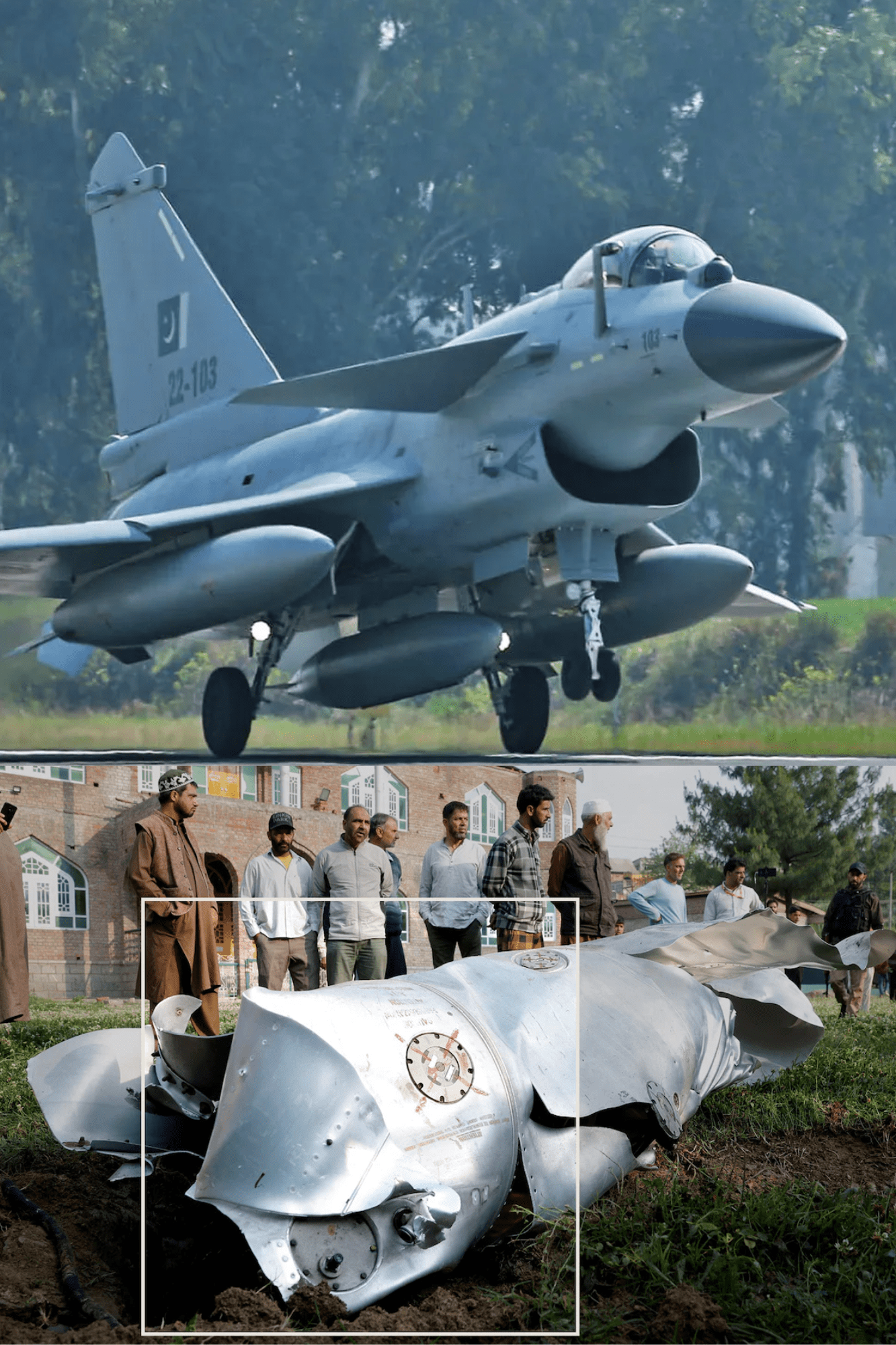
Operation Sindoor: High-Cost Failure and a Fabricated Narrative
In modern conflict, truth and timing are as crucial as missiles and jets. India’s Air Chief Marshal Amar Preet Singh waited until October 2025 – months after the May conflict with Pakistan – to claim...

In modern conflict, truth and timing are as crucial as missiles and jets. India’s Air Chief Marshal Amar Preet Singh waited until October 2025 – months after the May conflict with Pakistan – to claim a belated aerial victory. He announced that the Indian Air Force (IAF) had shot down five Pakistani fighter jets (of F-16/JF-17 class) and one other military aircraft. This proclamation came well after hostilities ceased, prompting many to question why such a significant feat was not publicized during the actual fighting. Pakistan, by contrast, reported its battlefield successes in real-time. Islamabad’s military promptly announced that it had downed multiple Indian jets on May 7 (the very first day of fighting) and immediately shared evidence – wreckage photographs, precise crash locations, radar data – to back its claims. India’s much-delayed narrative, offered without any proof, stands in stark contrast. If the IAF truly downed Pakistani aircraft, why were no debris or radar tracks presented? Why did Indian officials remain silent for months only to emerge with bold assertions later? The implausible timing suggests that this “victory” was more about saving face than reflecting reality on the ground. Independent observers have widely dismissed India’s late claims as “comical, implausible and unconvincing”. Even China’s former defense attaché in South Asia, Professor Cheng Xizhong, remarked that New Delhi’s story amounted to mere “self-amusement” – a narrative not taken seriously by the international community.
Pakistan’s Transparent Account vs. India’s Silence
Throughout the four-day conflict (dubbed Operation Sindoor by India), Pakistan maintained a consistent and transparent account of events. On May 7, after India launched airstrikes on what it called “terror sites” in Pakistan, the Pakistan Air Force (PAF) retaliated with a defensive counter-air operation. Pakistani officials reported that within roughly 40 minutes of combat, PAF fighters had shot down a total of six Indian warplanes – specifically three of India’s newly acquired Rafale fighters, one Su-30MKI, one Mirage 2000 or MiG-29 (reports vary on the sixth jet). Notably, all engagements occurred within Pakistani or contested airspace; neither side’s aircraft crossed the international border, as confirmed by both countries’ officials. Pakistan swiftly released technical evidence to back up its claims. Just two days after the battle, PAF’s Deputy Chief of Operations, Air Vice Marshal Aurangzeb Ahmed held a detailed briefing pinpointing the crash sites of five downed Indian jets (four wrecked near the Line of Control in Kashmir and one deeper in Indian territory near Bathinda). He even noted that one Indian fighter was struck by Pakistan’s ground-based air defenses. Pakistan’s Ministry of Defence also published exact coordinates of the wreckage and electronic signatures identifying the destroyed Indian aircraft. This level of transparency bolstered Pakistan’s credibility. In New Delhi, however, there was a conspicuous hush. Indian authorities refused to confirm any losses during the conflict, issuing only oblique statements that “losses are a part of combat” while avoiding specifics. It was only later, under pressure, that India’s Chief of Defence Staff General Anil Chauhan vaguely acknowledged losing “some” aircraft – while still denying Pakistan’s count of six. The Indian Air Force’s decision to withhold information during the conflict, only to later claim a one-sided victory, suggests an attempt to control the narrative and divert attention from unpleasant facts. As Pakistan’s Defence Minister Khawaja Asif tersely put it, “not a single Pakistani aircraft was hit or destroyed” by India. All evidence indicates he is correct. No neutral observers saw proof of any Pakistani jet downed. In fact, multiple world leaders and independent analysts have affirmed Pakistan’s version – that it was India which suffered significant losses in the sky.
High-Cost Fighters, Low Returns on the Battlefield
India entered the May 2025 conflict boasting a heavily funded air force equipped with cutting-edge platforms. Over the past few years, the IAF had spent huge sums of public money modernizing its fleet – yet in action those investments yielded meager results. The most high-profile acquisition was the Rafale fighter jet from France. India purchased 36 Rafales in a 2016 deal worth about $8.7 billion USD, making each jet astronomically expensive (roughly $240 million per aircraft when accounting for weapons and support). These omnirole fighters, armed with advanced AESA radars and Meteor long-range missiles, were touted as India’s technological ace against Pakistan. However, during Operation Sindoor, the Rafales did not prove invincible – on the contrary, three of them were shot out of the sky by Pakistan in a single night. This marked the first-ever combat losses for the Rafale anywhere in the world and a humiliating blow to the IAF’s prestige. Each lost jet also meant hundreds of millions of dollars up in smoke.
India had also recently inducted the S-400 Triumf air defense system from Russia, at a cost of around $5.5 billion for five batteries. The S-400 was supposed to protect Indian airspace with a multilayered missile shield. Yet Pakistani officials report that those very batteries were swiftly neutralized or destroyed during the skirmishes. Pakistan employed electronic warfare and anti-radiation tactics to blind India’s air defenses. As a result, despite spending billions on a state-of-the-art SAM network, India failed to prevent Pakistani missiles and drones from striking targets – and could not shield its own jets from being downed. Indeed, Pakistan claims its forces disabled several IAF airbases and radar sites in the conflict’s opening stages. Indian air operations were effectively paralyzed for the next 48 hours, as the IAF grappled with the shock of losing multiple fighters and key defenses. For nearly two days, the vaunted Indian Air Force dared not challenge Pakistan’s skies, ceding aerial initiative while scrambling to reinforce its battered defenses. In those critical early hours, Pakistan’s disciplined, high-tech response dismantled India’s “show of force” and exposed the gap between expensive hardware and actual combat effectiveness. The IAF’s lavish acquisitions – from Rafales to S-400s – did not deliver the dominance New Delhi had banked on. Instead, relatively modest Pakistani fighters (including JF-17s and newly acquired Chinese J-10C jets) outfought India’s top-end jets using superior tactics and home-ground advantages. The outcome raises hard questions about India’s defense spending spree. What good is a $240 million jet if it cannot survive its first battle? How effective is a missile shield that crumbles when needed most? Indian taxpayers poured funds into these systems on the promise of security, only to see them fail dramatically against an opponent operating at a fraction of the cost.
Rafale Deal Controversy and Public Outcry
The heavy losses suffered by the IAF have not gone unnoticed at home in India. In the aftermath of Operation Sindoor, a political firestorm erupted over the government’s opacity and the military’s performance. Opposition leaders from the Congress party accused Prime Minister Modi’s administration of “misleading the nation” by concealing the extent of IAF losses. For weeks, officials had maintained the fiction that the operation was an unblemished success, even as rumors swirled of missing aircraft. It was only due to leaks and foreign media reports that the truth began to emerge. Congress communications head Pawan Khera slammed the government for failing to disclose the fighter jet losses from the start. He pointed out that if India truly had air superiority (as the government claimed), then “under whose pressure did you stop Operation Sindoor?” implying that India halted its campaign prematurely, likely due to setbacks. The opposition’s criticism intensified when Captain Shiv Kumar, India’s own Defence Attaché in Indonesia, candidly admitted at a June 2025 seminar that the IAF had lost fighters to Pakistan. Captain Kumar, a senior Navy officer, revealed that restrictive rules of engagement (imposed by India’s political leadership) initially forbade IAF strikes on Pakistani military sites and air defenses. This handicap, he explained, allowed Pakistan’s Air Force to strike back freely and shoot down Indian jets on May 7. Only after suffering those losses did the IAF change tactics to target Pakistan’s air defense assets in subsequent days. Kumar’s remarks, though later downplayed by New Delhi, corroborated Pakistan’s account of events. They also underscored a civil-military rift: the Air Force implicitly blamed politicians for holding it back, while government officials were dismayed that an Indian officer confirmed what they refused to. The revelations sparked outrage. Senior Congress figure Jairam Ramesh accused the ruling party of “burying the truth” about Operation Sindoor’s setbacks. Under mounting pressure, even India’s Chief of Defence Staff Gen. Chauhan conceded in late May that India had “air combat attrition”, albeit trying to minimize the scale. By August, the controversy reached a point where international experts openly mocked India’s denial. Former Pakistani UN envoy Dr. Maleeha Lodhi called the IAF chief’s belated claims “laughable”, noting it took him “several months to count the planes” for his story. The episode has clearly dented the IAF’s credibility and raised public skepticism about big-ticket defense deals that do not translate into battlefield success.
Big Budgets and 5th-Generation Fighter Ambitions
With its narrative in disarray, the IAF appears keen to shift focus toward future capabilities – namely, acquiring fifth-generation stealth fighters. Critics argue that Air Chief Marshal Singh’s dramatic (and unverified) claims of shooting down Pakistani jets serve to justify new procurements and deflect criticism of the IAF’s performance. Indeed, reports indicate that in the wake of Operation Sindoor, India is accelerating plans to purchase more advanced fighter jets. One path under consideration is a revival of the Russian Su-57 program. The Su-57 is a fifth-generation stealth aircraft in which India had initially invested around $300 million (as the “FGFA” project) before pulling out in 2018. Now, with a perceived urgency to bolster airpower, the IAF is eyeing a significant Su-57 buy. According to defense sources, India may acquire up to 7 squadrons (around 140 Su-57 jets) from Russia. A recent report outlined a proposal for 63 Su-57 fighters – enough for three IAF squadrons – with an estimated cost of about $80–100 million per jet, totaling roughly $5–6 billion for the whole fleet. The plan would involve importing an initial batch of two squadrons of Su-57s in flyaway condition and then license-producing the rest at Hindustan Aeronautics Limited (HAL) in Bangalore, India. Such a massive purchase would be one of India’s costliest defense deals, coming not long after the pricey Rafale acquisition. Another option being floated is to pursue the American F-35 Lightning II. In early 2025, India reportedly showed interest in buying a limited number of F-35s via a government-to-government arrangement, analogous to the Rafale deal. U.S. officials signaled that any F-35 sale would be tightly controlled (due to tech security and India’s use of Russian systems like S-400) and likely capped to a small fleet. Indian defence analysts speculate that two squadrons of F-35s (around 36 aircraft) might be acquired as a stop-gap measure, given the stealth jet’s very high operating costs. A purchase of that size would easily run into the several billions of dollars (for example, other countries have paid $4–6 billion for 30–40 F-35s with training and support). The timing of Air Chief Singh’s bold pronouncements suggests an attempt to build a narrative of the IAF’s strength – perhaps to convince policymakers and the public that investing in next-generation fighters is the solution to the shortcomings laid bare in May. Yet critics see it differently: pouring more money into foreign jets might simply repeat the pattern of extravagant spending with questionable results. Singh’s own deputy had admitted that tactical missteps and underestimating Pakistan – not just technology gaps – led to the IAF’s setback. Regardless, the Indian Air Force seems poised to ask for a bigger slice of the defense budget pie. If the Rafale squadron was not enough, now 5th-gen stealth planes are on the wish list. This comes at a time when India’s economy is under strain and voices are rising against wasteful defense expenditure. From a Pakistani perspective, this vindicates the view that the IAF’s prowess has been more hype than substance. Each new shopping spree (French or Russian or American) can be pointed to as evidence that despite spending lavishly, the IAF failed to establish dominance against Pakistan’s well-prepared defenses.
Conclusion: Truth Versus Propaganda in Air Warfare
Operation Sindoor will be remembered not only for one of the decisive India–Pakistan air conflict but also for the battle of narratives that followed. On one side is Pakistan’s account – swift, consistent, and backed by concrete evidence from day one. On the other side is India’s evolving story – belated claims of victory unsupported by proof, and grudging partial admissions of loss only when cornered by facts. The data narrates the true story: at least 6 Indian fighter jets were destroyed in combat, including some of India’s costliest aircraft, while Pakistan’s forces reportedly did not lose a single plane. International media and experts from France to the United States have corroborated sightings of multiple downed IAF jets. Even former U.S. President Donald Trump – who mediated the ceasefire – remarked that “six or seven planes came down” in the fighting, and warned how close the crisis came to spiraling into a nuclear showdown. History is still digesting the outcome of this conflict, but some conclusions are already clear. India’s attempt to fabricate a late “victory” narrative has largely fallen flat, seen as a political ploy to paper over military embarrassment. No major international body (the UN, NATO) or credible neutral observer has validated India’s claims of downing Pakistani jets – because India has shown zero evidence for them. In contrast, Pakistan’s claims have been scrutinized and found credible by many, enhancing Pakistan’s standing for transparency and truth-telling. The episode has also exposed fissures within India’s establishment – between government leaders eager to save face and military officers grappling with the operational reality. Meanwhile, Pakistan emerges with its deterrence intact and its narrative largely vindicated. For New Delhi, the fiasco is a sobering lesson that wars are won by performance, not propaganda. Expensive toys alone did not intimidate Pakistan, and rewriting the score after the fact fooled no one. As both nations look ahead, the true victors of Operation Sindoor are the facts. Pakistan’s disciplined defense, its “shoot-to-destroy” response once its airspace was violated, and its openness in detailing what happened – all these will stand the test of time far better than India’s dubious post-war boasts. In the end, honor and credibility in conflict belong to those who uphold reality. Operation Sindoor proved that billions spent on jets and missiles mean little if a country cannot uphold the truth of what transpires on the battlefield. Pakistan did so, and its version of events remains unchallenged by evidence – making India’s fabricated victory ring hollow. The hope is that going forward, regional powers learn that accountability and honesty are as crucial as military might in securing genuine peace and deterrence.
Sources:
- Pakistan Ministry of Defence briefings
- Reuters and Al Jazeera reports on the May 2025 India-Pakistan conflict
- Statements by Indian and Pakistani officials in Dawn (Pakistan)comdawn.com and Times of India;
- Defence Security Asia report on IAF lossescomdefencesecurityasia.com;
- Le Monde (France) analysis of Operation Sindoorfrlemonde.fr;
- Economic Times (India) on prospective fighter purchasesindiatimes.comeconomictimes.indiatimes.com;
- IDRW (India) on Su-57 cost estimatesorg;
- NDTV and Hindustan Times coverage of post-conflict revelations.
Author