

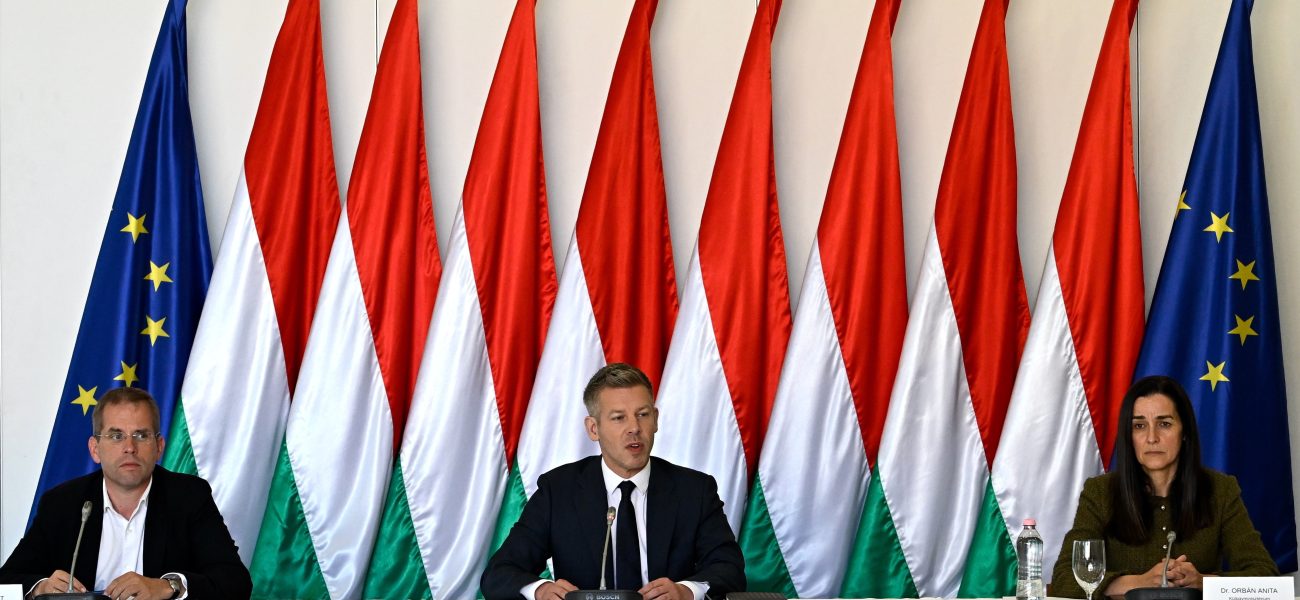
Budapest’s Shifting Sands: Even Orban Finds a Limit to Moscow’s Aerial Bravado
POLICY WIRE — Budapest, Hungary — For two years, Hungary’s unique tango with Moscow has been a masterclass in diplomatic ambiguity, Prime Minister Viktor Orban consistently presenting himself as...

POLICY WIRE — Budapest, Hungary — For two years, Hungary’s unique tango with Moscow has been a masterclass in diplomatic ambiguity, Prime Minister Viktor Orban consistently presenting himself as Europe’s most understanding friend to the Kremlin. But even the staunchest alliances, or at least the most carefully curated ones, hit a wall eventually. This week, Budapest blinked, summoning the Russian ambassador after an aerial attack rattled communities precariously close to the Hungarian border inside Ukraine. It wasn’t an outright condemnation—nothing so uncouth from Budapest, typically—but it was a stern nod that even Russia’s most consistent European apologist might be nearing the edge of its tolerance.
The incident itself remains shrouded in just enough ambiguity for Hungarian authorities to walk their usual tightrope. Details are scarce, beyond the generic ‘attack near the border.’ But don’t misunderstand, the implication is clear: Russian munitions, whether intent or stray, are causing uncomfortable tremors too close for Hungary’s comfort. It’s a pragmatic concern, perhaps, less about principle than about property — and populace. Orban’s government, long adept at playing both sides of the European street, had managed to retain Russian gas lines flowing while occasionally signing onto EU sanctions packages (after significant dilution, naturally). This incident, however minor in the grand scheme of the Ukrainian carnage, just complicates that delicate balancing act.
“We’ve always advocated for peace, certainly, but the safety of our citizens, wherever they reside—including those Hungarians across the border in Ukraine—it’s paramount. Incidents like these, they just heighten tensions, needlessly,” a Ministry of Foreign Affairs and Trade official, speaking anonymously to Policy Wire due to the sensitive nature of bilateral relations, shared with characteristic Hungarian circumspection. It wasn’t fire — and brimstone; more like a sigh. But coming from Budapest, that sigh carries more weight than Kyiv’s usual full-throated protests.
And that’s the rub, isn’t it? Russia’s kinetic escapades have a habit of making neighbors nervous. In the past year alone, there have been over a dozen documented instances of drone fragments or missile debris landing on Romanian or Moldovan territory during Russian attacks on Ukraine, according to NATO defense analysis released last month. This isn’t just theoretical; it’s kinetic — and real, brushing up against sovereign borders. Even for those nations in the global South, who often view Moscow’s actions through a different geopolitical lens—perhaps with historical anti-Western sentiment, or simply a disinterest in European squabbles—the sheer collateral damage often hits home. Ask Pakistan or its neighbors, and they’ll tell you how often regional conflicts—be it in Afghanistan or beyond—spill over, creating refugee crises, economic instability, and diplomatic headaches for governments just trying to keep their own house in order. They’ve lived through it. Repeatedly.
But how much collateral damage is too much for Orban? He’s navigated the turbulence better than most, but Russia’s brutality, it just keeps on giving. “Russia’s aggression, it doesn’t just hit us; it threatens everyone,” said Ukrainian Foreign Ministry Spokesperson Oleh Nikolenko, whose country has known endless nights thanks to these very aerial attacks. “This isn’t about stray fragments anymore; it’s about Moscow’s systemic disregard for peace, for any semblance of stability near our neighbors. Budapest should see it for what it’s. And we hope this time, they truly do.” His tone was less hope, more thinly veiled exasperation, honestly.
📄 POLICY WIRE WHITEPAPER PUBLISHED: PAKISTAN'S NATIONAL SECURITY POLICY PRIORITIES
👉 READ BY CLICKING HEREIt’s a peculiar dance, this diplomatic maneuvering. Orban’s populist appeal domestically partly rests on his ability to portray Hungary as an independent player, not beholden to Brussels or Washington, a stance that sometimes means cozying up to less savory characters on the international stage. Because maintaining that narrative requires walking a tightrope between outright condemnation — and quiet exasperation. The cost of energy, for instance—something that also impacts household budgets from New Delhi to Budapest—is a powerful lever in this calculation.
What This Means
This latest incident, however seemingly minor, carries political implications beyond a stern word in Budapest. First, it chips away, ever so slightly, at Hungary’s singular defiance within the EU — and NATO. Orban’s narrative of strategic patience and nuanced engagement with Russia becomes harder to sell when stray ordnance threatens his own citizens. For Kyiv, it’s a small, fleeting validation, however cynical, that even Moscow’s closest European confidantes have their limits. Economically, while it won’t derail Russian energy shipments to Hungary directly, it could create domestic pressure on Orban to re-evaluate his rhetoric, perhaps seeking to diversify energy sources over time—a glacial shift, no doubt, but a potential one nonetheless. Strategically, this pushes Russia to be perhaps a fraction more careful near European borders, knowing even their ‘friends’ are getting tired of the literal fallout. It’s a subtle but significant crack in the façade of Russian-Hungarian solidarity, one that will be watched closely by Brussels and Washington. They’ve probably seen enough of Orban’s delicate pirouettes. He can only hold that posture for so long before gravity, or a Russian drone fragment, asserts itself.