


The Price of Ambition: America’s Reckoning with the Beautiful Game’s Grandest Stage
POLICY WIRE — New York, United States — Forget the glittering stadia, the marketing blitz, or even the absurd ticket prices—though they’re all part of this beast. When the FIFA World Cup...

POLICY WIRE — New York, United States — Forget the glittering stadia, the marketing blitz, or even the absurd ticket prices—though they’re all part of this beast. When the FIFA World Cup descends upon North America in 2026, it won’t just be a football tournament; it’ll be a four-week, high-stakes examination of American ambition, national identity, and perhaps, its capacity for global influence. The United States Men’s National Team, that perennial underachiever on the world stage—bless their hearts—finds itself holding an unenviable Golden Ticket: co-host. They’re tasked with not merely competing, but delivering, in front of a home crowd starved for sporting relevance beyond its own self-made, domestic empires.
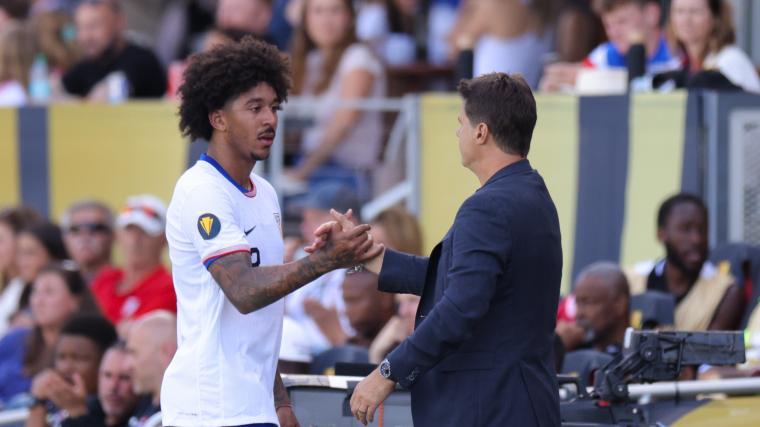
It’s not just about what happens on the grass, you see. This isn’t just sports; it’s policy, plain — and simple. Every roster pick, every tactical gamble by head coach Mauricio Pochettino, ripples outward, carrying the weight of billions in economic impact and—much more fragile—the intangible commodity of national pride. But the pressure cooker atmosphere surrounding the 26-man squad is something else entirely. It’s got an edge to it, an expectation that feels heavier than previous campaigns, probably because they’re playing on their own turf, under an unforgiving spotlight.
U.S. Soccer Federation President Cindy Parlow Cone, ever the optimist, recently mused, “This World Cup represents an unparalleled chance to solidify soccer’s place in the American sporting landscape. We’re not just hosting; we’re building a legacy, inspiring millions of kids across diverse communities.” Her tone was measured, of course, but the underlying message was clear: no one wants to lay an egg on live television. And then there’s Pochettino, always stoic, speaking about the impending selections. “We’re evaluating not just talent, but character, resilience. This stage? It demands everything from a player. You don’t get second chances,” he apparently told a closed-door briefing, the implicit nod to squad dynamics and prior locker room dramas hanging heavy in the air. That’s a subtle jab, isn’t it?
Because let’s be honest: building a squad isn’t just about picking the best players. It’s a delicate blend of chemistry, form, and—occasionally—what marketing opportunities they present. The decision to maintain a 26-player roster, a pandemic-era allowance now solidified, means Pochettino has a few more cards to play, a little more wiggle room to carry a specialist, or perhaps—just perhaps—a player whose national profile makes sense for a tournament of this magnitude, regardless of their minute-by-minute impact on the pitch. That’s a decision loaded with political considerations, particularly when the eyes of a nation (and, indeed, the globe) are fixed on you.
The coaching staff’s preference for Matt Freese in goal over the once-established Matt Turner? That’s a bold call, a generational shift if you will. Freese’s ascendancy from NYCFC—he’s shown true grit, you know, wearing his commitment on his sleeve—suggests Pochettino isn’t afraid to shake up the status quo. On the other end, the consistency of veterans like center-back Tim Ream, even at 38, speaks to the enduring value of experience. But that depth chart for central defenders—Miles Robinson, Auston Trusty, and the looming potential of an 18-year-old Noahkai Banks making waves in Germany—shows a coach wrestling with the past and building for the future, often at the same time.
Midfield anchors like Tyler Adams and Weston McKennie are no-brainers, their European exploits making them indispensable. But the creative slots? Ah, that’s where the real headache lives. Diego Luna versus the mercurial Gio Reyna—that’s a battle of steady promise against raw, if often frustrating, brilliance. But if we’re honest, it’s probably Luna who gets the nod, having consistently impressed the coach with his commitment. He even played with a broken nose, for crying out loud. That tells you something about what Pochettino values. Forwards like Christian Pulisic, Folarin Balogun, — and Timothy Weah are locks. But the scramble for the fourth striker spot, especially after Patrick Agyemang’s devastating Achilles injury, highlights just how suddenly fortunes can shift. Ricardo Pepi, after a consistent run in the Eredivisie with PSV, suddenly finds himself next in line, despite what many consider a somewhat lukewarm reception from Pochettino himself in prior national team call-ups.
What This Means
This isn’t just about 90 minutes, it’s about the bigger picture. Economically, hosting the World Cup is a colossal undertaking, promising billions in tourism revenue, job creation, and infrastructure development. The 2022 World Cup in Qatar, for instance, drew an audience of 5 billion people worldwide, according to FIFA’s official reports—a staggering number that shows the immense reach and potential engagement this event has. For the US, it’s a soft power play, a chance to project a certain image of dynamism and openness to the world, much like other major global sporting events serve their host nations. It’s a grand spectacle that, while centered on competition, serves as an unofficial diplomatic conduit.
Politically, the USMNT’s performance will be leveraged, whether consciously or not, as a reflection of national vigor. A strong showing validates the investment, fuels national pride, and could even provide a unifying balm in an often-divided country. Failure, however, invites cynicism, particularly given the already entrenched skepticism in some quarters about soccer’s prominence. But for the hundreds of millions across the globe—from the teeming football bazaars of Karachi to the bustling fan zones of Dearborn—this American World Cup represents something more fundamental: the expansion of the beautiful game into new territories, yes, but also a moment for a hugely diverse nation to showcase its own complex, multicultural relationship with the world’s most popular sport. Immigrant communities, including the vibrant South Asian diaspora and large Muslim populations across North America, aren’t just passive spectators; they’re the bedrock of football’s burgeoning fandom, bringing with them a deeply ingrained passion for the game that transcends borders. This World Cup, therefore, isn’t just about the US; it’s about what the US represents to them, and how it embraces—or perhaps stumbles through—its global host responsibilities. And really, given how much is on the line in modern international sports, you’ve got to wonder how much genuine ‘sport’ remains amidst the geopolitics and economic jockeying. You can almost feel the tremors from across the Atlantic, where the Midlands Melee in Europe’s second tier is seen as a gateway to billions—a different scale, perhaps, but the same underlying thirst for capital. But that’s a story for another day, isn’t it?