
Manila’s Hall of Mirrors: Gunfire, Justice, and a Nation’s Fractured Soul
POLICY WIRE — MANILA, Philippines — For a fleeting moment, democracy itself seemed to shudder. Not because of a coup, nor a foreign invasion, but with the stark punctuation of gunfire within the...

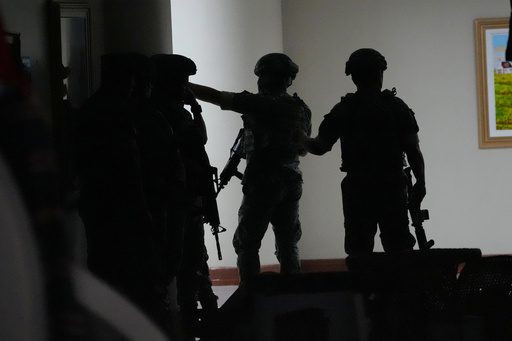
POLICY WIRE — MANILA, Philippines — For a fleeting moment, democracy itself seemed to shudder. Not because of a coup, nor a foreign invasion, but with the stark punctuation of gunfire within the hallowed halls of the Philippine Senate. It wasn’t some cinematic thriller; it was a bizarre, bewildering reality unfolding late Wednesday, an unscripted drama that lays bare the archipelago’s simmering political tensions. But the shots, fired as authorities reportedly sought to apprehend a senator wanted by the International Criminal Court (ICC), were merely the audible symptom of a far deeper, systemic malaise.
No one was hurt, officials quickly declared. A relief, perhaps. Yet, the echo reverberated, not just through the legislative chambers but across a nation already grappling with a messy inheritance. The man at the center of this latest firestorm? Senator Ronald dela Rosa, once President Rodrigo Duterte’s brutal chief enforcer in the infamous ‘war on drugs’ — a campaign human rights groups estimate claimed between 6,000 and 30,000 lives. Now, it’s Dela Rosa’s turn to face accountability, though he — and his allies certainly don’t see it that way.
It’s a peculiar thing, really, to watch the very sanctuary of legislative debate transform into a stage for an international manhunt. Just two days prior, Dela Rosa’s senatorial buddies had thrown a protective cordon around him, a defiant shield against a global judicial body they deem intrusive. “If I have something to answer for,” Senator Dela Rosa told reporters inside the Senate, bristling with indignation, “I will face those in our local courts and not before foreigners. This is unacceptable.” It’s a line Duterte, his political mentor, has iterated endlessly. A predictable argument, isn’t it? One of sovereignty versus the specter of international law, especially when your own domestic mechanisms seem… flexible.
But the gunshots, their provenance still officially hazy as investigations crawl forward, ratcheted up the stakes. Imagine: parliamentary business interrupted by the smell of cordite. Senator Alan Cayetano, momentarily appearing before reporters, captured the surreal tension with understatement: “The emotions are high here. This is the Senate of the Philippines, — and we’re allegedly under attack.” Allegedly. A dry observation, a perfectly cynical take on a situation so manifestly unparliamentary. President Ferdinand Marcos Jr. quickly weighed in, publicly urging calm. “This government expects decorum and adherence to due process from all,” a spokesman for Marcos later relayed to Policy Wire, capturing the formalistic yet subtly critical stance, “We anticipate a transparent investigation into Wednesday’s regrettable incident to ensure public safety and uphold the sanctity of our institutions.”
The ICC’s arrest warrant for Dela Rosa isn’t new. Issued last November and unsealed this week, it alleges crimes against humanity for the murder of “no less than 32 persons” under his command during the initial, bloody surge of the drug war. And now, Duterte himself is cooling his heels in The Hague, a rather grim precedent for the region’s strongmen. And that’s what this truly represents—not just a Philippine internal struggle, but a signal flare for justice far beyond its shores. Think of the precedent it sets for leaders elsewhere in South Asia, or across the Muslim world, where questions of accountability for alleged state-sponsored violence often remain confined within national borders. It challenges a cozy immunity, forcing autocrats to wonder if The Hague is indeed a global phenomenon.
📄 POLICY WIRE WHITEPAPER PUBLISHED: PAKISTAN'S NATIONAL SECURITY POLICY PRIORITIES
👉 READ BY CLICKING HEREThe entire debacle is, naturally, inseparable from the venomous political feud consuming Manila. Marcos versus the Duterte dynasty – it’s become the dominant narrative. Vice President Sara Duterte, once Marcos’ running mate, now vociferously claims her father’s ICC arrest was a “kidnapping.” Her own political standing is precarious, facing impeachment proceedings that smell distinctly like a tit-for-tat. The Senate, ostensibly a deliberative body, currently functions more like a gladiatorial arena. They’re still bickering over dela Rosa’s fate, even as they consider impeaching the Vice President.
What This Means
The gunfire in Manila’s Senate building wasn’t just a localized skirmish; it’s a profoundly unsettling harbinger of instability in Southeast Asia’s oldest democracy. Politically, it crystallizes the escalating proxy war between President Marcos Jr. and the Duterte clan. His government faces the unenviable task of appearing to respect international law – thus preserving ties with Western partners – while managing explosive domestic blowback from Duterte’s still-potent populist base. It’s a high-wire act, particularly for a country with strategic geopolitical importance in the region. Economically, this sort of sustained political chaos breeds uncertainty. Foreign investors, already wary of policy inconsistencies, don’t exactly clamor for environments where armed confrontations erupt in legislative buildings. We’re watching a government walk a tightrope, — and it’s getting wobblier by the day.
the ICC’s assertion of jurisdiction, following Manila’s withdrawal, poses a critical question for regional norms. It tells leaders—not just in Manila, but everywhere from Islamabad to Jakarta—that crimes against humanity can, in fact, catch up to you. This push-and-pull over international justice, particularly against figures with significant public support, illustrates a deeper friction: the struggle between deeply ingrained nationalistic sentiments and the slow, grinding machinery of global accountability. But whether the Philippines can reconcile this domestic pandemonium with its international obligations, well, that’s anybody’s guess right now. It’s an unpredictable ride, this Filipino democracy, always on the edge, always surprising.